




Global CO₂ emissions from fossil fuels decline, but total global emissions continue to rise
Share
Global carbon dioxide emissions from fossil fuels could decrease by 0.4% in 2026, driven by the expansion of solar and wind power, as well as disruptions in energy markets caused by the conflict in Iran. However, total CO₂ emissions are expected to continue rising due to an increase in emissions associated with land-use change, primarily deforestation and forest degradation, according to the new Global Carbon Budget 2026 report.
According to the report, CO₂ emissions from fossil fuels are projected to reach 38.2 billion tonnes this year. When emissions from land-use change are included, total emissions could reach 43.3 billion tonnes, compared with 42.8 billion tonnes in 2025.
Oil-related emissions are expected to fall by 1.9%, partly due to the short-term effects of the energy shock triggered by the conflict in Iran. Emissions from natural gas could decrease by 0.3%, while coal-related emissions are projected to increase by 0.6%.
In contrast, emissions associated with land-use change could rise to 5.1 billion tonnes of CO₂. This increase is driven by peatland fires in Southeast Asia, almost entirely caused by human activities, as well as forest degradation resulting from drier conditions associated with the onset of the El Niño climate phenomenon.
Renewables are increasingly meeting growing energy demand
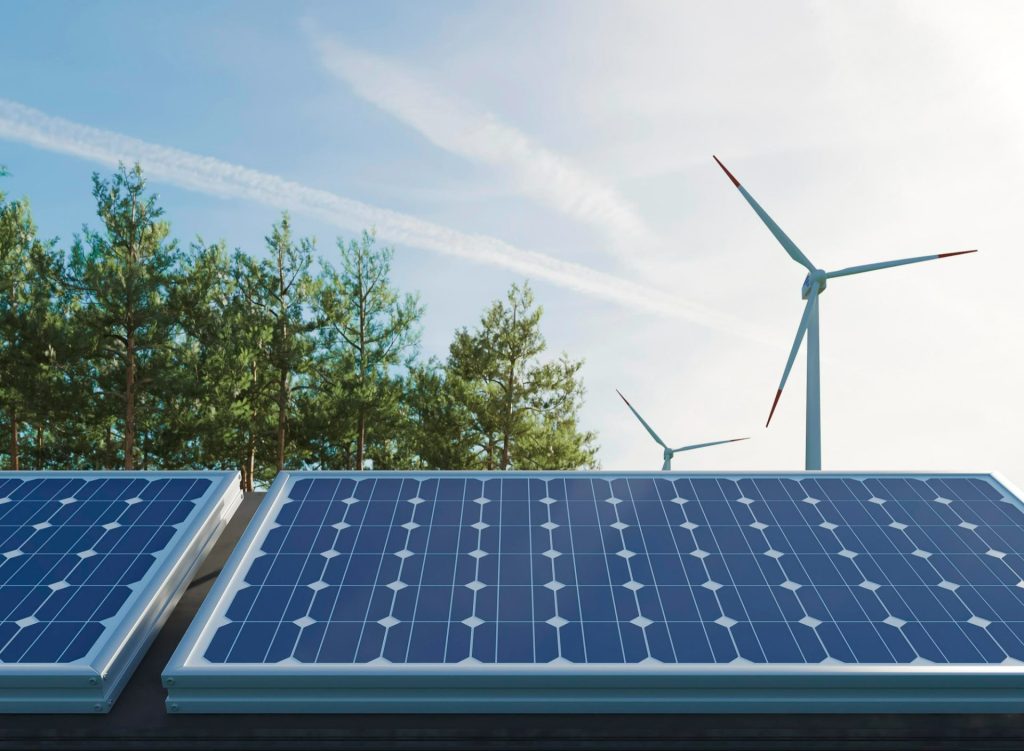
Although global energy demand continues to rise, around two-thirds of the increase is being met by new solar and wind power capacity, alongside the contribution of electric vehicles. The amount of CO₂ emissions avoided thanks to solar and wind power increased from 280 million tonnes in 2010 to 4.1 billion tonnes in 2025, and is projected to reach 4.6 billion tonnes in 2026.
An analysis published in the journal Nature Climate Change shows that solar and wind power, together with electric vehicles, could offset between 64% and 79% of emissions resulting from growing global energy demand by the end of 2028.
Read more:
- A Game-Changer: ProCredit Bank’s Net Zero Calculator for Measuring CO₂ Emissions
- Electric Cars to Save the EU 20 Million Tons of CO2 – Air and Maritime Transport Remain a Challenge
- Green Growth: 30 Percent of World Regions Achieve Economic Growth While Reducing CO2 Emissions
The research also shows that an increasing number of countries are managing to reduce emissions while maintaining economic growth. There were 59 such countries in 2025, with emissions below their 2019 levels, before the COVID-19 pandemic. In addition, total CO₂ emissions grew more slowly over the past decade, at an average annual rate of 0.3%, compared with 1.7% in the previous decade.
Looking at the world’s largest economies, emissions in China could decrease by 0.9%, in the United States by 1.3%, in the European Union by 1.5%, and in Japan by 1%. In contrast, emissions in India are expected to increase by 4.4%. China, which accounts for 32% of global fossil fuel emissions, is also leading the deployment of clean technologies. Half of the global emissions avoided through renewable energy and electric vehicles are attributed to China.
“Declining fossil CO₂ emissions are encouraging, but a reduction driven partly by geopolitical shocks is not a sustainable climate solution. The long-term answer remains the rapid deployment of clean energy technologies,” said Professor Pierre Friedlingstein of the University of Exeter, who led the research.
Less than four years remain for the 1.5°C target
The remaining carbon budget for limiting global warming to 1.5°C is now around 150 billion tonnes of CO₂. At the current rate of emissions, this amount would last for less than four years. Meanwhile, atmospheric CO₂ concentrations could reach 427.7 ppm in 2026, which is 54% above pre-industrial levels.
The report also highlights the importance of natural carbon sinks. The land carbon sink has returned to its previous level following a significant weakening during the 2023–2024 El Niño. However, the strong El Niño expected in 2026 is likely to affect the ability of land ecosystems to absorb carbon over the coming year.
Researchers stress that, alongside reducing emissions, efforts to remove CO₂ from the atmosphere must also be scaled up. Afforestation and forest restoration already remove substantial amounts of carbon dioxide, but these gains are not yet sufficient to offset emissions caused by deforestation. Permanent CO₂ removals through afforestation and reforestation currently offset around half of the emissions resulting from permanent deforestation.
The Global Carbon Budget 2026 report, prepared by an international team of more than 140 scientists, is the 21st annual edition of this research. It was published on 10 November in the journal Earth System Science Data.
Energy Portal