

Newsletter Subscribe
Enter your email address below and subscribe to our newsletter

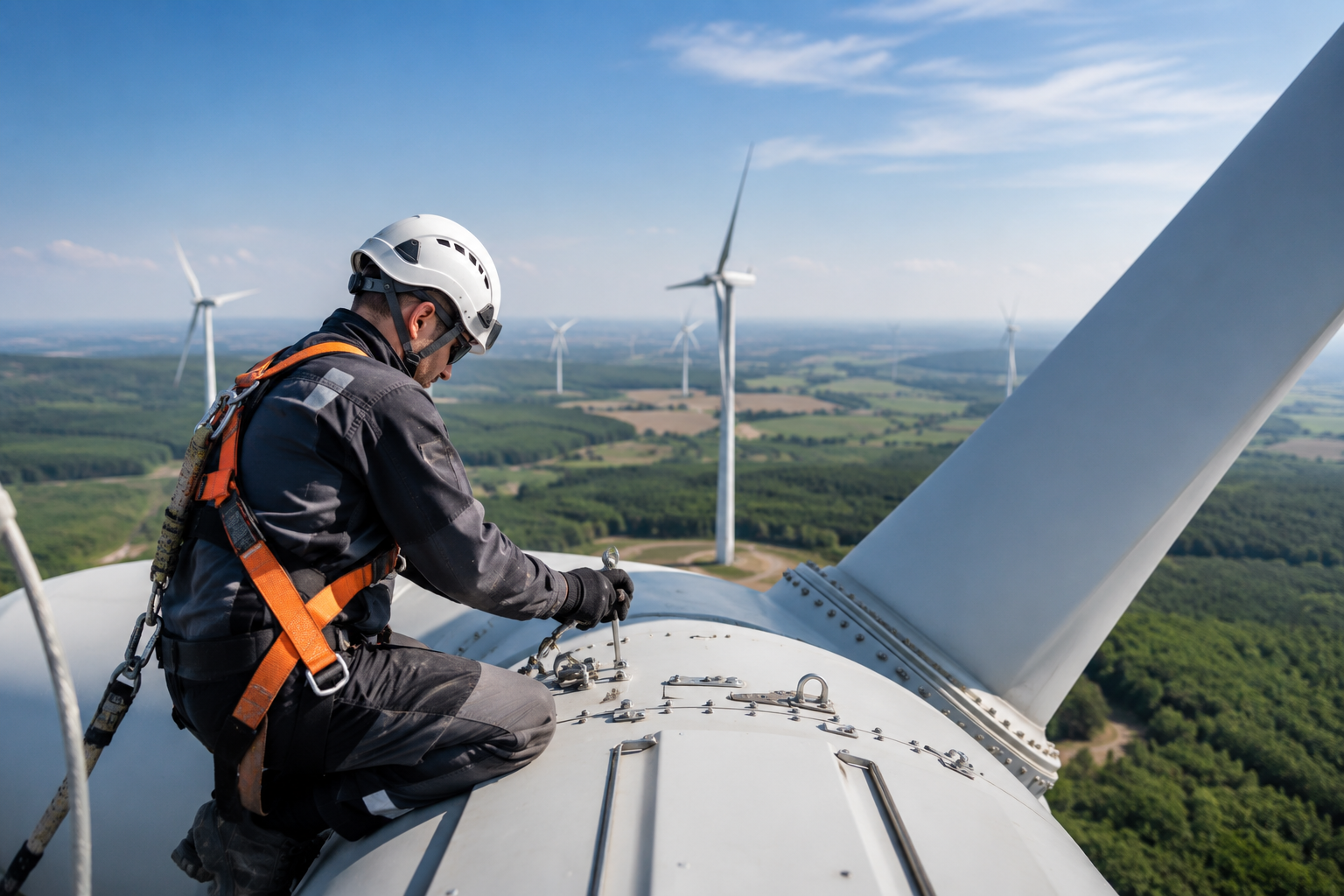
The European wind industry continues to grow rapidly, but the shortage of skilled labour could jeopardise the achievement of the continent’s ambitious energy targets.
According to data from WindEurope, the European wind industry currently employs around 478,000 people, of which 225,000 are directly employed in the sector, while an additional 253,000 jobs are related to ancillary activities in the supply chain. The manufacturing sector alone provides about 110,000 jobs, confirming the importance of wind energy for the European economy.
The number of employees in the sector is expected to exceed 600,000 by 2030. However, as the association points out, the challenge is not only to increase the number of employees, but also to ensure an adequate workforce with the necessary knowledge and skills. If key positions remain unfilled, the development of new wind farms could be slowed down.
In order to help companies and decision-makers respond to this challenge in a timely manner, WindEurope has presented a new tool for planning and developing the workforce in the wind energy sector.
The Workforce Development Tool provides a detailed overview of employment needs by country, project development phases and job categories. It also identifies critical skills shortages and shows how demand for certain profiles will evolve in the coming years. The tool builds on the previous Wind Energy Workforce Report, which identified as many as 235 different occupational profiles along the value chain of the wind industry.
WindEurope warns that companies cannot simultaneously invest in training for all employee profiles, which is why it is necessary to set priorities precisely. Without reliable labour market data, workforce planning becomes uncertain, which can lead to inefficient training investments and project delays.
Data collected through the new tool show that the greatest workforce shortages are in technical occupations that are crucial for the construction and installation of wind farms. Among the most sought-after profiles are field engineers, assembly technicians, pre-assembly technicians and welders. Demand for these professionals will continue to grow in the coming years.
WindEurope concludes that, in addition to new investments and accelerated project development, ensuring a sufficient number of qualified workers is essential for Europe’s successful energy transition. The readiness of the workforce, the association stresses, is becoming one of the key prerequisites for the further development of wind energy and the achievement of European goals in the field of energy security and decarbonisation.
Energy Portal