Newsletter Subscribe
Enter your email address below and subscribe to our newsletter

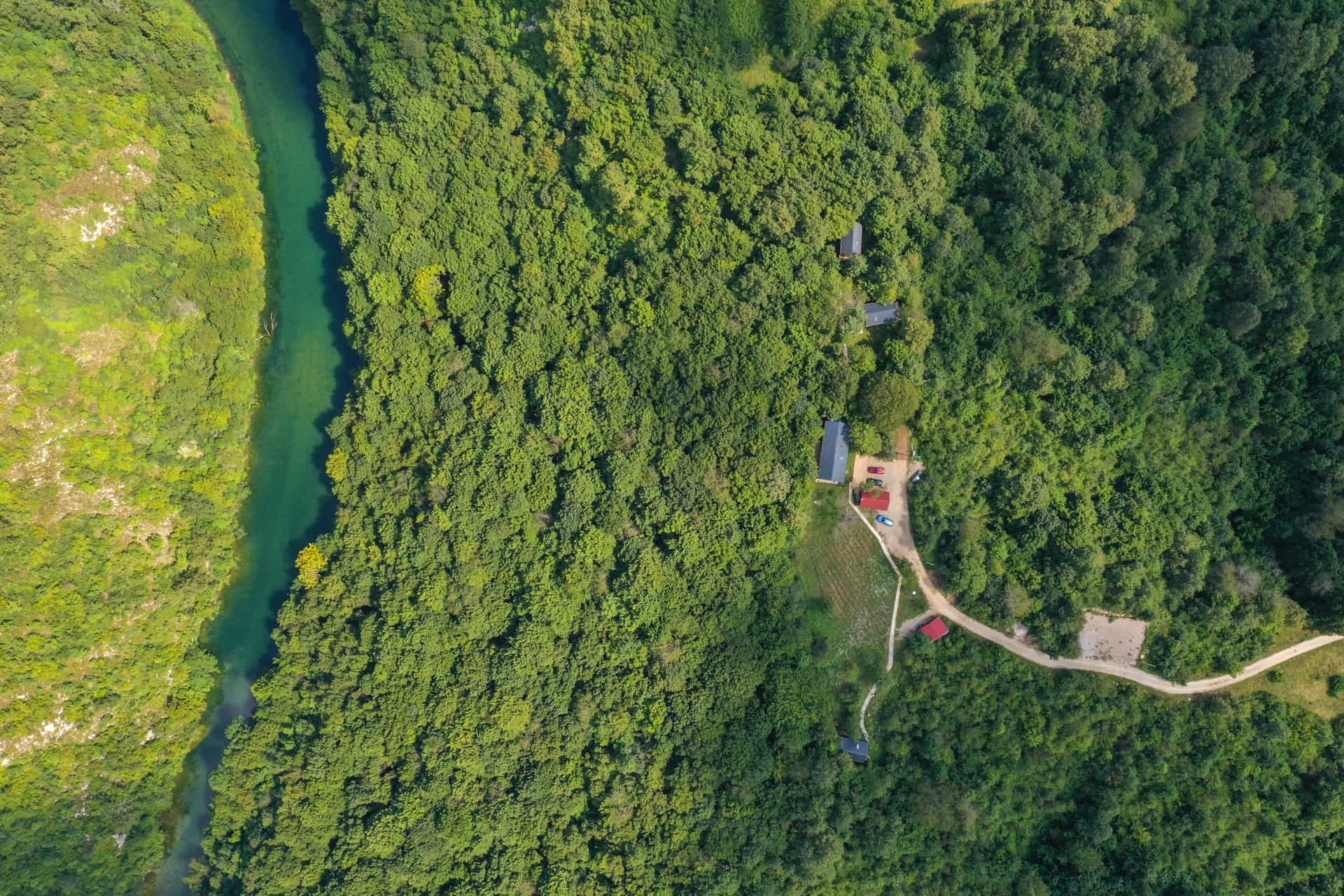
In the village of Donji Nikšić, not far from Slunj, the road slowly leaves the rhythm of everyday life behind and leads into a corner of Kordun unlike the landscapes most of us are used to. The forests along the Korana River and the sense of peace become the main reasons for coming here. It was precisely in such surroundings that Tree Elements was created – a space conceived as a true escape from everyday life and everything it brings.
Slunj is situated on two rivers, about an hour and a half from Zagreb, around two hours from the sea, while Plitvice Lakes National Park is in the immediate vicinity. This proximity to well-known places does not diminish the sense of peace, but gives it a special measure: it is far enough away to offer silence, yet close enough for guests to have coffee, fresh bread, a restaurant, or an excursion within easy reach.
Behind the project is the owner, Ivona, together with her small, carefully chosen team – her parents – and she transformed her desire to create a place where nature is the main attraction into Tree Elements.
– I have always been drawn to the idea that architecture can be part of the landscape, rather than something that disrupts it. I wanted to create a space that is not just accommodation, but an experience – a place where guests can slow down, rest, and find balance again, says our interviewee, Ivona.
When the project was being developed, this type of concept was almost non-existent in Croatia, and even in the wider region. Inspiration came from examples of sustainable architecture around the world. Still, from the very beginning, Tree Elements was conceived as an authentic space rooted in the local environment and way of life.
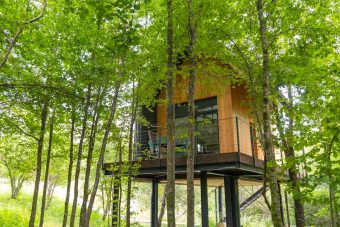
This idea is most clearly reflected in the three houses named after natural elements – Earth, Water, and Wind. They are the same in size and layout, but each has its own character.
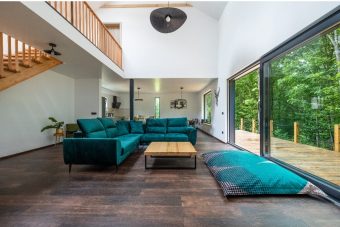
Earth is conceived as a space of stability and calm. It is dominated by earthy tones, natural materials, and a strong connection to the surroundings. Water introduces somewhat livelier tones, reflected in the colors of the sofa and kitchen, while Wind carries the symbolism of freedom, movement, and airiness. Large glass surfaces open the space towards the surroundings, blurring the boundary between the interior and nature.
Above all, as a kind of crown of the complex, stands the main house, Ether. It is conceived as a space where all the elements meet, but also as the owner’s personal signature. A large open space, a wooden staircase, plants, and natural materials make it warm, pleasant, and intimate.
At Tree Elements, sustainability does not appear as an additional value, but as the very way the space was conceived from the beginning. Many natural materials were used in the construction, primarily wood. The façades are made of larch, while the warmth of natural materials has also been preserved in the interiors.
Large glass surfaces bring in plenty of daylight and create a constant connection with the forest, making the landscape an integral part of the interior.
All houses are prefabricated and built according to the principles of passive construction, which means they are designed to reduce the energy required for heating and cooling. Good insulation, large glass surfaces, and heat pump systems that draw part of their energy from the air all contribute to this.
Special attention has also been paid to water. Rainwater is collected and used for watering the garden, maintaining green areas, and technical needs. Wastewater is treated using bio-septic systems adapted to this type of location, with the aim of minimizing environmental impact.
Solar panels are currently used to power the garden and outdoor systems, and one of the next steps in development is further investment in solar energy. The goal is for an even larger part of the complex to be powered by renewable sources in the future.
Throughout the entire project, particular care was taken to avoid unnecessary concreting and to preserve as much of the existing greenery as possible.
Tree Elements is visited by guests from Croatia and abroad, most often those seeking a quieter stay in nature or a starting point for visiting Rastoke and the Plitvice Lakes. The space is also used for smaller workshops, retreat programs, intimate weddings, private gatherings, and team-building events.
It seems that the core idea is recognized in this — that there are still ways for tourism today to adapt to nature, rather than the other way around.
Prepared by Milica Vučković
The story was published in Energy portal Magazine CLEAN ENERGY