
Newsletter Subscribe
Enter your email address below and subscribe to our newsletter


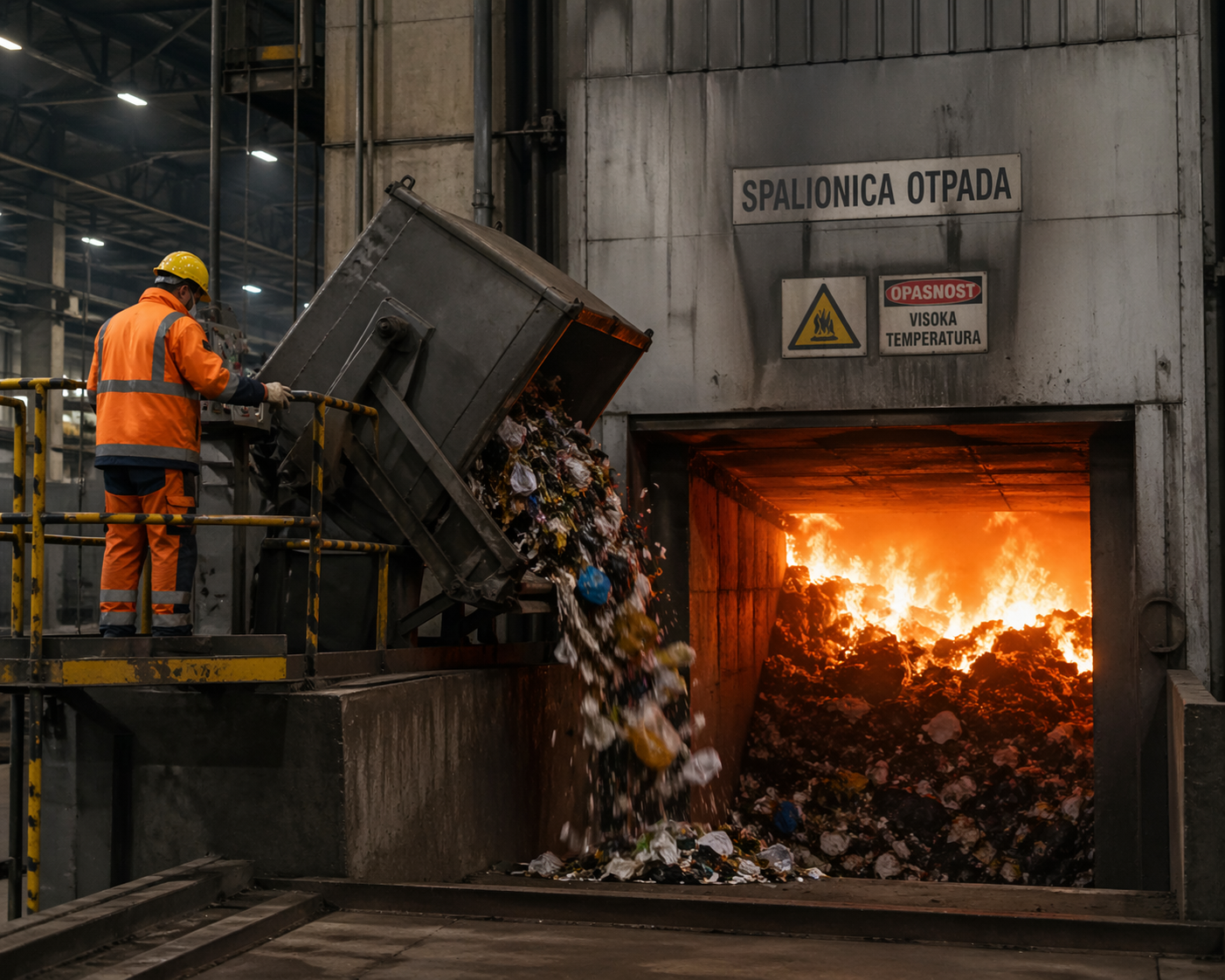
Despite growing evidence that waste incineration is not a solution for the circular economy, governments and utility companies in the Western Balkans are increasingly turning to the construction of waste incineration plants and the use of fuel derived from waste in outdated coal-fired thermal power plants.
However, such projects are technically unviable, environmentally hazardous, financially risky, and inconsistent with European Union policies and legislation, concludes the new analysis by the CEE Bankwatch Network titled “Waste Incineration Trends in the Western Balkans“.
Incineration is not a circular solution
The author of the analysis, Nataša Kovačević, emphasizes that waste incineration and co-incineration, instead of keeping materials in use, destroy recyclable resources, generate carbon dioxide and other toxic pollutants, as well as large quantities of hazardous ash. This, she points out, undermines decarbonisation, especially considering that auxiliary fossil fuels are needed to maintain combustion, given that oil-based and plastic waste constitute the most caloric fractions.
On the other hand, the EU waste hierarchy places incineration, even with energy recovery, near the very bottom – only above landfilling. New EU directives further limit incentives for such projects, predicting their economic obsolescence as early as 2028.
Toxic contamination – evidence from the EU
The analysis highlights new, independent studies supported by Zero Waste Europe, which documented serious contamination in the vicinity of waste incineration plants in France, the Netherlands, and Spain.
Eggs from backyard poultry in the town of Zubieta, Spain, contained 10 times the amount of dioxins above the EU legal limit, while dioxin levels in moss increased up to 300 times compared to the period before the incinerator started operating. In Harlingen, Netherlands, the presence of PFAS chemicals (so-called forever chemicals) in surface water was 138 times higher than the drinking water threshold. In Paris, soil contamination above EU limits was recorded near several schools and public parks.
This, the analysis states, is the strongest available empirical evidence that even modern waste-to-energy plants, equipped with advanced emission controls, cause long-term cumulative deposition of carcinogenic substances.
Why is the Balkans particularly vulnerable?
According to the analysis, the risks are even greater in the Western Balkans. Air quality is already among the worst in Europe, with PM2.5 particles regularly exceeding both legal limits and World Health Organization recommendations. An additional source of waste and fossil fuel combustion would only worsen the situation, especially in closed basins like Sarajevo, Skopje, Tuzla, and Pljevlja.
Another problem is the lack of hazardous ash landfills – while 26-40 percent of incinerated waste ends up as toxic fly and bottom ash, the region lacks adequate capacities for its disposal. This poses a risk to soil and groundwater, or leads to huge export costs.
The near-total absence of functional environmental inspections and law enforcement is also problematic, increasing the risk of uncontrolled discharge of pollutants into rivers.
Instead of incineration, which destroys resources and pollutes the environment, the author of the report urges the region to urgently focus on waste prevention, improved separate collection, and high-quality recycling, in line with the principles of the circular economy and EU legislation. Without this, waste incineration projects in the Western Balkans pose a risk to citizens’ health, budgets, and the European integration of the countries in the region.
Energy Portal