Newsletter Subscribe
Enter your email address below and subscribe to our newsletter

here are things that cannot be rushed. Their creation requires patience, natural rhythms and time. Plants are among them. For a seed to become a flower, a certain amount of time is needed. It takes soil, water and sunlight, but also someone we often take for granted – bees and other pollinators.
Today, when attention spans are getting shorter and cities are growing larger, it is easy to forget that even the most carefully maintained park, the most beautiful garden or a tree lining a street depends on tiny creatures that tirelessly carry pollen from flower to flower. Bees and other pollinators play a crucial role in food production – according to previous international studies, around three quarters of the world’s leading crops depend to some extent on their work. Yet bees, butterflies and other pollinators are among the species that have faced increasing pressure from urbanisation, habitat loss and climate change in recent decades.
It is no coincidence that the words often attributed to Albert Einstein continue to be quoted, even How an Environmental Initiative Mobilised Children Across Serbia though there is no reliable evidence that he actually said them: “If bees disappeared from the Earth, humanity would have only a few years left to live.” Regardless of the quote’s origin, its message remains clear – pollinators are far more important than they may seem at first glance.
Urban areas with a limited variety of plant species provide a poorer food source for pollinators. Uniformly landscaped parts of cities often bloom for short periods and at the same time. This is where the idea of bringing nectar-producing plants back into cities comes from – not only to make them more beautiful, but also to bring more life back into them.
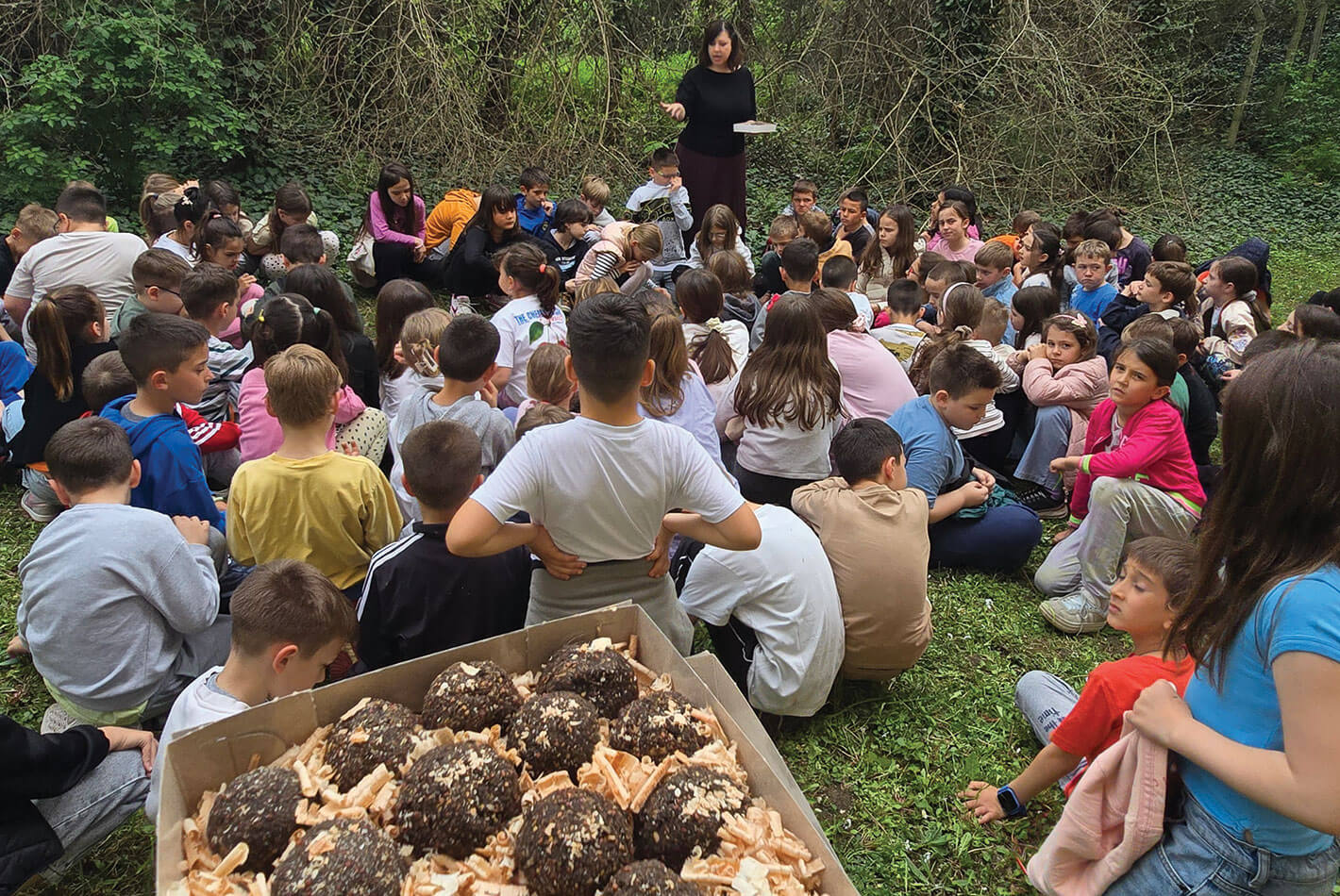
It was precisely the desire to bring the importance of bees and other pollinators closer to people that gave rise to the “Throw Something Beautiful” initiative, launched in early 2026 by the Green Generation association. The idea was to give everyone the opportunity to contribute, through a small gesture, to greening the space where they live and creating new food sources for pollinators.
Instead of large campaigns and complicated instructions, the focus was placed on small balls made from soil and seeds. All it takes is to throw them in a suitable place, gently press them into the ground and let nature do the rest.
– The flower mixture we currently use was carefully developed and includes lavender, mint, oregano and rosemary. Once they reach the soil, they begin to sprout within just a few days, and the germination process soon becomes visible. The first shoots appear after about ten days.
What sets this initiative apart is the fact that it has not remained merely symbolic. The organisers say they receive daily feedback from people who follow the growth of the plants.
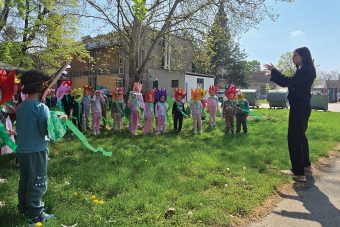
So far, more than 2,000 school and kindergarten groups have participated in the activities, while more than 300 educational and field activities have been organised across Serbia.
– We believe that the greatest success is the sense of community and bringing people and organisations together around a noble goal. The initiative will continue as long as there is interest and a need to further raise awareness of the importance of such initiatives for the well-being of local communities, the Green Generation association says.
However, as the community gathered around the project grew, so did its ambitions. What began with a single seed ball has developed into a much broader vision.
The Green Generation Global Summit has been announced for 2027. The organisers want to develop it into one of the largest regional gatherings dedicated to sustainability, innovation, education and socially responsible initiatives. Unlike many events that focus primarily on diagnosing problems, the aim of this event is to put solutions at the centre of attention.
Written by: Milica Vučković
Read the full article in in Energy portal Magazine CLEAN ENERGY