



Newsletter Subscribe
Enter your email address below and subscribe to our newsletter
Enter your email address below and subscribe to our newsletter


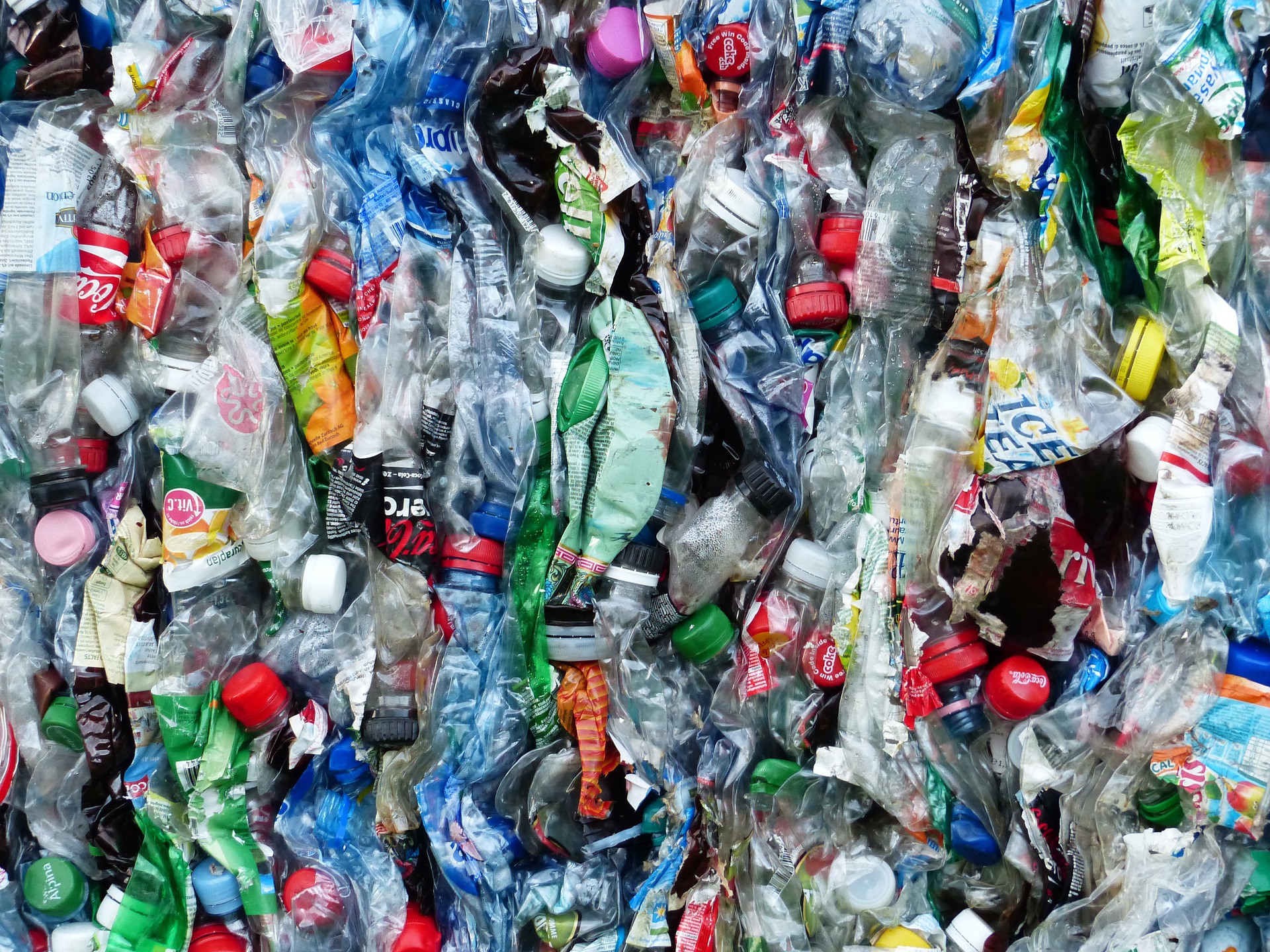
What if a plastic bottle, packaging, or a car part that ends up in a landfill today could one day become a raw material for producing clean hydrogen? New technology developed by researchers from the United States and South Korea shows that such a scenario is not just theoretical.
Plastic is one of the most ubiquitous materials in modern society. We use it for packaging, bottles, bags, car parts, electronic devices, and countless other products. The problem arises when these products reach the end of their lifespan.
Although plastic recycling has been discussed for decades, the reality remains far from ideal. Different types of plastic usually must be separated before processing, which requires additional infrastructure, labor, and energy. As a result, a large portion of plastic waste still ends up in landfills or is incinerated.
According to data cited in the research, only about nine percent of discarded plastic is recycled, while approximately 79 percent ends up in landfills, and roughly 12 percent is incinerated.
But what if we didn’t have to sort plastic first?
Three Types of Plastic – One Reactor
This is precisely one of the most intriguing questions tackled by researchers from the UCLA Samueli School of Engineering and Ewha Womans University in South Korea.
They believe that a mixture of three very common types of plastic – PET, PE, and PP – could be processed together without prior separation, with the outcome being hydrogen with a purity exceeding 90 percent.
The researchers used a process known as alkaline thermal treatment, or ATT. The method was originally developed for producing hydrogen from biomass, such as seaweed. However, the scientists adapted it to break down plastic waste.
In the process, sodium hydroxide reacts with organic material at elevated temperatures, triggering chemical reactions that produce hydrogen.
PET proved relatively suitable for this treatment. However, PE and PP posed a greater challenge. These plastics are chemically highly resistant, so they required prior “activation.”
That is why the researchers introduced an additional step – thermal oxidation.

The plastic is briefly heated in the presence of air, during which oxygen-containing groups form on the long polymer chains. These allow the subsequent alkaline treatment to break down the material much more easily.
In other words, the scientists found a way to make plastics that are otherwise highly resistant to chemical reactions more “ready” for degradation.
Hydrogen Is Not the Only Product
Perhaps an even more interesting part of this process is what happens to the carbon. When plastic is broken down, its carbon must end up somewhere. In conventional gasification, which operates at very high temperatures, part of the carbon can end up as carbon dioxide.
With the new method, the idea is different – during the reaction, sodium hydroxide binds the carbon and converts it into sodium carbonate, thereby preventing its release into the atmosphere in the form of carbon dioxide.
According to the research results, more than 75 percent of the carbon originally contained in the plastic ended up in stable carbonate compounds or liquid organic residues. Less than 13 percent entered the gas phase, while direct release into the atmosphere was negligible.
The sodium carbonate can then be converted into calcium carbonate, a stable mineral in which carbon can be stored long-term.
Thus, the process attempts to address two problems simultaneously: to produce a useful raw material from plastic waste and to prevent part of its carbon from ending up in the atmosphere.
Another advantage highlighted by the researchers relates to temperature.
Traditional gasification requires very high temperatures and can therefore be energy-intensive. The new method operates at temperatures that, according to the study results, are about 300 to 400 degrees Celsius lower than those used in classical steam gasification.
This does not automatically mean that the entire process is energy-neutral or that it will be cheap when scaled up to industrial levels. Nevertheless, the lower operating temperature opens up the possibility of reducing the energy requirements of the process.
And that is precisely one of the key challenges when we talk about technologies that should be part of a circular economy – it is not enough for something to work technically. It must also be energy- and economically viable.
If this technology proved economically sustainable on an industrial scale, it could be attractive for facilities that simultaneously want to reduce plastic waste and produce hydrogen.
Milena Maglovski