

Newsletter Subscribe
Enter your email address below and subscribe to our newsletter


Wildfires are becoming larger, more frequent and more intense, and their impact does not end where the flames stop. Smoke can travel hundreds of kilometres and continue to affect air quality for days or even weeks after a fire.
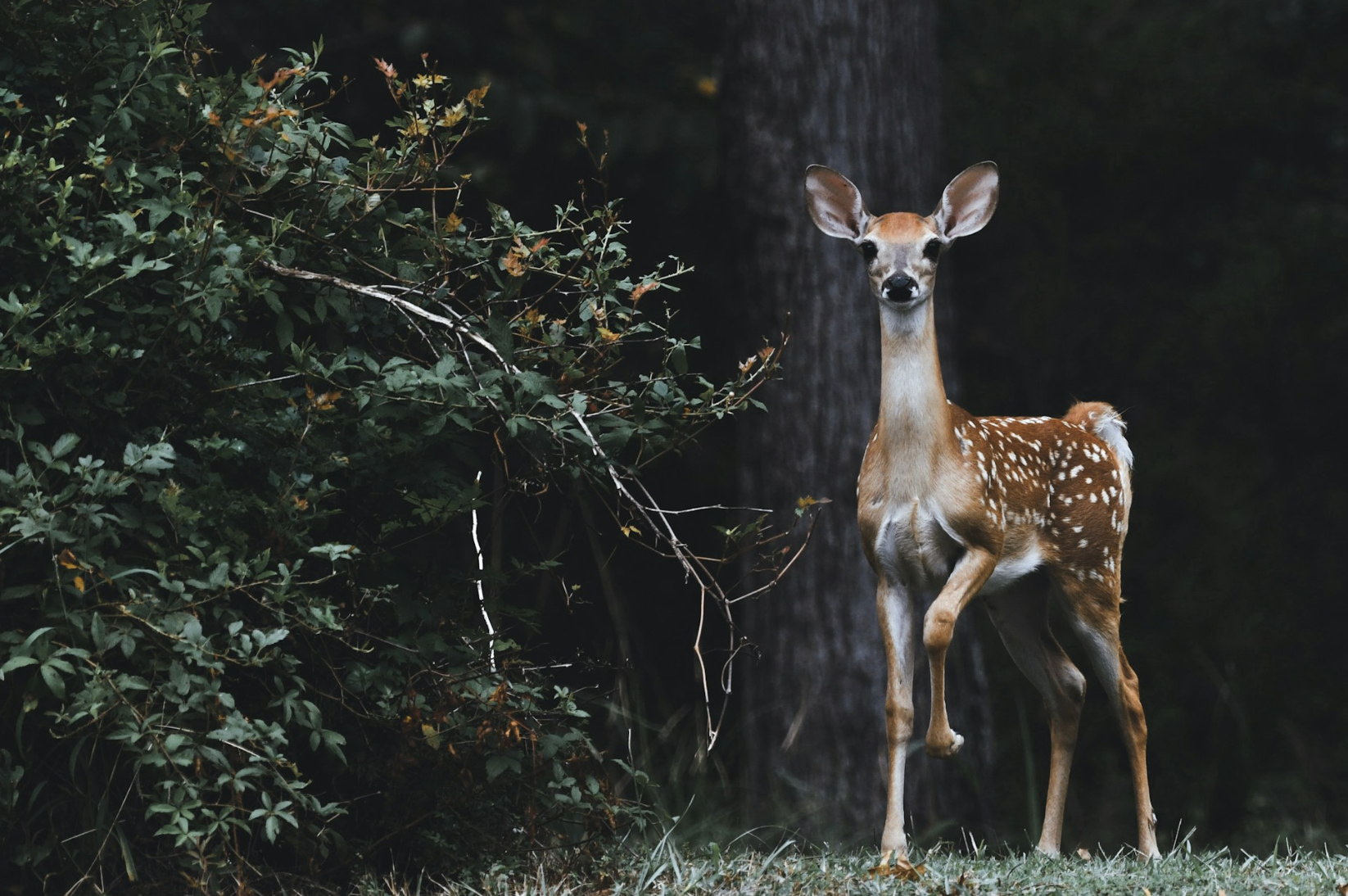
While the impact of wildfire smoke on people is increasingly being monitored, much less is known about how much smoke wild animals are exposed to. One reason is simple – air quality monitoring stations are generally not located in the remote areas where wildlife lives and moves.
Researchers at Colorado State University have therefore developed a small device that can be attached directly to an animal’s GPS collar to measure the concentration of fine particles in the air around it.
The device, called a “smoke logger”, uses an optical sensor to measure PM2.5 – fine particles up to 2.5 micrometres in diameter. It records measurements at regular intervals, together with the time of measurement, allowing the data to be linked to the animal’s location and movements.
In the study, the sensor was active for 30 seconds every 30 minutes before switching to a low-power mode. The version designed for animals also uses battery and solar power, while the sensor itself weighs only around 26 grams, helping to minimise the load on the animal.
In other words, an animal can effectively carry its own small air quality monitoring device while moving through its habitat.
The same system can also be deployed as a stationary sensor in a specific area to monitor air quality where animals live and move.
One of the most interesting findings of the study was just how large local differences in smoke concentrations can be.
During one deployment in Utah, the nearest regional monitoring station was about 20 kilometres away. Measurements from the sensor attached to the animal’s GPS collar differed from those recorded by the station by an entire order of magnitude. In other words, data from the nearest monitoring station did not necessarily show how much pollution the animal itself was exposed to.
A similar result was observed in Colorado. Sensors placed outdoors recorded a distinct local increase in PM2.5 that lasted around two hours. However, data from nearby monitoring stations differed from the sensor measurements, both in the timing of the increase and in the PM2.5 levels recorded.
Even though some of the stations were only a few kilometres away, the differences were large enough to show how much air quality can change over a relatively small area.
This device is not important only for measuring air pollution. It also allows scientists to answer questions they previously could not address precisely. Does an animal change its direction of movement when it encounters heavy smoke? Does it retreat to certain parts of its habitat? Does it reduce its activity? Does it choose areas where smoke exposure is lower?
In the study, sensors were attached to GPS collars worn by mule deer (Odocoileus hemionus), and the results showed that PM2.5 concentrations varied depending on the animals’ proximity to roads. This demonstrates that the device can detect smaller changes in air quality as an animal moves through different areas, rather than only recording major pollution peaks.
Another interesting possibility offered by these devices is the identification of so-called “smoke refugia”. By combining data on animal movements with PM2.5 concentrations, researchers can determine which parts of a habitat have lower smoke exposure. Such areas could be important for wildlife because they provide places where animals can move away from polluted air.
The authors note that the open-source design of the device could eventually be adapted to monitor other pollutants and microclimate conditions, such as temperature and humidity. For now, the “smoke logger” is primarily a tool for studying exposure to smoke and PM2.5.
But its greatest value may be that it allows scientists to observe environmental conditions from the animal’s own perspective – at the place, time and conditions in which it actually lives.
Katarina Vuinac