


Newsletter Subscribe
Enter your email address below and subscribe to our newsletter

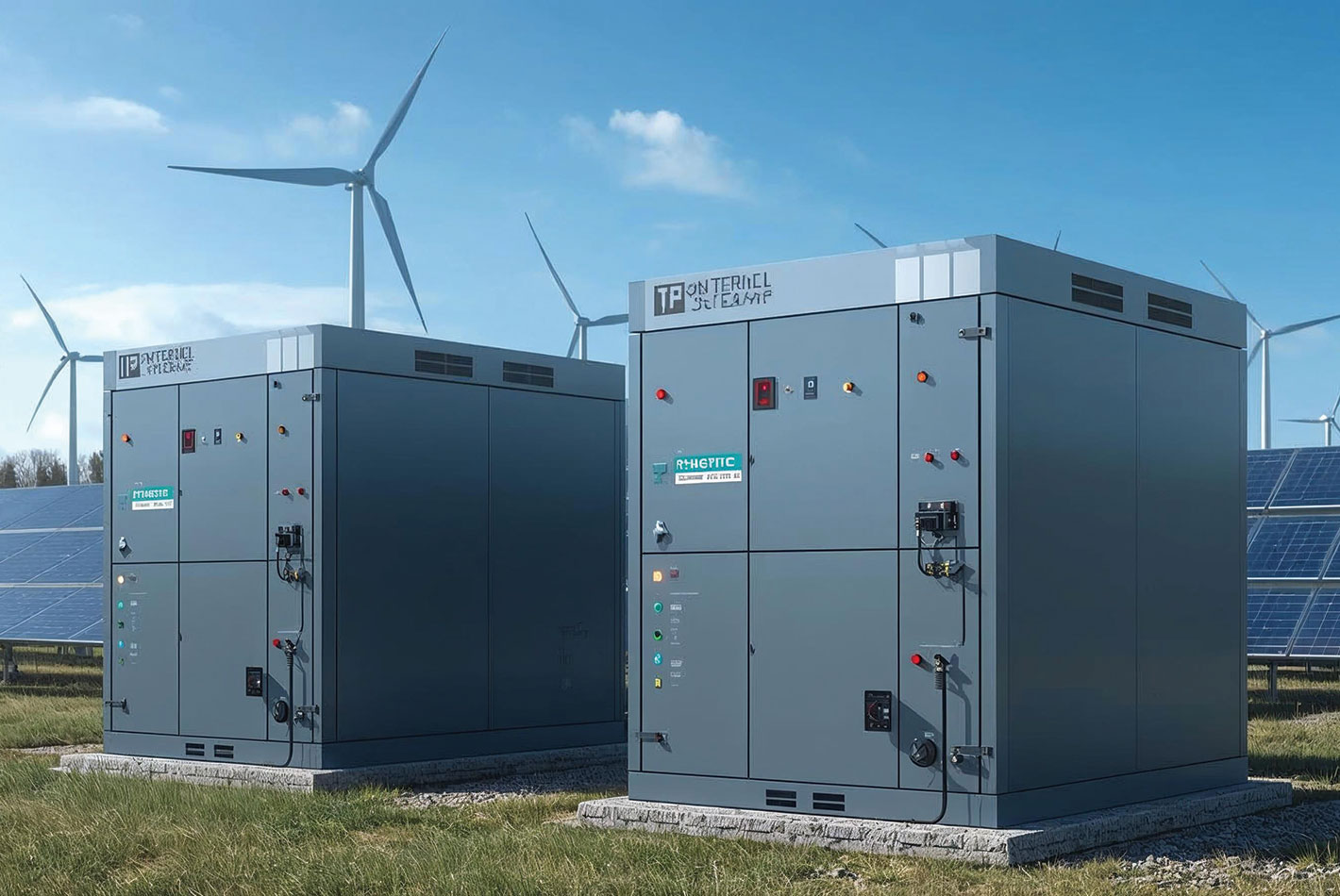
Europe is rapidly shifting toward renewable energy sources. Still, along this path, one question is becoming increasingly critical: How to ensure power system stability in a world where the sun does not always shine, and the wind does not blow consistently? The answer is increasingly found in battery energy storage systems (BESS), which are becoming a central pillar of the energy transition. These systems not only enable more efficient use of energy generated by solar and wind power plants but also provide grid flexibility, enhance security of supply, and reduce dependence on fossil fuels. Without the strong development of battery storage, further growth of renewable energy would be significantly constrained.
Over the past twenty years, since SolarPower Europe began tracking the market, battery energy storage systems in the European Union have been setting continuous records. In 2025, the EU installed 27.1 GWh of new capacity. Germany and Italy maintained their leading positions, while Bulgaria emerged as the fastest-growing market. The Netherlands and Spain ranked fourth and fifth, respectively. The threshold for entering the top tier has risen significantly—reaching one gigawatt-hour is no longer sufficient; instead, the connection of substantial volumes of grid-scale batteries is required, according to the latest report published by SolarPower Europe, EU Battery Storage Market Review 2025.
In March 2025, the European Commission adopted a list of 47 strategic projects to strengthen European raw material value chains and diversify supply sources, in line with the Critical Raw Materials Act (CRMA). The targets set for 2030 stipulate that European extraction, processing, and recycling of strategic raw materials should meet 10 percent, 40 percent, and 25 percent of EU demand, respectively. Of the total number of projects, 70 percent are focused on battery-related raw materials.
The European Union remains heavily dependent on global markets for the supply of metals required for battery cell production. According to European Commission data, in 2023, the EU imported nearly 80 percent of its primary battery raw materials and more than 60 percent of processed materials. When it comes to refined lithium—the key chemical component of all batteries—this dependence is complete.
By the end of 2025, Europe had a total annual battery cell manufacturing capacity of 252 GWh, of which 80 percent was dedicated to electric vehicles. From just 1 GWh in 2017, battery cell production in Europe has grown to over 250 GWh today, supported by approximately €33 billion in investments in battery factories. However, many manufacturers are postponing or cancelling expansion plans due to uncertainty around future profitability. Production costs in Europe remain approximately 50 percent higher than in China, and the supply chain ecosystem remains relatively weak.
Most manufacturers continue to import battery cells from Asia and perform only final assembly in Europe, although some use domestically produced cells or rely on strategic partnerships. Only 16 percent of European manufacturers specialize in BESS, whereas some startups are extending the lifecycle of electric vehicle batteries through second-life applications.
As noted in the report, Germany has the largest number of battery system manufacturers in Europe, with 43 active companies, followed by Poland and Hungary. In contrast, the remaining manufacturers are spread across an additional 20 countries. From an estimated 10 active companies in 2010, battery system production in Europe has increased eightfold over the past 16 years.
Forecasts indicate that 2026 will bring further accelerated growth, as existing development plans include nearly 13 GW of new capacity—approximately 50 percent more than the additions recorded in 2025. Growth is also expected to expand into emerging markets in Eastern and Southern Europe, as these regions develop supportive regulatory frameworks and increasingly benefit from favorable market conditions. Bulgaria, Romania, Greece, and Hungary stand out as emerging markets in Southeast Europe, with strong growth anticipated in the coming period.
Prepared by Katarina Vuinac
The story was published in Energy portal Magazine DIGITALIZATION