
Newsletter Subscribe
Enter your email address below and subscribe to our newsletter


This year, ABB marks the 50th anniversary of the introduction of its first low-voltage variable speed drive (VSD), an invention that fundamentally changed the way industry uses electrical energy. Although it remains largely unnoticed by the general public, this device lies at the very foundation of modern industry—across water and wastewater management, food production, transportation, data centers, and renewable energy facilities. It helps systems operate more reliably and efficiently, with a significantly reduced environmental footprint.
Back in the mid-1970s, Finnish engineer Martti Harmoinen developed a concept that would become an industry standard: enabling an induction motor to operate more efficiently, precisely, and reliably through electronic speed control. The first model, SAMI A, was installed in 1975 at a sawmill and at the Loviisa nuclear power plant in Finland, marking the beginning of a technological revolution. Over the following decades, ABB continuously refined this technology—from advances in power electronics and the introduction of IGBT transistors to process digitalization, automated testing, and the development of software functionalities that today form the backbone of modern variable-speed drives.
Today, variable speed drives are complex digital systems that integrate hardware, software, telemetry, and advanced analytics, enabling remote diagnostics, motor performance optimization, and predictive maintenance. Engineers who worked on their development several decades ago recall a time when tests were recorded manually, measurements were performed with analog instruments, and simulations were virtually nonexistent. Today’s generation of engineers operates in a completely different environment—modern processors, digital algorithms, and cloud services have transformed the drive into a key enabler of industrial energy efficiency.
Part of this story has also been shaped in Serbia. Jovan Miladinović, Service Sales Manager at ABB Belgrade, recalls his early career: “I joined ABB in 2002, and that was my first encounter with variable speed drives, as I did not have the opportunity to learn about them at university—unlike today’s generation of students, who are introduced to this type of equipment already during their studies. In my case, it was more challenging, as I had to relearn and adopt something entirely new.”
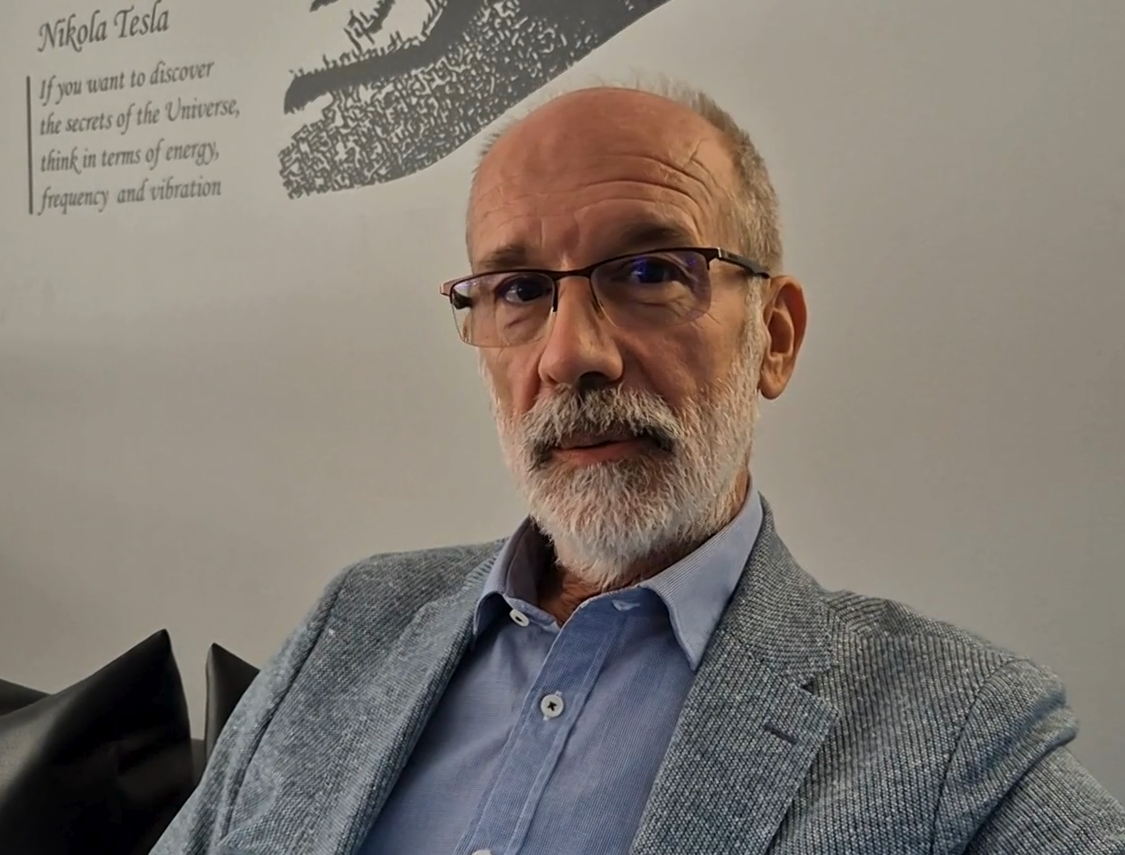
At the time he joined ABB, the ACS600 generation of drives was in use, and already the following year, the new ACS800 drives were introduced, quickly finding their place in large-scale projects within Elektroprivreda Srbije (EPS), particularly in Kolubara and Kostolac.
“One of the most significant projects at that time was the BTO system project in Kostolac, which we implemented together with Goša FOM. It was an extremely important project for us and paved the way for the later establishment of a service team here in Belgrade,” he explains.
At that time, variable-speed control represented a radical change for mining machinery: reliability was increased, equipment wear was reduced, and more efficient process control was enabled. Miladinović highlights two individuals who had a decisive influence on the development of the Serbian market: Miko Heikkilä, who enabled training programs and factory visits in Helsinki, and Pekka Tiitinen, who encouraged the establishment of a local service organization in Serbia. “Thanks to him, we received support for training our personnel and equipping the service center, which was of great importance for our customers,” Jovan says.
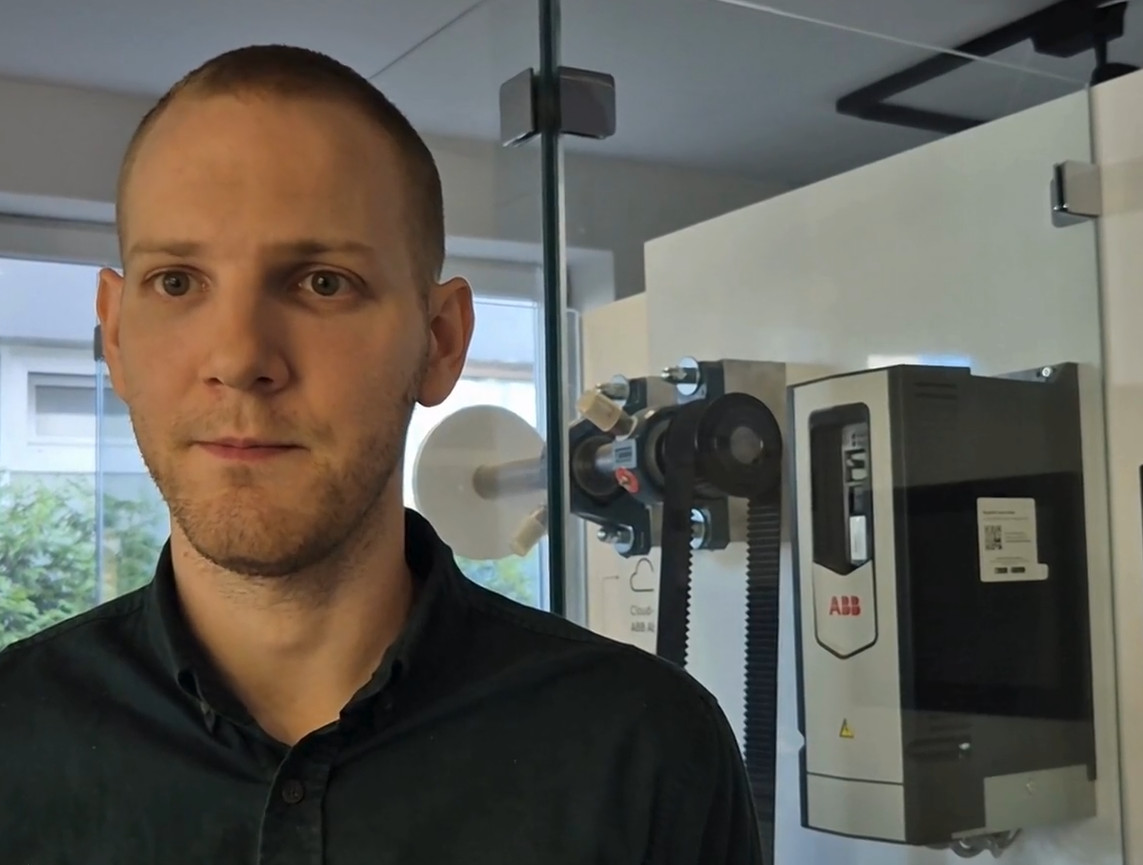
A new generation of professionals also offers its perspective on the development of the technology. Stefan Pavlović, Application Sales Engineer, belongs to a generation that encountered ABB drives already during university studies. “My first encounter with variable speed drives was in my third year, when I started attending courses in Electric Drives. Already at university, I had hands-on experience with ABB drives through laboratory exercises, as well as the opportunity to attend lectures where variable speed drives were thoroughly covered.”
His message clearly reflects the evolution of the technology: “A variable speed drive is no longer just a device used to control motor speed. Drive technology has advanced significantly, especially in software. Today, a drive can automate an entire machine without the use of a PLC, or a service center on another continent can resolve an issue remotely.”
He also points to the environmental aspect: “It is estimated that less than a quarter of electric motors are paired with drives, which means there is enormous potential for energy savings through the wider application of this technology.”
Stefan concludes that the common thread throughout all 50 years has remained the same: continuous innovation, with ABB as its driving force.
The environmental impact of variable speed drives today is greater than ever. Electric motors account for around 70 percent of industrial electricity consumption, so any improvement in their control results in significant energy savings and directly contributes to reducing CO₂ emissions. ABB’s analyses of more than 2,000 industrial motors show that switching to variable speed control delivers an average energy saving of 31 percent. At one of the world’s most renowned scientific institutions, CERN, an analysis of 800 motors identified a potential 17.4 percent reduction in energy consumption. These results confirm that variable-speed drives are not only a more efficient way to control motors—they are also among the most widespread and practical decarbonization technologies worldwide.
Today, as industries worldwide transition toward more sustainable business models, ABB continues to combine tradition and innovation, technology and people, local experience and global expertise. Variable speed drives are not merely equipment—they represent a technological legacy, an energy strategy, and a human story that has lasted for half a century. In line with ABB’s vision, the anniversary of variable-speed drives is best captured by the slogan Engineered to Outrun, as it is precisely the combination of reliable technology and human expertise that continues to push boundaries, exceed expectations, and enable the industry to be more efficient and sustainable than ever before.
ABB d.o.o. Beograd
stefan.pavlovic@rs.abb.com
The story was published in Energy portal Magazine RESPONSIBLE BUSINNES