
Newsletter Subscribe
Enter your email address below and subscribe to our newsletter

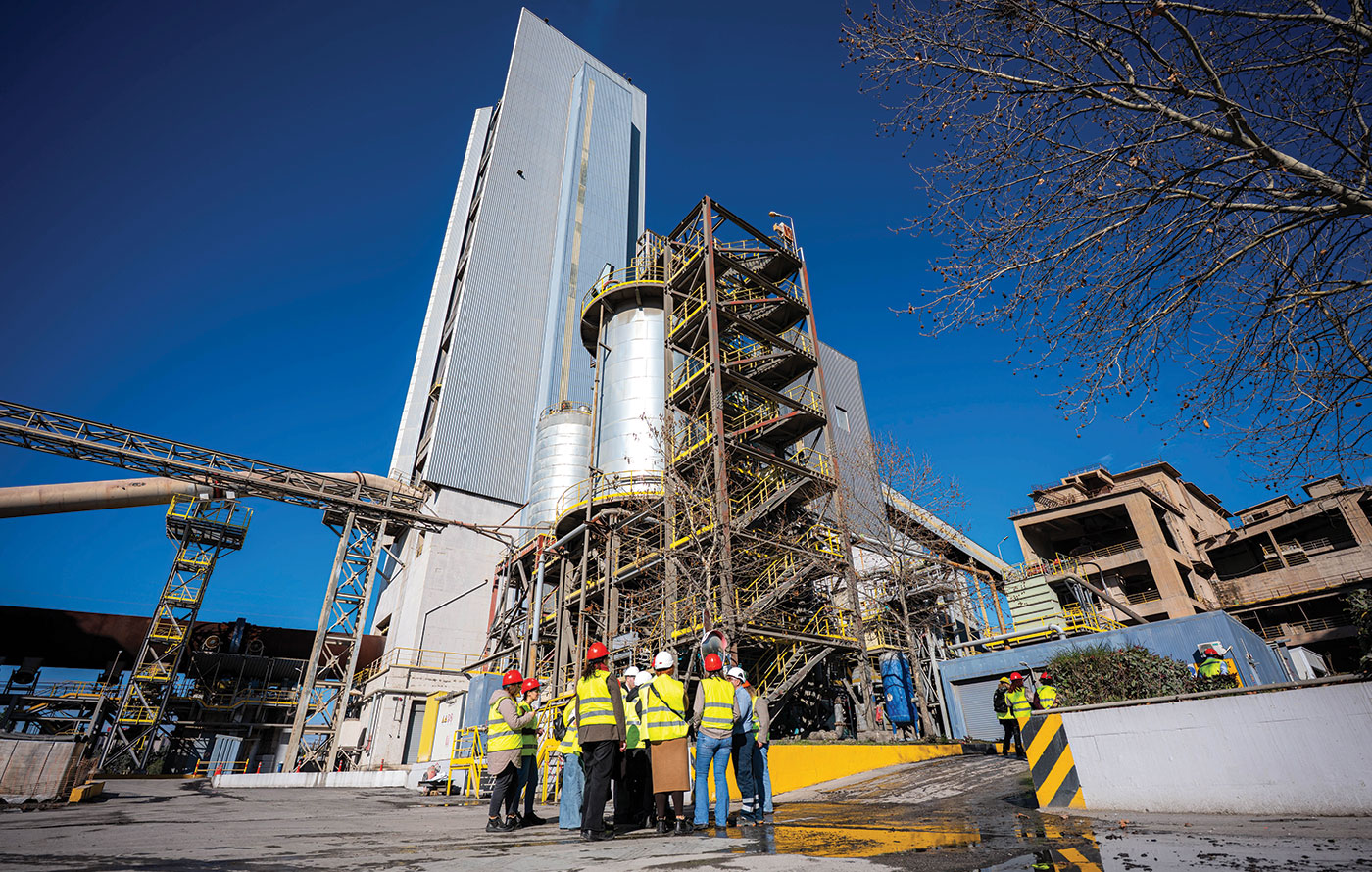
At a time when European industry is rapidly transforming under the pressure of decarbonization and the transition to clean energy sources, energy-intensive sectors increasingly recognize that the use of alternative fuels is not only desirable but essential. The cement industry, one of the most energy-intensive industrial sectors, stands at the heart of the sustainable transition, as every ton of clinker produced entails significant energy consumption. The use of waste-derived fuels enables the industry to reduce its reliance on fossil resources, enhance energy security, and drastically cut greenhouse gas emissions. This practice has become standard within the European Union – the average share of alternative fuels in the cement industry reaches 46.5 percent, confirming that this approach has long been part of best available techniques and a key driver of sector decarbonization.
It is precisely in this area that Titan Group demonstrates the full strength of its industrial leadership and strategic vision.
Titan Group is an international company with more than a century of experience in the production of cement and construction materials. Today, it operates in 25 countries worldwide, manages cement plants in 10 countries, and employs more than 6,000 people. With an annual production capacity of approximately 27 million tons of cement and related materials, the company meets the needs of local markets and global partners while remaining committed to the highest standards of quality and sustainability.
Its activities encompass the entire value chain – from the production of clinker, cement, and concrete, to aggregates and mortars, as well as the transport and distribution of construction products. By utilizing natural raw materials and introducing innovations into its production processes, the Group provides reliable construction materials that contribute to safe housing, high-quality infrastructure, and long-term societal value.
The company is an active participant in global sustainability initiatives and is committed to the United Nations 2030 Agenda. Its membership in the UN Global Compact initiative, the Global Cement and Concrete Association (GCCA), and CSR Europe confirms its dedication to responsible business practices, transparency, and the continuous improvement of environmental protection standards.
The cement production sector, together with the energy and transport sectors, has a significant impact on greenhouse gas emissions. Titan Group began addressing these challenges as early as the early 2000s, initially through active participation in the Cement Sustainability Initiative (CSI), and subsequently by adopting its own Climate Change Strategy in 2006. This strategy focuses on increasing energy efficiency, developing cement with lower clinker content, and, in particular, on the use of waste-derived alternative fuels through co-processing.
Alternative fuels, such as SRF (Solid Recovered Fuel) and RDF (Refuse-Derived Fuel), are produced by treating the non-recyclable fraction of municipal, commercial, and industrial waste that would otherwise end up in landfills. Their composition includes paper, plastics, textiles, and small quantities of wood—materials that possess significant calorific value but are not suitable for further recycling. By introducing these fuels into the clinker production process, Titan Group simultaneously replaces fossil fuels and enables the most efficient use of valuable energy and material resources from waste.
Prepared by Milena Maglovski
The story was published in Energy portal Magazine DIGITALIZATION