Newsletter Subscribe
Enter your email address below and subscribe to our newsletter


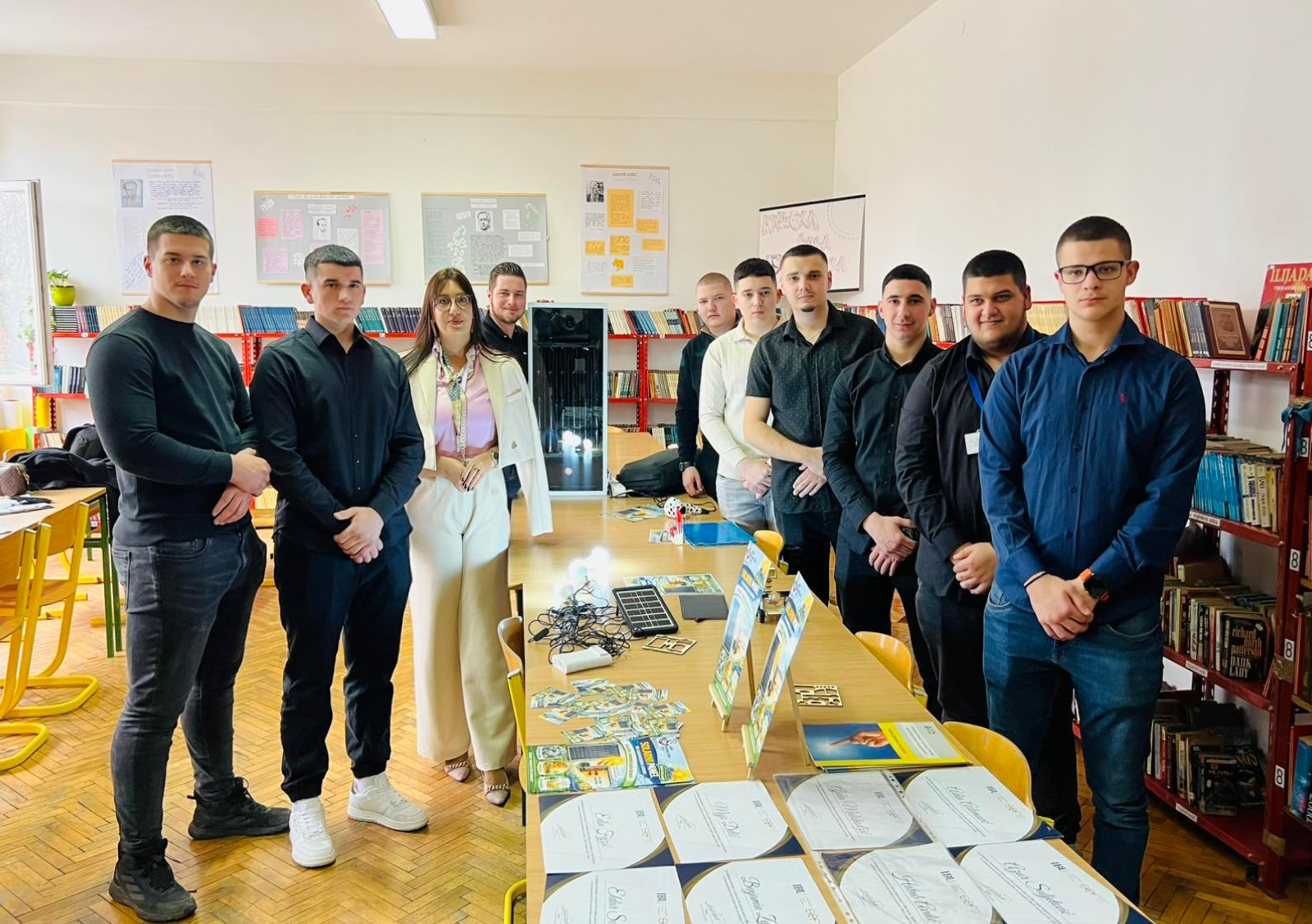
How waste can be smartly utilized with a bit of creativity is demonstrated by the students of the Mechanical School in Tuzla. Through the school section Youth for Clean Energy, which was established relatively recently, they are developing ideas and solutions that reduce environmental pollution.
Their first project, a solar panel made from cans, has already attracted wider public attention, and how it all began was explained to us by Professor Muamera Hasančević.
– We came up with the idea for this project through real problems we faced in our school. During the cleaning of the schoolyard around the Mechanical School in Tuzla, as well as the area near the bridge on the Jala River, we noticed a major issue with littering, especially cans. In October, due to a pipe burst, the school was left without heating, which significantly made it more difficult for students and teachers to stay and work. It was precisely then that we began thinking about alternative and affordable solutions for heating spaces – says Hasančević.
Their goal was to design a solution that requires minimal investment while delivering concrete results. This led to the idea of creating a simple solar heating system using recycled materials and resources. They emphasize that such solutions can be accessible to everyone, regardless of financial means or whether someone lives in a rural or urban area.
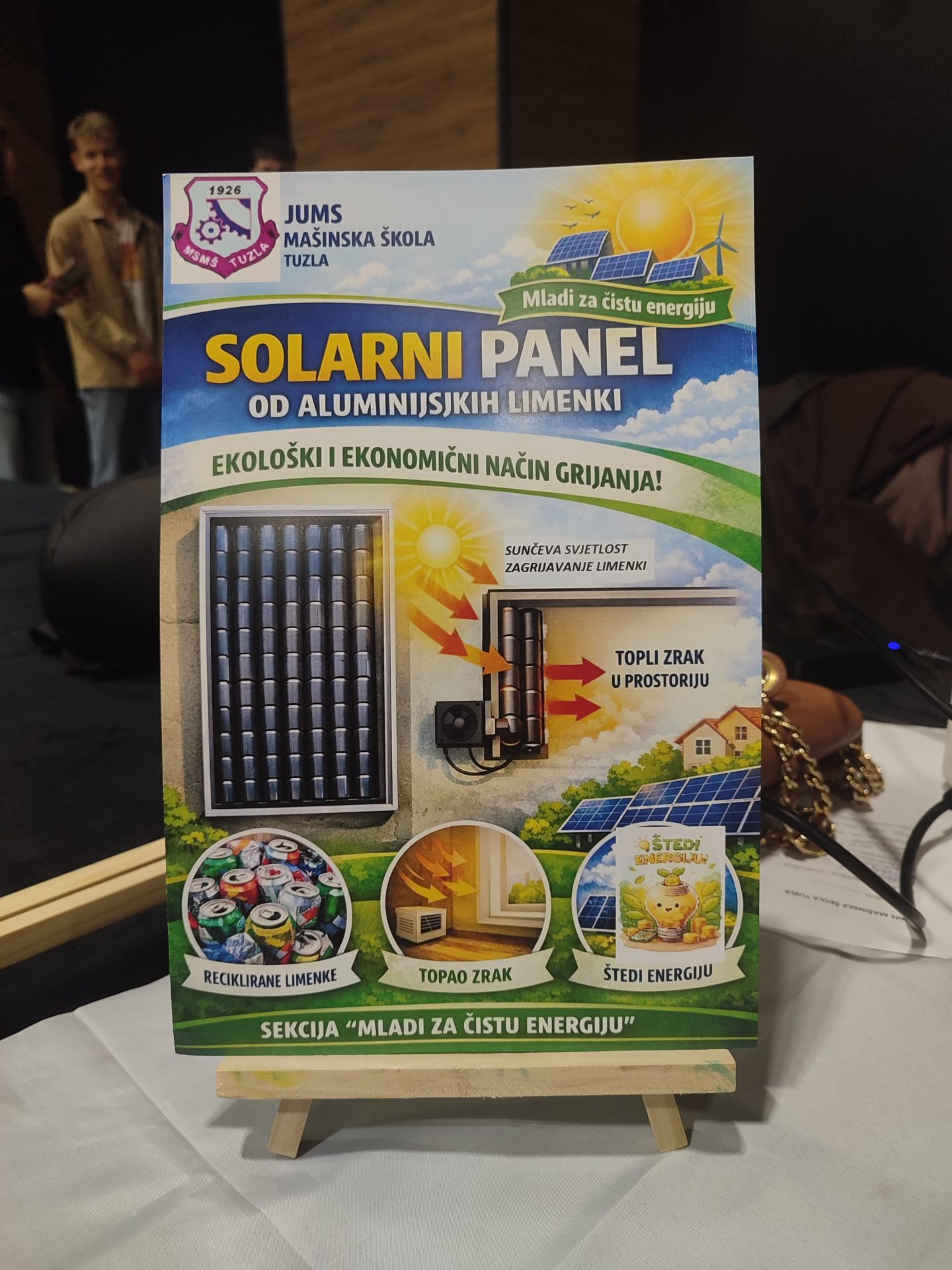
A solar panel made from cans can be used to heat air in smaller spaces such as classrooms, workshops, greenhouses, and garages.
The panel is made from simple and easily available materials, which was one of the main goals of the project – to achieve maximum effect with minimal investment. A wooden structure was used as the base – OSB boards and laminated boards (frame), while the main elements of the panel were aluminum cans, which were previously cleaned, cut, and connected in rows to allow airflow and improve heat transfer, with thermal insulation on the back side.
The interior of the panel is lined with a dark (black) material to better absorb solar energy, while the front side is covered with a transparent material (plexiglass or glass) to retain heat inside the panel and create a greenhouse effect. In addition, openings for air intake and outlet were added to enable the circulation of warm air.
A fan is installed at the top of the panel, with the role of extracting (removing) warm air from the panel. In this way, the fan creates continuous airflow: it draws in cold air from below, heats it inside the panel, and expels warm air into the space being heated.
Hasančević emphasizes that this arrangement of the fan further improves efficiency by preventing warm air from accumulating inside the panel, enabling constant circulation, and accelerating the heating of the space.
She adds that the fan can be powered by electricity or a small solar panel, making the system energy-efficient and environmentally friendly.
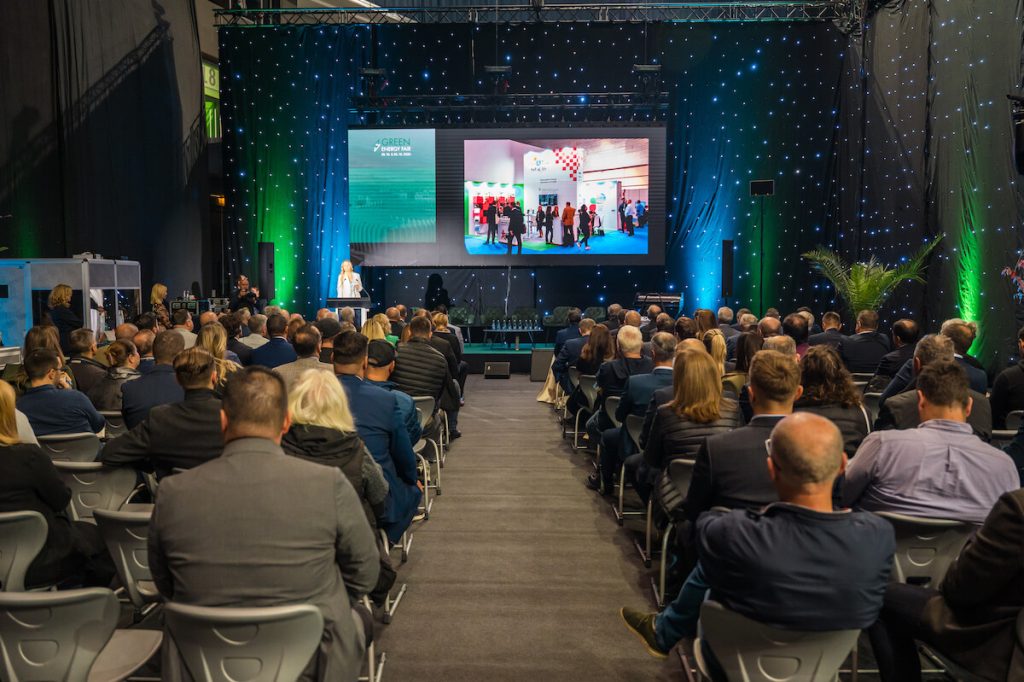
At the Sarajevo Energy Forum, their project was declared one of the best in Bosnia and Herzegovina, representing significant recognition and confirmation of the quality of their work. One of their plans is to launch and develop the Tuzla Energy Forum, an event that would bring together experts, young innovators, companies, and institutions to actively engage all stakeholders in developing sustainable energy solutions.
When it comes to the work of the Youth for Clean Energy section, the Mechanical School Tuzla plans to strengthen it through activities in both urban and rural areas.
– Our focus is to involve as wide a range of people as possible – regardless of education or place of residence – and through simple and accessible solutions enable the use of renewable energy sources with minimal financial investment. In the future, we aim to develop educational programs, workshops, and practical projects that will have a direct impact on the community and contribute to creating an energy-sustainable and environmentally responsible environment, says Hasančević.
Although the section is among the first in Bosnia and Herzegovina to work with young people in this way, it has already gained recognition across the country. So far, among other things, they have developed small solar-powered cars that use solar energy for movement, projects utilizing the power of water (producing electricity using propellers), and experiments with wind energy.
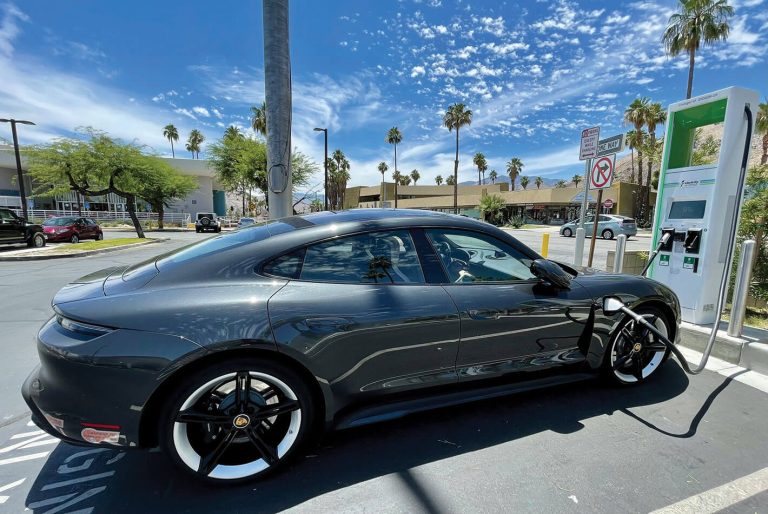
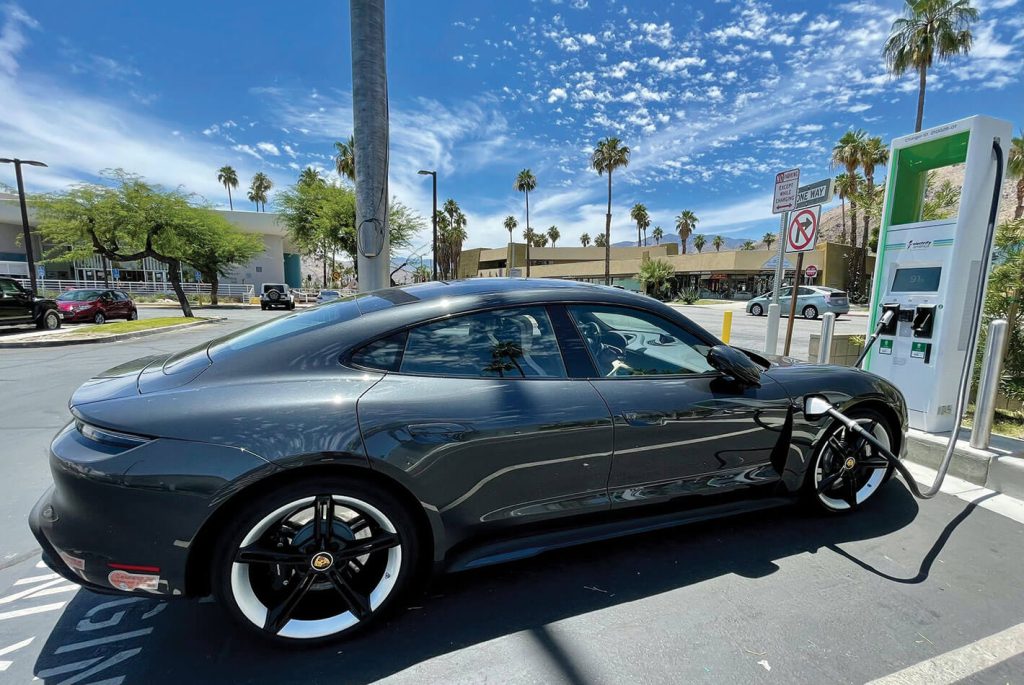
They are currently working on developing a system for charging electric vehicles in the schoolyard, which will use renewable energy sources, and which represents their most significant project. The goal is to demonstrate that even small communities, such as schools, can take concrete steps toward a sustainable future.
Through their activities, they strive to bring clean energy closer to everyone using practical, simple solutions and ideas.
Prepared by Jasna Dragojević
The story was published in Energy portal Magazine ECOMOBILITY