
Newsletter Subscribe
Enter your email address below and subscribe to our newsletter


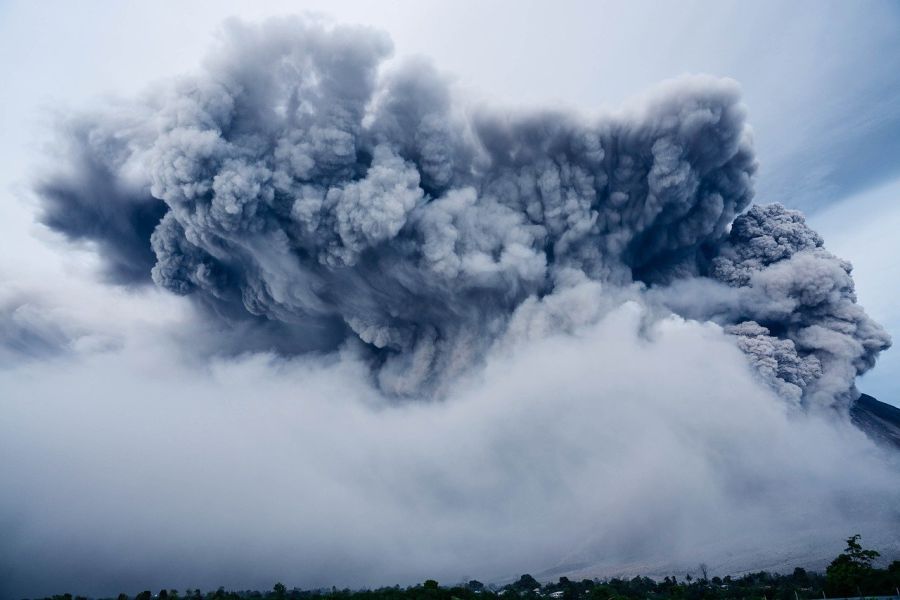
When the underwater volcano Hunga Tonga-Hunga Ha’apai erupted in the South Pacific on 15 January 2022, it released enormous amounts of volcanic ash, seawater and gases into the atmosphere. The eruption was one of the most powerful volcanic events of the modern era.
However, scientists found something unexpected in the plume that formed above the volcano: while the eruption was releasing large amounts of methane into the atmosphere, the same plume was simultaneously accelerating its breakdown.
The clue that led them to this conclusion was formaldehyde. It is produced during the chemical breakdown of methane and remains in the atmosphere for only a few hours. Therefore, an unusually high concentration of formaldehyde indicates that methane is actively being broken down within the plume.
“When we analysed the satellite observations, we were surprised to see a plume with a record-high concentration of formaldehyde,” said Maarten van Herpen, the study’s lead author. The researchers tracked the plume for ten days, all the way to South America, showing that the breakdown of methane continued throughout that period.
How did the volcanic plume “clean” methane?
According to the scientists, the key was an unusual combination of volcanic ash, sea salt and sunlight.
Because Hunga Tonga erupted beneath the ocean, a large amount of saltwater entered the atmosphere together with volcanic particles. Some of this material reached the stratosphere.
Sunlight then triggered chemical reactions on the particles within the plume, producing highly reactive chlorine compounds. These could react with methane molecules and accelerate their breakdown. The researchers believe that this process was responsible for the unusually large amounts of formaldehyde detected from space.
Formaldehyde is a toxic substance and, at sufficiently high concentrations, can irritate the eyes and respiratory system, while long-term exposure is associated with serious health risks. However, in the case of Hunga Tonga, its significance lies primarily in the fact that it serves as a chemical tracer showing that methane was actively being broken down.
Why is methane so important?
Methane is the second most important greenhouse gas associated with human activities after carbon dioxide, but it differs from CO₂ in how strongly it affects the climate over shorter time periods.
Its atmospheric lifetime is roughly a decade, while the main natural mechanism for removing it from the atmosphere is oxidation, primarily through reactions with OH radicals. The IPCC estimates the chemical lifetime of methane in the troposphere at around 11.2 ± 1.3 years.
This is why reducing methane emissions can have a relatively rapid climate effect. Unlike CO₂, part of which can remain climatically relevant for a very long time, reductions in methane emissions can affect atmospheric concentrations over a much shorter period.
Its strong greenhouse effect further explains why methane is so important. The global warming potential depends on the time horizon and methodology used, but the IPCC shows that methane is many times more potent than CO₂, particularly when assessed over a shorter period.
This is why methane is increasingly viewed as one of the levers for slowing warming over the coming decades.
But one point should not be overlooked: accelerated methane removal is not a substitute for reducing CO₂ emissions. Long-term climate stabilisation still depends on reducing the accumulation of carbon dioxide in the atmosphere.
A new detail in the “methane budget”
When climate scientists talk about the global methane budget, they are essentially trying to create a form of atmospheric accounting.
On one side are the sources: wetlands, agriculture, livestock, fossil fuel extraction and use, landfills and other natural and human-related sources. On the other are the processes that remove methane from the atmosphere.
Until now, these calculations have largely focused on well-known chemical and biological processes. The new research suggests that mineral particles in the atmosphere may play a greater role than previously assumed, at least under certain conditions.
This does not mean that volcanic ash is some hidden climate technology. Volcanic eruptions are rare and unpredictable, and they can have a range of opposing effects on the climate. But from the perspective of atmospheric chemistry, the discovery is valuable precisely because it shows that not all of the pathways through which methane is broken down are yet fully understood.
Milena Maglovski