



Montenegro’s Energy Sector on the Path to EU Accession: Progress in Energy Networks and Renewables, but Faster Phase-Out of Fossil Fuels Needed
Share
The European Commission has published its 2026 Report on Montenegro, providing a detailed overview of developments in key infrastructure sectors, including energy and trans-European networks.
In the area of security of supply, Montenegro has made significant progress in establishing a system of mandatory oil reserves. This was supported in particular by the adoption of an emergency plan for responding to disruptions in the supply of petroleum products. Current oil reserves are equivalent to approximately 35 days of consumption.
Important steps have also been taken towards aligning legislation in the electricity sector, primarily through the adoption of the Law on Cross-Border Exchange of Electricity and Natural Gas in January 2026. However, the risk preparedness plan is still pending, while the establishment of a functioning natural gas market remains one of the main outstanding challenges.
As regards the internal energy market, Montenegro has taken a step towards full alignment with European rules by adopting a new legislative framework. The day-ahead electricity market is already operational, while the launch of the intraday market is still pending. Progress has also been made in regional cooperation, particularly through the involvement of the Montenegrin and Italian transmission system operators in regional capacity calculation.
Although the electricity retail market has been formally liberalised and Montenegro has seven licensed suppliers, EPCG continues to supply the entire retail market, indicating that competition has yet to develop in practice.
In the hydrocarbons sector, Montenegro has continued to align its legislation with the EU acquis. Following the adoption of the Law on Safety Measures in Offshore Hydrocarbon Exploration and Production, the accompanying secondary legislation was also adopted, providing further regulation of this area.
Montenegro has also taken an important step towards aligning its legislation with the Renewable Energy Directive (RED II), by adopting amendments to the Law on the Use of Energy from Renewable Sources and the accompanying secondary legislation, which also cover provisions on biofuels. Progress has also been made towards alignment with the RED III Directive through the adoption of secondary legislation on mapping the territory to identify areas suitable for renewable energy development, as well as on simplifying permitting procedures.
With regard to the development of energy generation capacity, Montenegro is continuing to prepare documentation for hydropower plants, with the aim of increasing electricity generation, while simultaneously taking steps towards the gradual shutdown of the Pljevlja Thermal Power Plant. The Gvozd wind farm, with an installed capacity of 54.6 MW, was commissioned in May 2026, and plans are in place to increase its capacity to 75.6 MW.
More:
- HESS Plans to Expand Battery Energy Storage Capacity by 2030
- EU imports €8 billion worth of solar panels, while exports remain far lower
- Solar Power Plant “Solar North” Nears Trial Operation: Trackers for Higher Energy Production
However, in the section of the report covering Chapter 27, the European Commission points to the need to accelerate the process of moving away from fossil fuels. Particular emphasis is placed on the need to step up efforts to permanently close the Pljevlja Thermal Power Plant in order to meet European emissions standards. In addition, Montenegro should adopt a just transition strategy setting out economic alternatives for the local community following the closure of the mining and thermal power sectors.
The development of solar capacity has also fallen short of expectations, as the first solar energy auction was cancelled and had not been relaunched by the time the report was published.
In the area of energy efficiency, Montenegro continued to align its legislation with EU standards through amendments to the Energy Efficiency Law in September 2025. The process of aligning with the new EU directives on energy efficiency and the energy performance of buildings has also begun. In April 2026, a roadmap was adopted, providing for full alignment with the remaining provisions by March 2027 and the adoption of a National Building Renovation Plan by the end of 2027.
As regards strategic planning, the National Energy and Climate Plan (NECP), which sets out Montenegro’s energy and climate targets for 2030, was adopted in December 2025.
Progress has also been made in the field of radiation and nuclear safety, with the adoption of accompanying secondary legislation in December 2025. Nevertheless, the European Commission points to the need to strengthen administrative and technical capacities and develop a comprehensive radioactive waste management programme, including provisions for its final disposal.
In the area of energy networks, Montenegro adopted the Law on Cross-Border Energy Infrastructure Projects in February 2026, thereby aligning its legislation with the EU Regulation on trans-European energy networks (TEN-E).
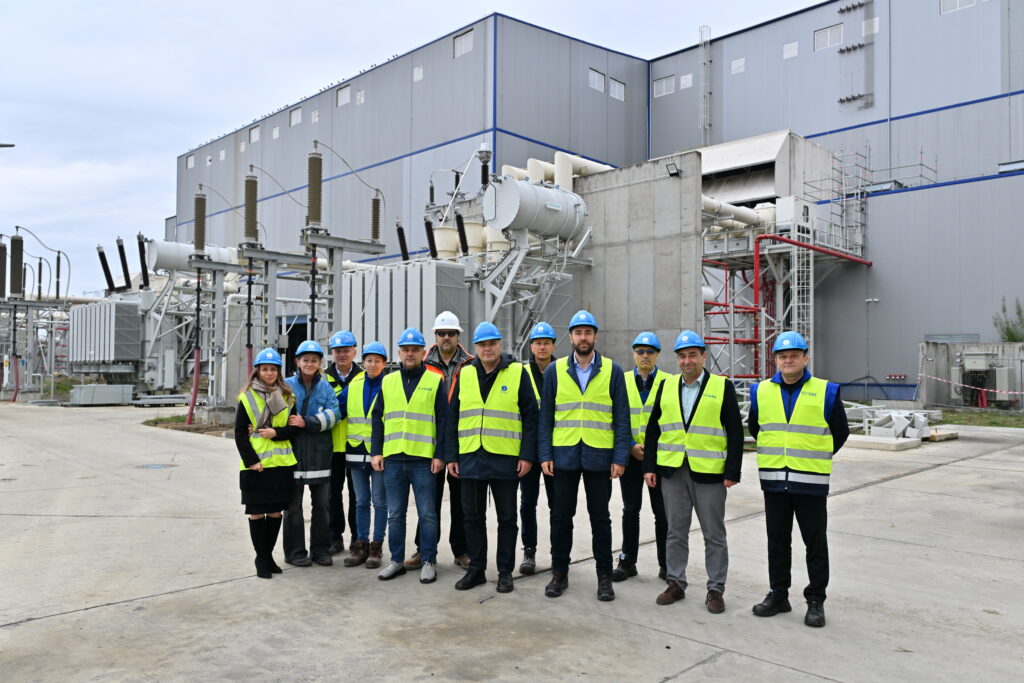
Another important milestone was the entry into trial operation of the Montenegrin section of the Trans-Balkan Electricity Corridor in July 2026. This section connects the Pljevlja Thermal Power Plant with the Lastva substation via a 400 kV transmission line, improving electricity transmission capabilities and regional interconnections.
Progress has also been made in developing the second electricity interconnector between Italy and Montenegro. The project to construct an additional 600 MW subsea direct-current cable, which would double the existing interconnection capacity between the two countries, was granted Project of Common Interest (PCI) status in April 2026.
Energy Portal