


New European Union Directives and the Future of Energy Renovation of Buildings in Serbia
Share
While Serbia has seen the emergence of the first organized subsidy and loan programs for building energy renovation in recent years, the EU adopted the new Energy Performance of Buildings Directive (EPBD) in spring 2024. Under this directive, European Union member states will in the future be required to renovate between two and three percent of existing buildings every year in order to improve the energy efficiency of the building stock.
The European Commission clearly emphasizes that, in addition to helping residents navigate the energy renovation processes of the buildings in which they live more easily, member states will also have to develop mechanisms for financing, training, and attracting a larger number of qualified workers and contractors. Serbia and other Balkan countries will need to develop their own strategies and mechanisms to undergo a similar energy transition of the building stock, with both financial mechanisms and programs to develop and attract educated and qualified contractors to carry out this large-scale energy renovation work.
In Serbia, the most important and largest-scale energy renovation subsidy program is the one that the EBRD has been developing for several years together with the Ministry of Mining and Energy – the Public ESCO Project. Because of the crisis related to sanctions against NIS, Serbia removed borrowing from the EBRD from its budget last November, but reinstated it through the budget revision a week ago. Specifically, the €50 million EBRD loan, together with state investment through district heating companies, will enable major works in 14 cities:
Public ESCO Project
At present, around 600 multi-story buildings connected to district heating systems in these cities have qualified for the first phase of the project. The project has the ambitious goal of financing the energy renovation of buildings connected to district heating systems through heating bills over a period of no more than ten years. In practice, heating bills would remain the same as before, while the savings in heating costs achieved by renovated buildings would be used to repay the investment in the building’s energy renovation. Instead of reducing heating bills after the renovation, the difference in the cost would remain with the district heating companies until the funds allocated to finance the renovation were repaid. Because the project criteria prioritized the least energy-efficient buildings, most selected buildings will repay their share of the investment through heating bills over five to seven years, after which their heating bills will be significantly reduced.
At the same time, a smaller, more narrowly focused program provides subsidies to individual households for energy renovations to their houses and apartments. This activity was launched back in 2021 by the Swiss RELOF project (Local Finance Reform) together with the Ministry of Mining and Energy, and has since developed into the current World Bank SURCE program, which is in its final phase:
IN FOCUS:
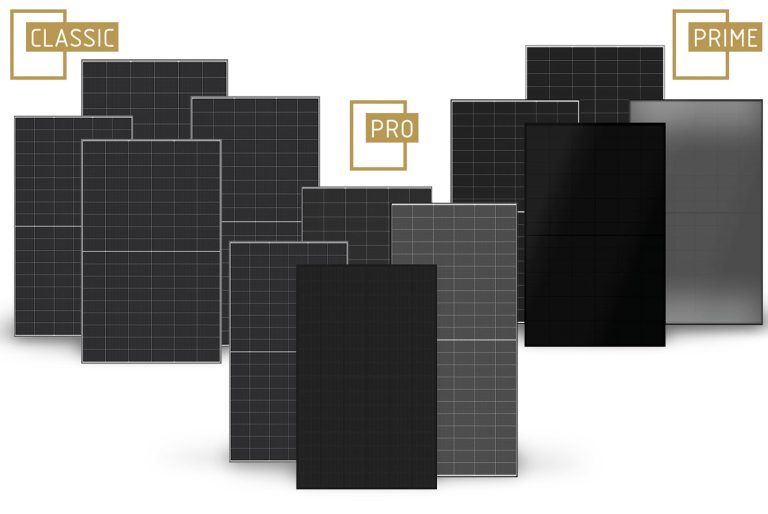
- Luxor Solar Responds to Market Needs with a Clearer Portfolio
- When a Building Begins to Understand Itself
- Fighting Drought with Sunshine: How Solar Power Plants Take Over When Rivers Run Dry
Clean Energy and Energy Efficiency for Citizens Project (SURCE)
Through this program, energy renovation and energy-saving measures are subsidized in most cities and municipalities in Serbia, but for individual households rather than collective housing. House owners, as well as individual apartment owners in multi-family residential buildings, can receive subsidies covering more than half the cost of renovating their homes. House and apartment owners can use the subsidies to invest in new exterior windows and doors, façade thermal insulation, solar panels on roofs or façades, and heat pumps. The plan is to renovate the energy performance of up to 50,000 households by the end of 2027.
In light of these changes in the housing construction market, the introduction of energy performance certificates for old and new buildings, and the large-scale energy renovation of existing buildings, the Association of Mineral Wool of Serbia – MIVUS is warning of potential mistakes that could be made in the process of improving the energy efficiency of existing buildings.
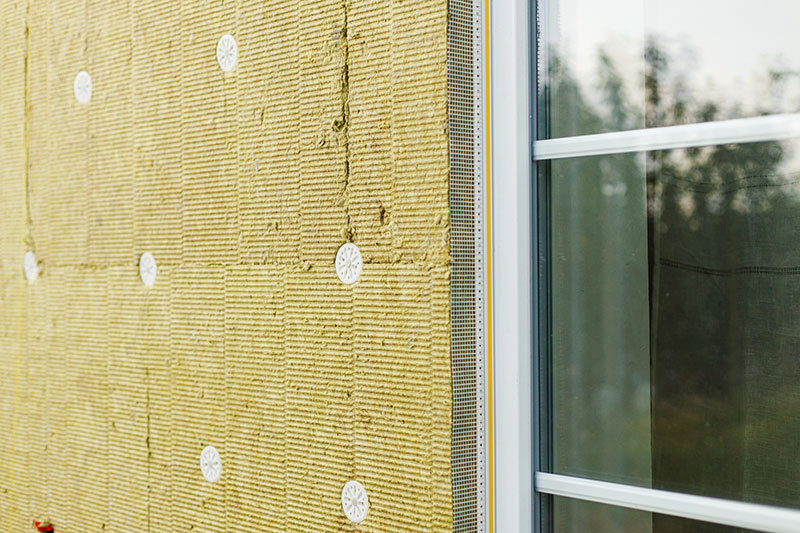
Potential buyers of new properties may notice that high-rise buildings are now constructed exclusively with façades insulated with mineral wool, due to fire protection requirements for property and residents’ lives. However, for lower buildings and for renovating existing buildings, mineral wool thermal insulation also offers benefits that other materials cannot provide. Let us not forget that polystyrene on façades exposed to sunlight can have a limited service life – there is a possibility that it may melt at high temperatures and gradually disappear from the façade layers.
The fire at Grenfell Tower in London in 2017 claimed more than 70 lives. Do we have to wait for such a case, or can we act preventively? Mineral wool fire barriers on façades and in roof insulation reduce damage to the building and the risk to residents. For buildings of certain heights, existing regulations require fire barriers, but these requirements are not always met.
The Association of Mineral Wool Producers of Serbia (MIVUS) educates the public about the need to insulate façades and attics with non-combustible materials or to install mineral wool fire barriers on façades when the primary insulation material of the building envelope is combustible.
The Rulebook on Technical Requirements for Fire Safety of External Walls of Buildings defines the use of non-combustible materials when constructing new buildings or renovating existing ones. MIVUS calls for compliance with existing regulations to protect both lives and property. A well-insulated and well-wrapped building also adds value for owners by increasing the price per square meter, while buildings insulated with non-combustible materials will be even more valuable.
In any case, the Balkan region is entering a period of several decades during which almost all existing buildings will undergo changes through energy renovation. Therefore, it is necessary to plan in advance for all aspects of these construction works, rather than focusing only on completing energy renovation projects as cheaply as possible.
MIVUS
The story was published in Energy portal Magazine SUSTAINABLE ARCHITECTURE