


Newsletter Subscribe
Enter your email address below and subscribe to our newsletter

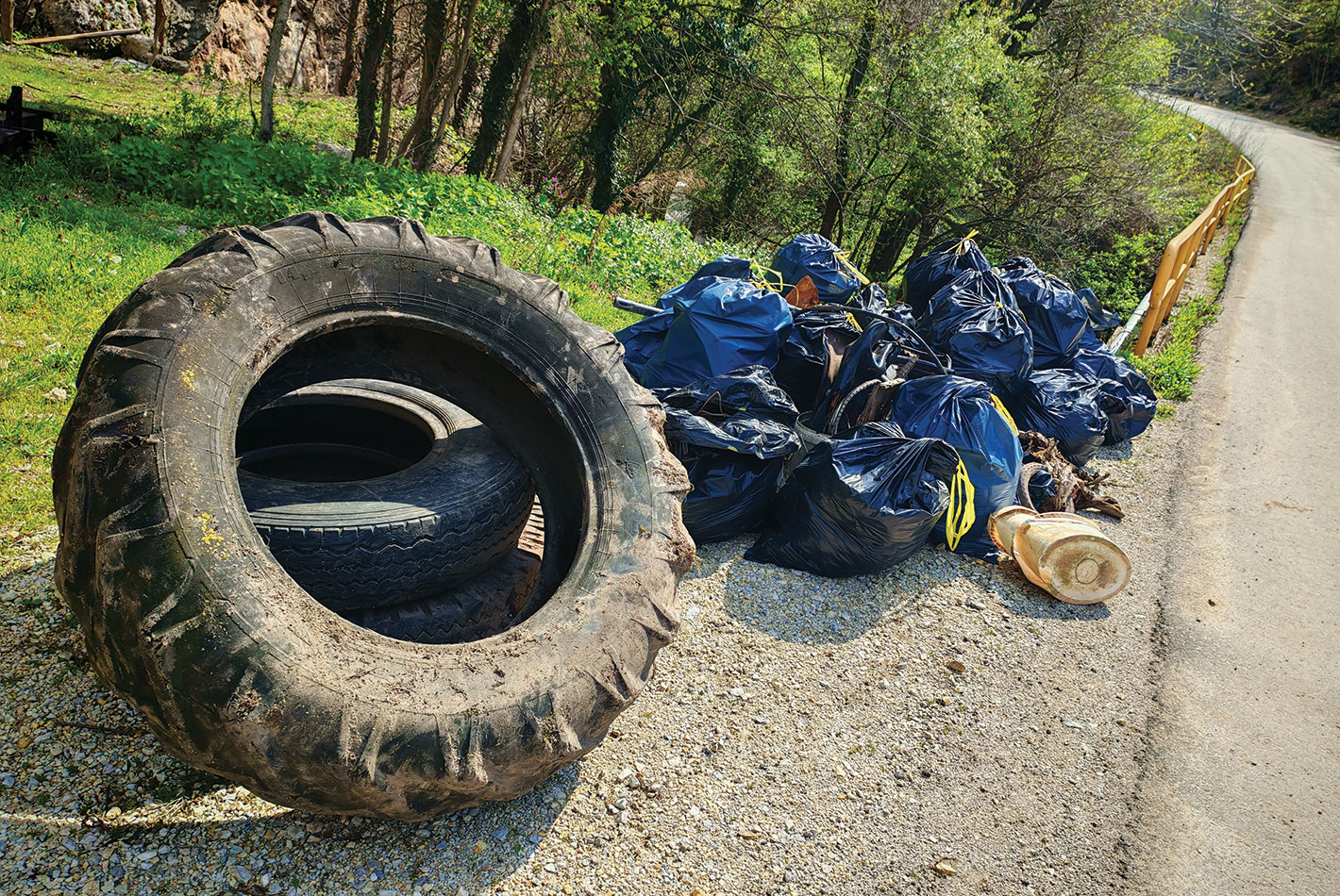
Behind the appearance of a clean stream, the Studena River was in fact hiding a true industrial dump. Used tractor tires, carpets, car parts, and even remnants of household appliances and bicycles were just some of the diverse types of waste collected during this year’s environmental campaign “Dry, but Clean.”
Nearly eighty volunteers, equipped with gloves and a shared determination to restore Suva Planina to its former beauty, covered three key sections: from Bojanine vode to Devojački grob, and from Niška Banja to Koritnjak. The largest amount of waste was collected in the Jelašnica Gorge, near Potkapina. It was precisely there—where nature offers the most—that people had polluted it the most, and where they have now cleaned it.
The result? Exactly 270 fully filled bags. Each one a small reminder that rivers and mountains are not landfills.
Milica Branković, editor of the portal dovrha.rs, says that the motivation behind organizing the “Dry, but Clean” campaign was the desire to make it a tradition, considering that it was initiated last year by two members from two Niš-based clubs—PK Železničar and PSK Mosor.
The Vrh Nature Lovers Association, that is, the portal dovrha.rs, participated as volunteers last year, while this year they wanted to take a more active role in organizing the event. A third association also joined, named after the mountain being cleaned (PD Suva planina), as well as the climbing association PAEK.
– In addition to members of Niš-based associations, a large number of citizens also applied for the campaign, and I will be modestly proud to say that we did expect a large turnout this year, because we remember how we felt last year when we participated as volunteers. This is not just cleaning—it is also socializing with like-minded people, building new friendships, and spending a wonderful day in nature – Branković emphasizes.
She adds that, prior to the campaign, all institutional requirements had to be fulfilled, as is necessary for such large-scale activities—reporting the gathering to the police, “Srbijašume,” emergency services, and the local public utility company “Mediana,” which promptly removed all collected waste after the action.
– Organizing people was demanding, as we also needed to arrange transportation with as few vehicles as possible, but everything went relatively smoothly because people came with positive energy and a strong desire to do as much as they could for the nature that offers us enjoyment every weekend—and mountaineers truly know how to appreciate that – Milica explains.
She notes that the amount of collected waste did not come as a surprise, especially compared to last year, when there were significantly fewer participants.
– Considering that we found carpets, car parts, bicycles, washing machines, bathroom sanitary equipment, food and beverage packaging, and much more in and around the river, I conclude that both the local population and visitors do not treat Suva Planina the way it deserves – says Branković, adding that this likely means they are not aware of how fortunate they are to live near such an environment, or, in the case of visitors, to be able to reach it easily by suburban transport.
She also points out that cooperation with institutions is very important in such initiatives, especially since the area is a Category I protected zone. On the other hand, she believes it would be beneficial for all relevant institutions to join forces to design a system of penalties for irresponsible behavior toward nature, as this is the only way to prevent such situations—not only around Suva Planina but in thousands of locations across the country.
As for the next steps, she says many participants suggested that clean-up actions should be organized more frequently. However, she personally believes it would be better to focus on measures that would make such frequent clean-ups unnecessary.
– Education is something mountaineers continuously promote, whether through numerous social media posts or by setting a personal example of how to respect nature. I can guarantee that mountaineers are among its greatest admirers. We certainly plan for “Dry, but Clean” to continue in the future, at least once a year, Branković concludes.
Prepared by Milena Maglovski
Read the whole text in Energy portal Magazine ECOMOBILITY