


Newsletter Subscribe
Enter your email address below and subscribe to our newsletter


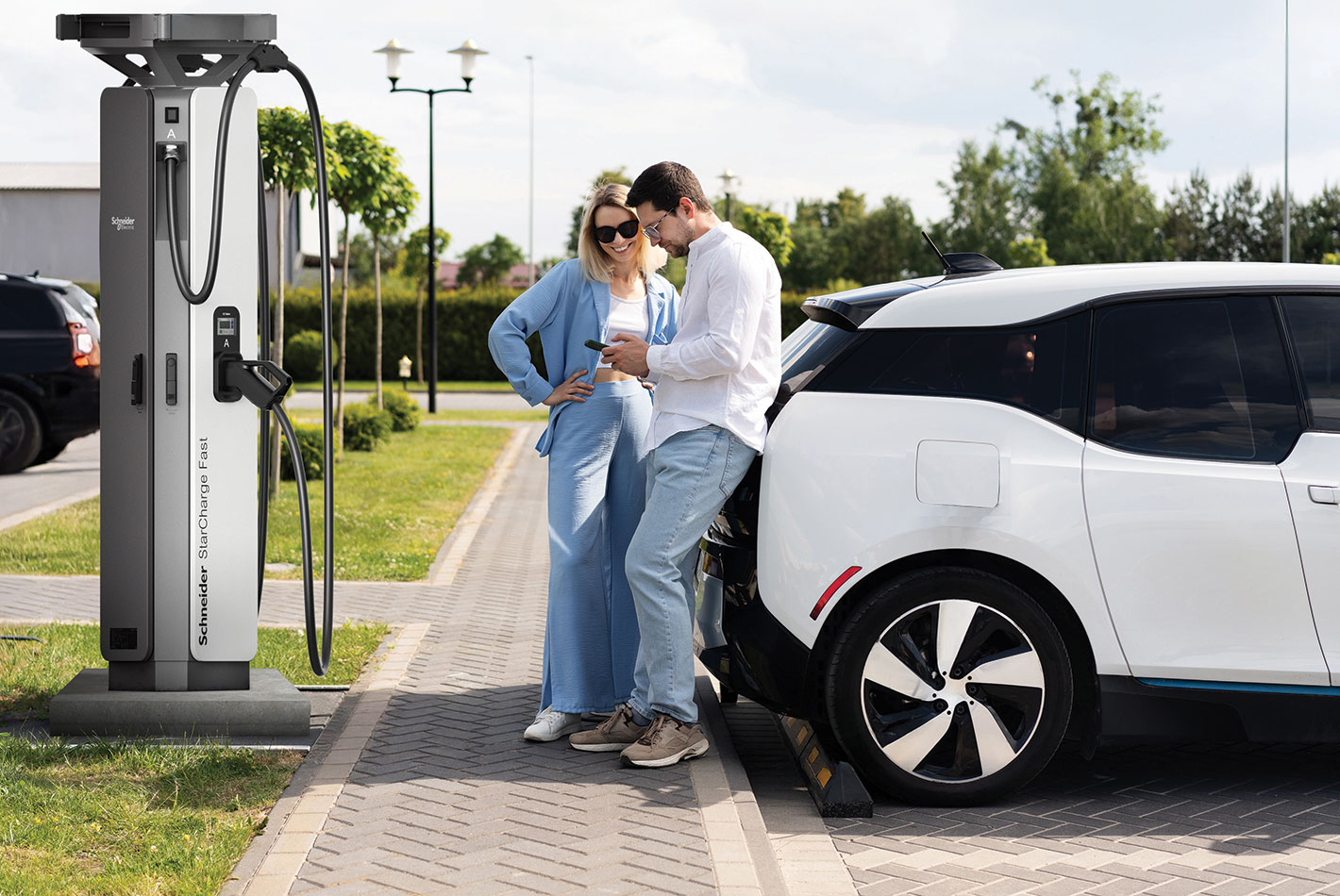
Electric mobility is no longer just a trend. It’s an irreversible shift transforming how we move and consume energy. We spoke with Darko Zeljković, eMobility Business Developer Southeast Europe in Schneider Electric, about global standards and the infrastructure challenges facing the region.
Q: Electric mobility is one of the key pillars of energy transition. How do you see Schneider Electric’s role in developing EV-charging infrastructure in Southeast Europe?
A: Schneider Electric is a key technology partner in digital transformation and energy sustainability. Our role in the region goes far beyond selling equipment – we act as an ecosystem architect. By developing integrated solutions that combine hardware, software, and advanced energy management systems, we deliver infrastructure that is both smart and future-ready. Our product portfolio meets the complex needs of investors and operators, especially given the accelerated growth of e‑mobility across the region.

Q: What are the most significant innovations Schneider Electric is currently developing in the field of e-mobility?
A: We have been in this field for more than 15 years, and that experience has enabled us to overcome the industry’s early challenges. Today, we offer EcoStruxure™ for E-mobility, one of the most reliable end-to-end solutions on the market, as well as Schneider StarCharge Fast DC chargers that deliver up to 320kW with 97 percent efficiency, significantly reducing energy losses. Another innovation is the StarCharge Fast 720, featuring a split-unit architecture where a central power cabinet supplies satellites (dispensers) distributed within an 80-metre radius, making it an ideal solution for petrol stations and logistics centers. Furthermore, our EV Charging Expert software enables real-time management of up to 150 chargers, ensuring optimal load balancing across the grid. To achieve the balance, it is essential to introduce battery systems, which are the cornerstone of modern electrification. Following this, we have launched the second generation of Schneider Boost Pro, as true sustainability is impossible without energy storage solutions.
Q: The EV charging infrastructure in Southeast Europe is still underdeveloped. In your opinion, what are the key obstacles to accelerating e-mobility development, and how can the industry overcome them?
A: Infrastructure in Southeast Europe is rapidly catching up and entering a phase of accelerated growth. In EU member states, development is governed by the AFIR (Alternative Fuel Infrastructure Regulation), which requires fast‑charging stations every 60 km along key transport corridors, and the EPBD (Energy Performance of Buildings Directive), which provides guidelines for installing EV-charging infrastructure. Serbia and other non-EU countries are still focused on the main road network. High initial costs, slower ROI, and limited distribution grid capacity at critical locations remain the main obstacles. Schneider Electric offers technical solutions for all of these challenges, but administrative support is essential to expedite implementation.
Q: How important is cooperation between companies, cities, and institutions in building a sustainable e-mobility ecosystem?
A: Cooperation is crucial, as e-mobility development is too complex for any single stakeholder. Our strategy is built on partnerships, from global ones with companies such as NVIDIA, to our local EcoXpert program, where certified partners install our equipment. To put it simply: companies bring the technology, cities provide the space, and institutions define the rules of the game.
Q: Electric vehicles are increasingly becoming part of a broader energy system. How do you see these technologies evolving in the next decade?
A: The energy landscape is being transformed from a centralized system to a decentralized grid. Schneider Electric turns the traditional one-way distribution model into a two-way system that allows operators to monitor and actively manage both production and consumption. Our continuously advancing software solutions, ADMS and DERMS, play a key role in this transformation. They enable grid digitalization and efficient integration of renewable energy resources, thus directly accelerating e-mobility development. While V2G (vehicle‑to‑grid) technology receives a lot of attention, I believe that DC Microgrid solutions will become far more relevant for commercial applications in the coming decade.
Interview by Milena Maglovski
Read the whole interview in Energy portal Magazine ECOMOBILITY