

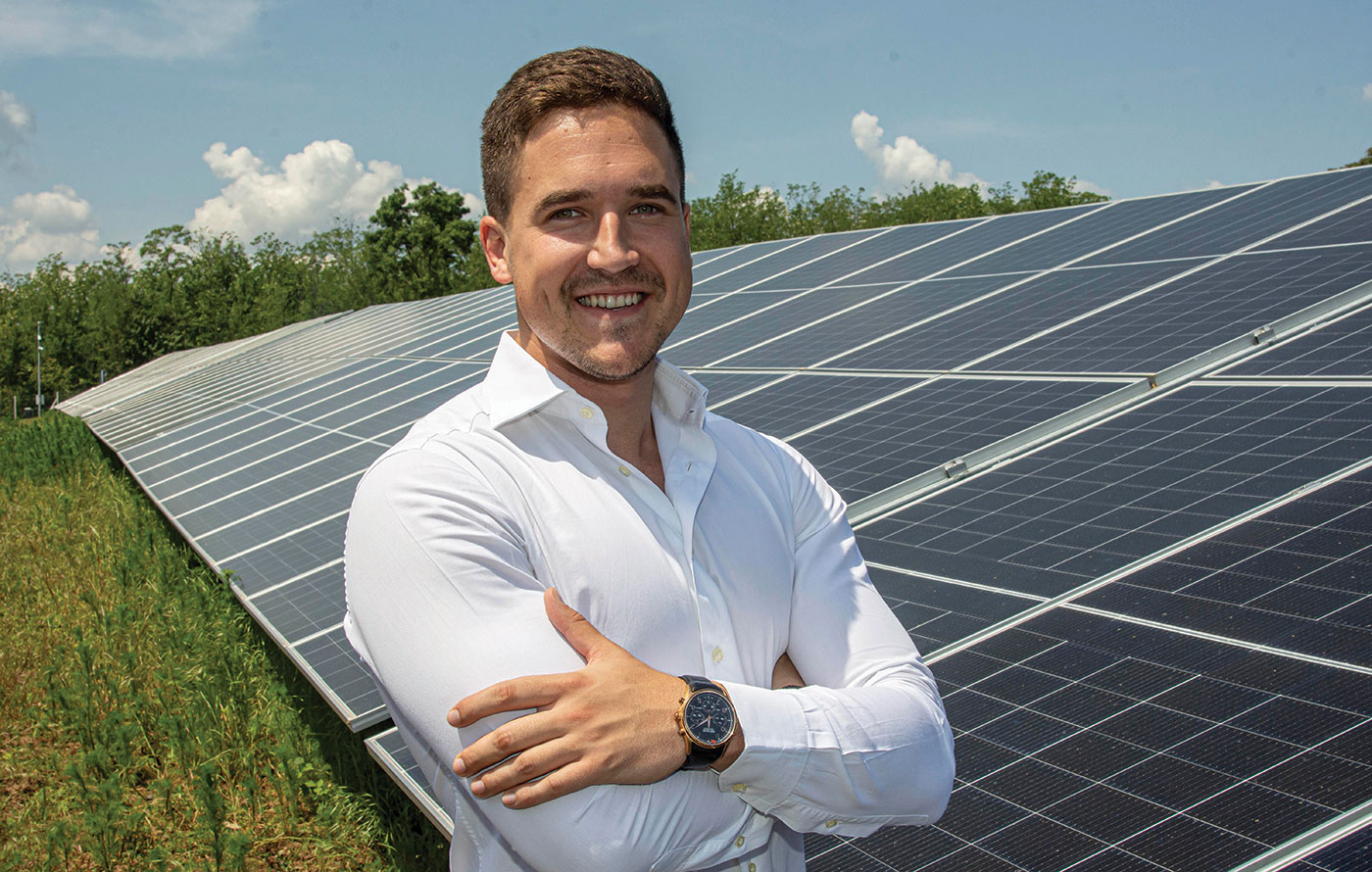
Numerous completed projects, technological breakthroughs, a substantial shift toward battery energy storage systems and tracker technologies, and expansion into regional markets marked 2025 as a turning point in the development of MT-KOMEX. Deputy Director Nikola Grubor speaks about the company’s achievements, key innovations, plans for 2026, and future trends in the solar industry.
Q: MT-KOMEX is certainly behind another successful year. Can we say that 2025 was the most successful year so far?
A: Without a doubt, this has been our most successful year to date—a year in which we delivered some of the most technologically complex solar projects, introduced new solutions, expanded our regional presence, and further confirmed our leading position in EPC services, prefabricated substations, and advanced solar technologies.
I would say that 2025 marks the year in which MT-KOMEX entered a new phase of development—from a strong domestic EPC partner to a company that is actively building and shaping the region’s energy transition.
Q: Which project or achievement would you highlight as the company’s most significant contribution to Serbia’s energy transition during 2025?
A: Throughout 2025, we implemented several projects that directly contribute to reducing CO₂ emissions and increasing the energy independence of the business sector. I would particularly highlight large-scale commercial solar power plants in the industrial sector, which today represent one of the key pillars of energy efficiency for domestic manufacturers.
Our prefabricated substations—such as the Huawei Jupiter 3000 model—also deliver significant added value, enabling faster grid connection and greater reliability of renewable energy facilities. These solutions substantially shorten project timelines and reduce the infrastructure burden for investors. The EPC approach MT-KOMEX has applied from the very beginning remains one of the key reasons investors recognize our company as a partner that delivers comprehensive, safe, and long-term, sustainable solutions.
IN FOCUS:
- How the RS Fund Is Building the Green Transition: Plans, Results, and Challenges
- Brazil Between the Challenges and Opportunities of the Green Transition
- Prelog – A Small City With a Big Vision
Q: When it comes to innovation, MT-KOMEX has traditionally been at the forefront of applying advanced solar technologies. What new solutions did the company introduce or implement in 2025?
A: Investing in innovation is a continuous process for us. This year, particular attention was drawn to the development and deployment of advanced inverters and optimizers, as well as the large-scale implementation of battery energy storage systems (BESS), which we introduced across all new projects. The integration of SCADA systems and remote monitoring platforms has become standard practice. At the same time, further improvements in prefabricated substations have further optimized the construction and grid connection process for solar power plants.
One of the most significant breakthroughs in 2025 was the start of construction of large-scale solar power plants equipped with single-axis tracker systems. We expect that by the end of next year, 50 MWp of such facilities will be completed and commissioned in Vojvodina.
Tracker systems deliver a range of benefits:
- an increase in energy production of 15–25 percent compared to fixed-tilt structures,
- more uniform power generation throughout the day,
- better utilization of solar irradiation in flat terrain,
- a lower LCOE over the entire lifecycle of the power plant.
For our clients, this means a faster return on investment, as well as higher energy output during periods of peak demand, when electricity prices on the market are at their highest.
Q: What are the key plans, projects, or investments that MT-KOMEX is planning for 2026?
A: In 2026, MT-KOMEX plans further growth through the construction of an even larger number of commercial solar power plants, the expansion of its BESS solutions portfolio, the strengthening of EPC and engineering teams, new investments in prefabricated solutions and energy infrastructure, as well as continued expansion into regional markets.
The coming year will be marked by intensive construction activity, new partnerships, and an even stronger position for the company in the energy sector of Southeast Europe. The solar industry is entering an accelerated phase of development in 2026. Commercial power plants, hybrid systems, battery capacities, and digitalization are becoming the norm. For MT-KOMEX, this represents both an opportunity and a responsibility—to continue introducing state-of-the-art solutions, to develop the market, and to build an energy future based on stability, efficiency, and sustainability.
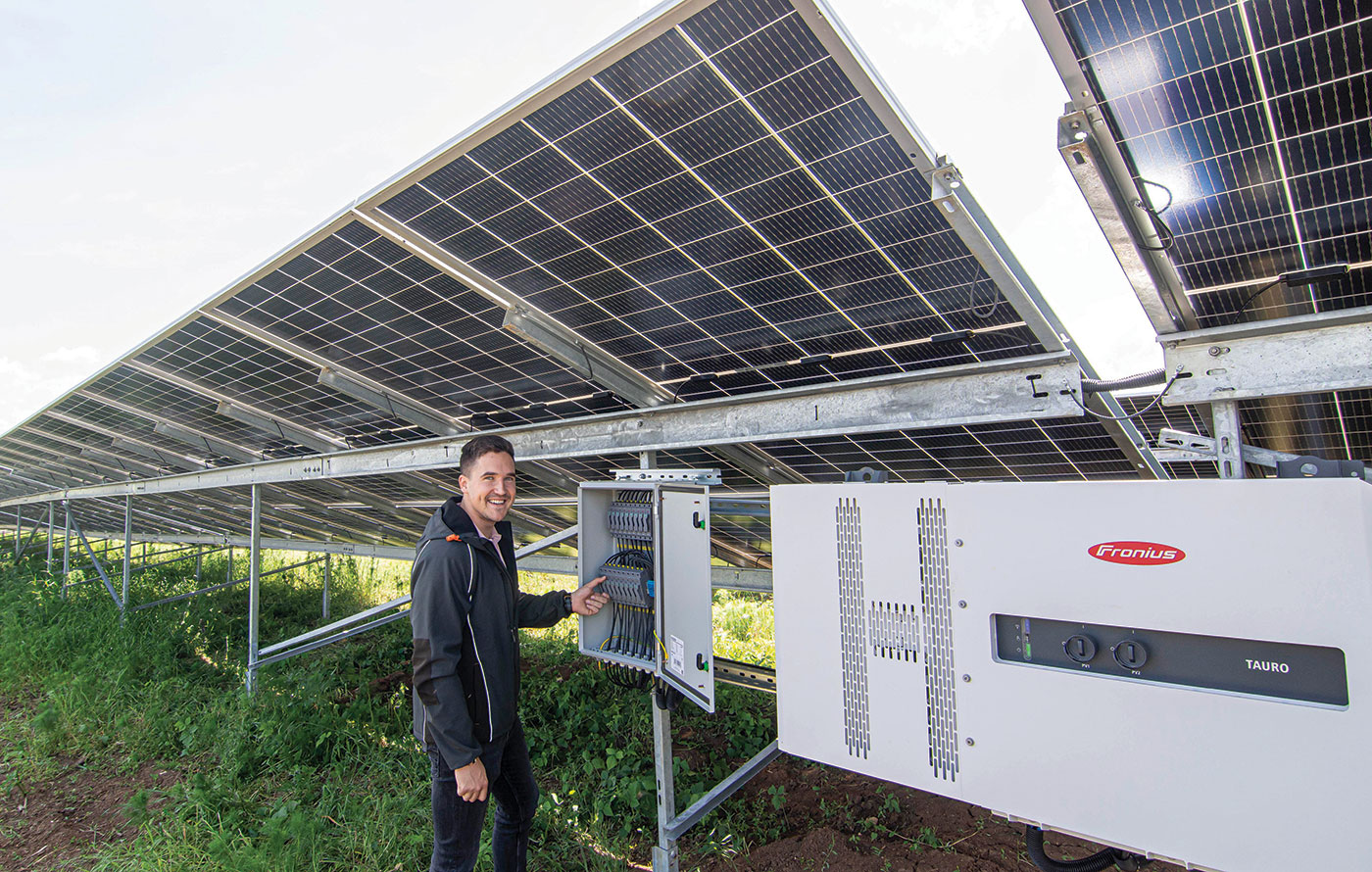
One of the key indicators of the company’s development is the fact that during 2025, we procured 100 MW of premium equipment, including:
- Huawei prefabricated substations,
- Huawei 300 kW inverters,
- AIKO solar panels—currently among the best on the market in terms of efficiency and degradation rates,
- complete mounting structures for solar power plants.
All of this equipment has been delivered, installed, and commissioned, or is currently under construction, enabling us to achieve the highest utilization rate of procured equipment in the company’s history.
Q: MT-KOMEX operates successfully across the region, particularly following the establishment of MT-KOMEX BH in 2023 in Banja Luka. What are the company’s further plans regarding expansion and strengthening its regional presence?
A: MT-KOMEX BH, established in 2023 in Banja Luka, proved in 2025 to be a strategic move that entirely delivered on expectations. Our team in Bosnia and Herzegovina is expanding. We are taking on large-scale solar projects in the Republic of Srpska and are actively analyzing entry into the Croatian and Montenegrin markets. The prefabricated energy solutions we develop position us as a trusted partner at the regional level as well.
Q: How do you see the outlook for the solar industry in Serbia over the coming year, and which key changes or market trends do you expect?
A: Electricity prices on the power exchange, along with the volatility that characterizes European markets, clearly indicate that projects incorporating tracker systems and BESS solutions will be of decisive importance in the coming years. Serbia is expected to adopt regulatory frameworks that will enable the ancillary services market and define the role of flexibility aggregators, which means that battery systems will become a key component of the energy mix for industrial consumers.
As our market becomes increasingly integrated with the European market, we also expect the emergence of negative electricity prices—a trend already commonplace in EU countries. These periods will be ideal for charging battery systems, while discharging will be most profitable during times of high demand.
For our clients, this delivers a dual value proposition: supply stability and additional revenue through market-based mechanisms.
Interview by Milena Maglovski
The interview was published in Energy portal Magazine RESPONSIBLE BUSINNES
