


How everyday, previously used objects can be given a second life is something Nina Stanarević, a graphic designer and hand bookbinder from Banja Luka, demonstrates through her work every day. Her brand, Studio Tisa, is recognized for its commitment to ecology, sustainable practices, and minimalist design inspired by local cultural heritage.
She has built her artisan craft on the principles of the circular economy, creating sketchbooks, journals, and photo albums from recycled, repurposed, and salvaged materials. The items are hand-bound, with wooden or textile covers; no glue is used in the construction, making the binding itself an integral and aesthetically meaningful part of the design.
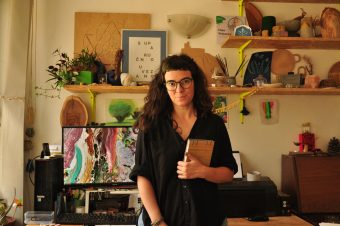
Nina created her first pieces during her studies in 2012–2013, which sparked her passion for bookbinding. As she explains, the ability to creatively repurpose materials has been present from the very beginning.
— Operating according to the principles of the circular economy means that materials must remain in use—either as a product or, when they can no longer serve their original purpose, as components or raw materials. This way, nothing becomes waste, while the product’s and the material’s essential value are preserved. In Studio Tisa, I continuously use other people’s recycled waste as new raw materials, and I also transform my own waste in new ways. Nearly all parts of my products are fully recyclable — Stanarević explains.
Striving for the most sustainable business model possible, she typically uses repurposed textiles for covers, dyes them with natural pigments, and often applies patchwork techniques (joining smaller fabric pieces). She also sources recycled paper and even produces her own from paper waste.
In focus:
- CEEFOR Strengthens its Operations With Two Additional ISO Certificates
- Solar Recycling Container – An Innovation From Banja Luka
- ABB Celebrates 50 Years of Variable Speed Drives – Technology, people, and vision shaping the energy future
She dyes the covers using plantsornamental, invasive, and medicinal species alike—and showed us examples colored with dyes extracted from the root of the madder plant and with walnut-based pigments. Her design portfolio also includes wooden items. Among them are bowls crafted from wood that originally served in the production of roulette wheels. These are just some of the sustainability practices she applies in both her business and her personal life.
Nina does not describe her work as revolutionary, as she draws inspiration from the past—from the resourcefulness of earlier generations who knew how to make the most of what they had. Still, it is undeniable that her creations are unique. When it comes to public awareness of such products, she notes that an increasing number of people want items made exclusively for them.
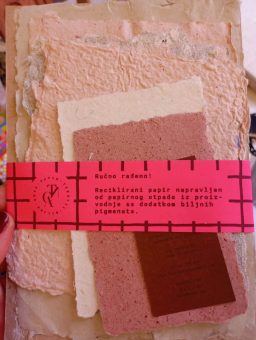
— I believe people have very quickly forgotten what handmade craftsmanship and small-scale production truly mean—and how much time, effort, and dedication are required to create something with one’s own hands. A large part of my business, as well as my presence on social media and at ArtMarkets, is dedicated to educating the public and bringing them closer to handmade work and artisan crafts. I’ve been active in DIY ArtMarkets and their communities for nearly 15 years, and I think interest is growing. It takes a great deal of effort to educate people. Still, I believe more and more of them want to hold a physical product again—and if that product is made especially for them, then the joy is immeasurable — Stanarević says.
To bring her craft closer to a broader audience, she often holds workshops organized by various institutions, covering a wide range of topics—from the basics of bookbinding to eco- and underconsumption-focused projects, papermaking, and more. Her greatest satisfaction, she says, comes from the act of creating itself—when she has the time and space to explore new things and enjoy the process.
She has been learning the craft through online resources and books since her university days, and her experimentation continues to this day. Her wish is for Studio Tisa to grow into a project that benefits the local community—a socio-cultural center offering workshops on eco-themes and crafts, a gallery, and perhaps even a café, as well as a place where older generations could mentor younger ones.
Prepared by Jasna Dragojević
The story was published in Energy portal Magazine RESPONSIBLE BUSINNES
