


The electrification of transport, the integration of renewable energy sources, and the application of digital solutions are no longer distant-future issues but concrete challenges facing local communities, decision-makers, and businesses across the region today.
We discussed these topics—as well as the realistic potential of sustainable mobility, institutional capacities, financial models, and the role of knowledge in a successful transition—with Vedran Kirinčić, Associate Professor and Head of the Department of Electric Power Systems at the Faculty of Engineering, University of Rijeka.

Q: Your professional biography is strongly associated with clean energy, sustainable mobility, and digitalization. How would you describe your current professional focus, and which projects are you involved in—both in Croatia and beyond?
A: My current professional focus is on linking the energy transition and sustainable mobility through concrete, implementable projects at the local and regional levels. As an energy transition consultant, I work on developing investment concepts that integrate energy generation, transport electrification, and digital solutions into unified systems that are both technically feasible and financially sustainable. I collaborate with cities and municipalities on projects that integrate renewable energy sources, EV charging infrastructure, energy communities, and smart energy management. Through EU initiatives, I am also involved in projects across the wider region.
At the same time, as a member of the academic community, I place strong emphasis on knowledge transfer and capacity building for local and regional stakeholders—through numerous panels and workshops, as well as through a new university course, Energy Transition in the Transport Sector. Practical experience shows that without people and institutions that understand the system, there can be no long-term transition. My interest, therefore, always lies at the intersection of technology, finance, and real-world implementation.
IN FOCUS:
- Digital Energy Management in Hotels – The Role of the ABB KNX System
- Siemens: A Reliable Partner in the Digitalization of the Energy Sector
- How Can Serbian Heavy Industry Remain Competitive by 2030?
Q: Sustainable mobility is becoming one of the key pillars of the energy transition. How do you assess the current state of sustainable mobility in Croatia, and where does it realistically stand in relation to the goals set by the EU?
A: Sustainable mobility in Croatia has made progress in recent years, but this progress has largely come through isolated initiatives rather than through systematically planned development. We are seeing an increase in the number of electric vehicles, the first more serious projects focused on the electrification of public transport, and investments in infrastructure; however, these advances are still not sufficiently integrated into the energy system or spatial planning.
In relation to the goals of the European Union, Croatia is currently lagging behind, primarily due to slower implementation and the lack of an integrated approach that would link transport, renewable energy sources, and grid infrastructure. From a technological perspective, solutions are available and well proven, but the key challenges remain in organization, financing, and capacity building at the local level.
EU targets are extremely ambitious, yet achievable in the long term—provided there is a shift from high-level strategies to systemic, coordinated projects with clear operational and financial logic.
Q: What would you highlight as Croatia’s greatest achievements in the field of sustainable mobility to date, and whose efforts have contributed the most to these results?
A: Croatia’s greatest achievements in sustainable mobility are most visible where there has been a clear vision and strong personal commitment from individuals and teams at the local level, rather than merely formally adopted strategies. This is particularly evident in projects related to the development of public transport and mobility-on-demand services, the expansion of charging infrastructure, and pilot car-sharing systems, all of which have demonstrated that new solutions are technically and operationally feasible.
It is important to emphasize that these advances are not the result of systemic mechanisms, but rather of the work of motivated local authorities, experts, and companies that assumed responsibility and successfully connected various stakeholders. These examples clearly show that success does not primarily depend on the regulatory framework, but on capacity, knowledge, and willingness to cooperate. Educated and motivated individuals represent the greatest value. Their projects should serve as a foundation for scaling up best practices and building a more long-term, coherent approach to sustainable mobility at the national and regional levels.
Q: Looking ahead, what are your expectations for the development of sustainable mobility in Croatia by the end of this decade, and do you see room for stronger regional cooperation in the Western Balkans and Southeast Europe?
A: I expect sustainable mobility in Croatia to develop more rapidly than it has so far, primarily through further electrification of road transport and the strengthening of public transport, as well as through increasingly closer integration with the energy system. However, this development will not be linear and will inevitably involve certain missteps from which lessons will need to be learned. The key question will be how successfully we manage to move from isolated projects to systemic models that can be replicated and scaled.
As for regional cooperation, the potential is significant, as countries in the Western Balkans and Southeast Europe share similar infrastructural, institutional, and financial challenges. Rather than developing similar solutions in parallel, a stronger exchange of knowledge, experience, and best practices could substantially accelerate the transition and reduce overall costs for all stakeholders involved.
Q: Renewable energy sources and mobility are increasingly being viewed as interconnected systems. What is your engagement in the field of renewables, and how do you see the interplay between the development of renewable energy and the electrification of transport?
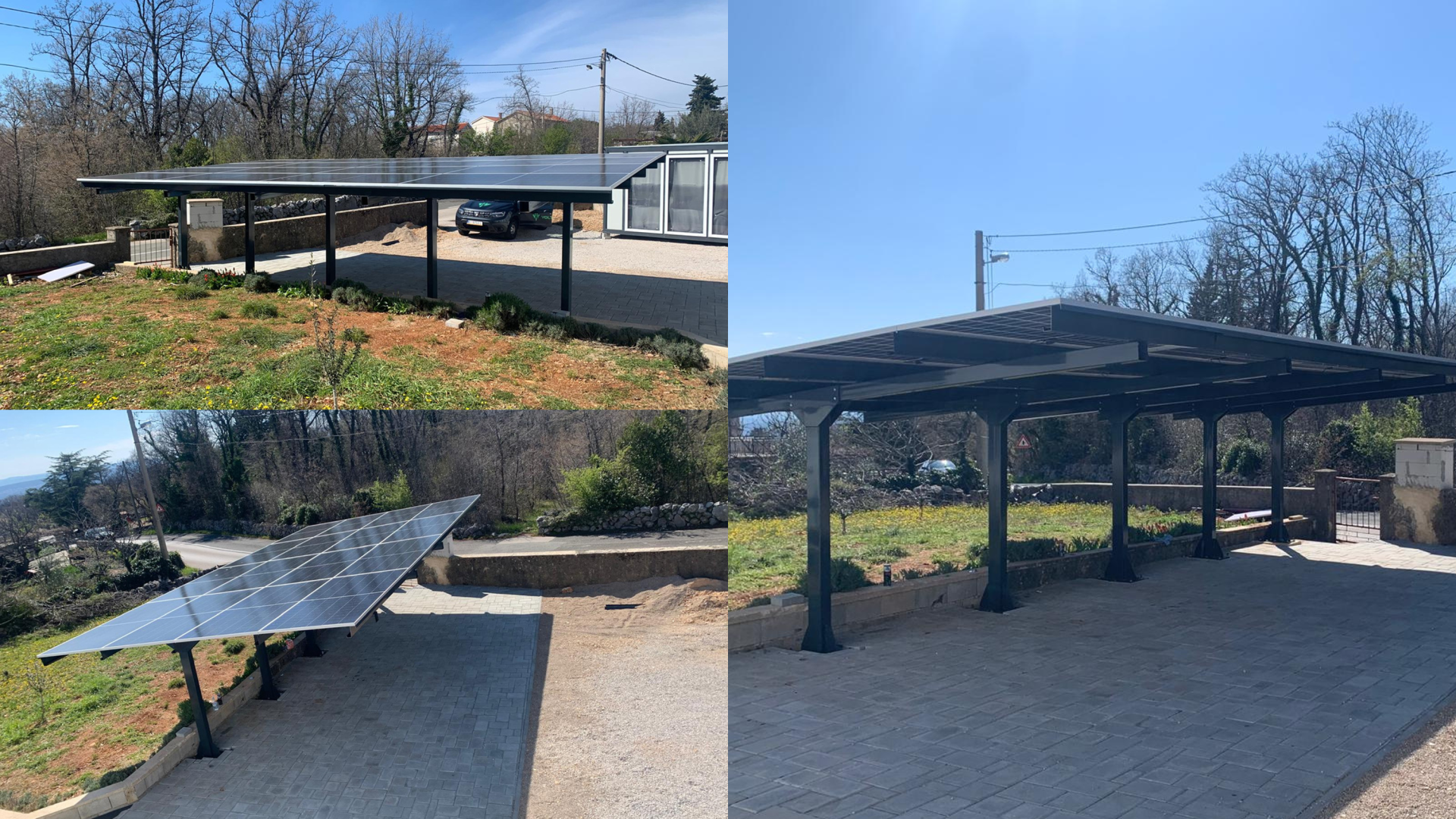
A: I strongly advocate an approach in which renewable energy sources and mobility are developed as interconnected systems, rather than as two separate sectors. The electrification of transport only makes full sense if it is accompanied by local clean energy generation and smart demand management. For this reason, my projects—implemented in cooperation with technology solution providers—focus on photovoltaic systems on buildings and solar carports, integrated with electric vehicle charging infrastructure and, where justified, with energy storage systems.
Such an approach reduces grid load, increases system resilience, and improves the economic viability of investments. I consider joint planning of energy and transport solutions to be essential, as only in this way can real climate impacts be achieved and the long-term sustainability of transport electrification be ensured.
Interview by: Milena Maglovski
Read the whole interview in Energy portal Magazine DIGITALIZATION.
