


The H-Bridges team of students from the Faculty of Electrical Engineering, University of Belgrade, has, for many years, been developing innovative solutions in the field of power electronics and successfully presenting them at the prestigious global competition, the International Future Energy Challenge (IFEC), under the auspices of the IEEE. Over the past few years, the team has achieved notable results, including winning 1st place in 2019, as well as second places in the 2020, 2022, and 2023 competitions. The winning team in 2019 developed a drive system for an electric bicycle and an Android application for communication between the cyclist and the electric drive. More information about previous successes and projects can be found on the H-Bridges team website.
Behind these results stand students who, alongside their regular academic obligations, spend months developing complex engineering systems, often spending evenings and weekends in the laboratory. In addition to the technical aspect, given that competition rules require teams to independently secure funds for prototype development and participation, being part of such a project offers students significant experience, enabling them to work in a multidisciplinary team, strengthen teamwork, and develop entrepreneurial skills.
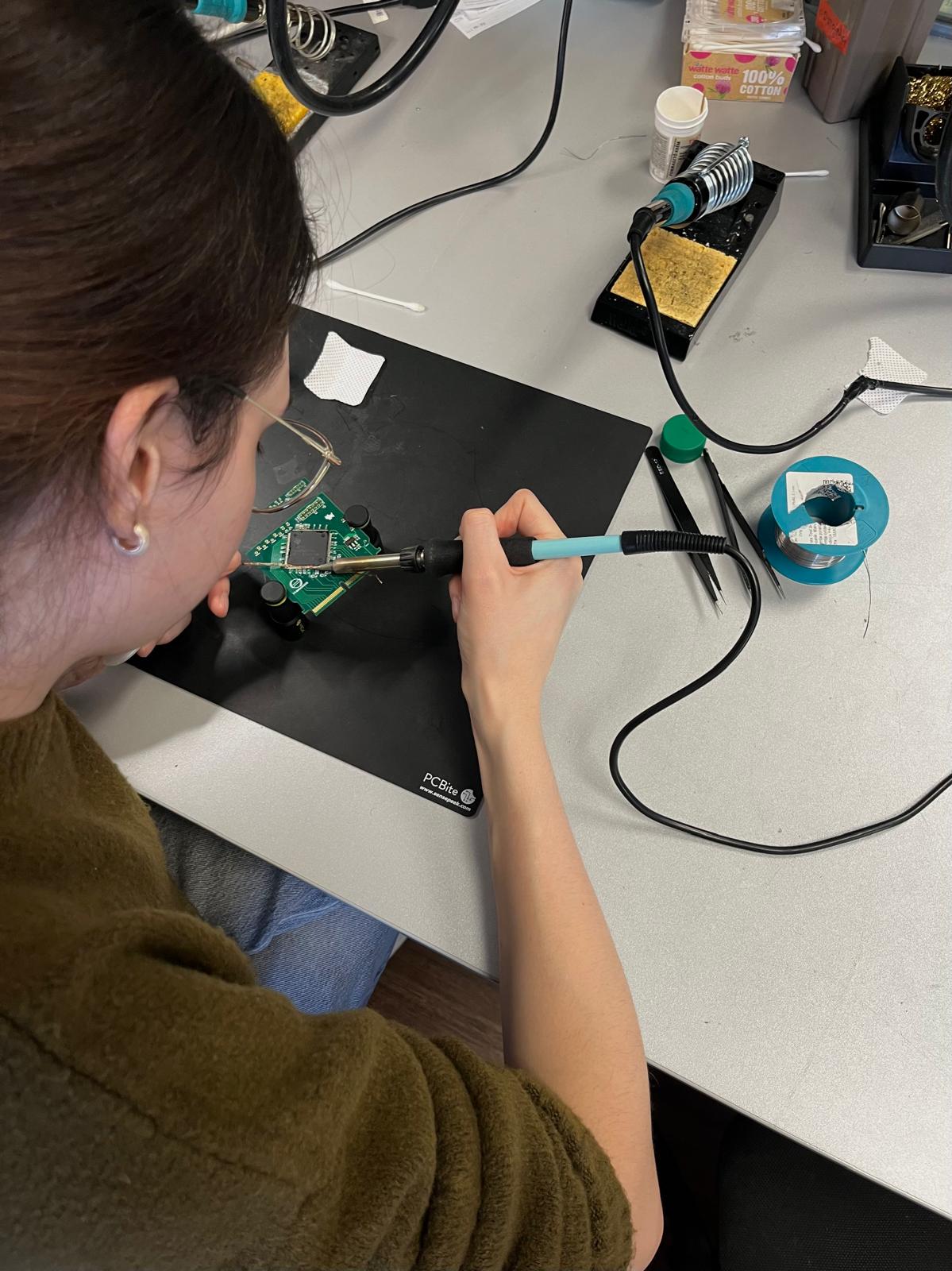
The team’s work takes place within the Laboratory for Digital Control of Converters and Drives at the Department of Power Converters and Drives. This laboratory serves as a research and educational base for developing and applying modern digital control methods for power converters and drive systems. The focus includes the design and implementation of algorithms for current, voltage, and torque regulation, as well as systems that ensure high power quality and stable operation under real conditions.
With the growing share of variable renewable energy sources and the increasing role of electric vehicles, the need for the digitalization of energy systems is becoming essential. At the same time, power electronic devices represent an indispensable part of such systems. It is precisely in this environment that students connect theory, modeling, and practical implementation, developing prototypes that integrate digital control platforms, control algorithms, and real-time measurements — technologies that are today standard in modern power engineering. In addition to working on competition projects, a certain number of students continue cooperation with the laboratory through bachelor’s and master’s theses under the mentorship of Assistant Professor Aleksandar Milić, deepening their knowledge in the field of control of power converters and drive systems.
IN FOCUS:
Current Project
This year’s team task is the design of a bidirectional on-board charger for electric vehicles. The project responds to the need for solutions that enable not only battery charging but also energy feedback from electric vehicles to the power grid, thereby making electric vehicles an active element of the energy system.
The competition requirements include a power rating of 1 kW, a power density of 2 kW/L, plug-and-play functionality, and a minimum efficiency of 92 percent at nominal power. These criteria set a high technical standard and require careful design of the topology, control strategy, and protection system. In addition, the dimensions of the prototype are limited to achieve greater compactness.
This year, the H-Bridges team consists of 25 members and is organized into three sub-teams: Hardware, Firmware and Control, and Public Relations and Fundraising. Development has entered the phase of intensive laboratory testing of the prototype, which includes verification of protection functions, measurement of key electrical parameters, and final optimization of the control system, as well as analysis of the system’s dynamic behavior, verification of control stability, and performance assessment under different operating modes. In parallel with technical activities, the team independently secures the funds necessary for participation in the next phase of the competition.
The competition consists of qualification, semifinal, and final rounds. After submitting a technically elaborated proposal, the H-Bridges team received confirmation of its placement in the semifinals at the end of December 2025. The explanation of the decision highlighted the clear structure of the document, the technical elaboration of the solution, the well-argued selection of the topology and control strategy, and the innovation and economic analysis of the project, which particularly contributed to its credibility.
The semifinal will be held in March 2026 in San Antonio, USA, during the IEEE APEC conference, where teams present technical results and progress. Placement in this phase represents a significant success for the team and the University of Belgrade, considering that H-Bridges competes on equal terms with universities from around the world. The final stage of the competition will be held in Belgium, at the Catholic University of Leuven.
H-Bridges
The story was published in Energy portal Magazine DIGITALIZATION
