
Newsletter Subscribe
Enter your email address below and subscribe to our newsletter

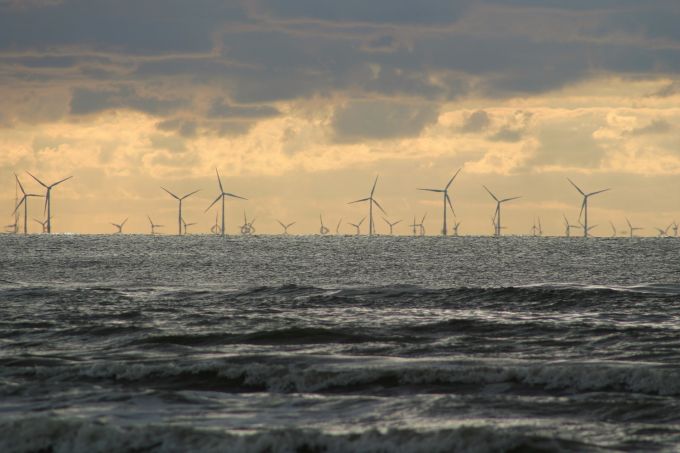
The success of auctions in Poland and the United Kingdom, as well as the North Sea Summit in Hamburg, has given new momentum to Europe’s offshore wind sector. At the summit, the North Sea countries committed to provide two-sided Contracts for Difference (CfD) for 10 GW of offshore wind annually between 2031 and 2040, and to remove regulatory barriers for Power Purchase Agreements (PPA). At the same time, the European wind industry announced it would mobilize 1 trillion euros of economic activity in Europe, create 91,000 new jobs, and invest 9.5 billion euros in the value chain, including manufacturing, port infrastructure, and specialized vessels.
However, strengthening the capacity of ports and specialized vessels remains a priority to ensure that these gains are maintained in the coming years. Their importance lies in being a key link in Europe’s offshore wind supply chain.
For this reason, the European Commission has introduced two new initiatives – the EU Ports Strategy and the EU Maritime Industrial Strategy – aimed at developing and modernizing port and maritime infrastructure.
According to WindEurope, European port capacity is already lagging behind demand, meaning an additional 2.1 billion euros in investment is needed on top of the 4.7 billion euros already invested in recent years.
The EU Ports Strategy recognizes the need for new investments and calls on Member States to better align port infrastructure modernization with the development of offshore wind projects. The strategy foresees faster permitting for port expansion, while port electricity infrastructure should be treated as a project of overriding public interest. Member States are also encouraged to accelerate grid connections and improve port electrification, although these steps alone will not be sufficient without additional funding.
The EU Maritime Industrial Strategy focuses on strengthening and protecting Europe’s shipbuilding industry by ensuring a level playing field with non-European shipyards. The EU plans to monitor policies in other countries to detect potential unfair trade practices, while coordinated public procurement and faster permits for shipyard upgrades aim to ensure stable demand. WindEurope supports these measures but emphasizes that additional funding is urgently needed.
The strategy also promotes the development of vessels for offshore wind farms, focusing on high-value segments where Europe already has strong industrial potential, such as offshore support vessels and cable-laying ships. A Maritime Industrial Value Chain Alliance will be established to identify new business opportunities for the European maritime industry.
At the same time, recent events have once again highlighted the vulnerability of Europe’s energy system to geopolitical shocks. Natural gas prices in Europe have risen by more than 40% following the escalation of the conflict in the Middle East on 28 February, reaching their highest level since 2023, further impacting industrial competitiveness.
In this context, offshore wind is considered one of Europe’s key options to reduce dependence on expensive and volatile fossil fuel imports, concludes WindEurope.
Energy portal