


Newsletter Subscribe
Enter your email address below and subscribe to our newsletter


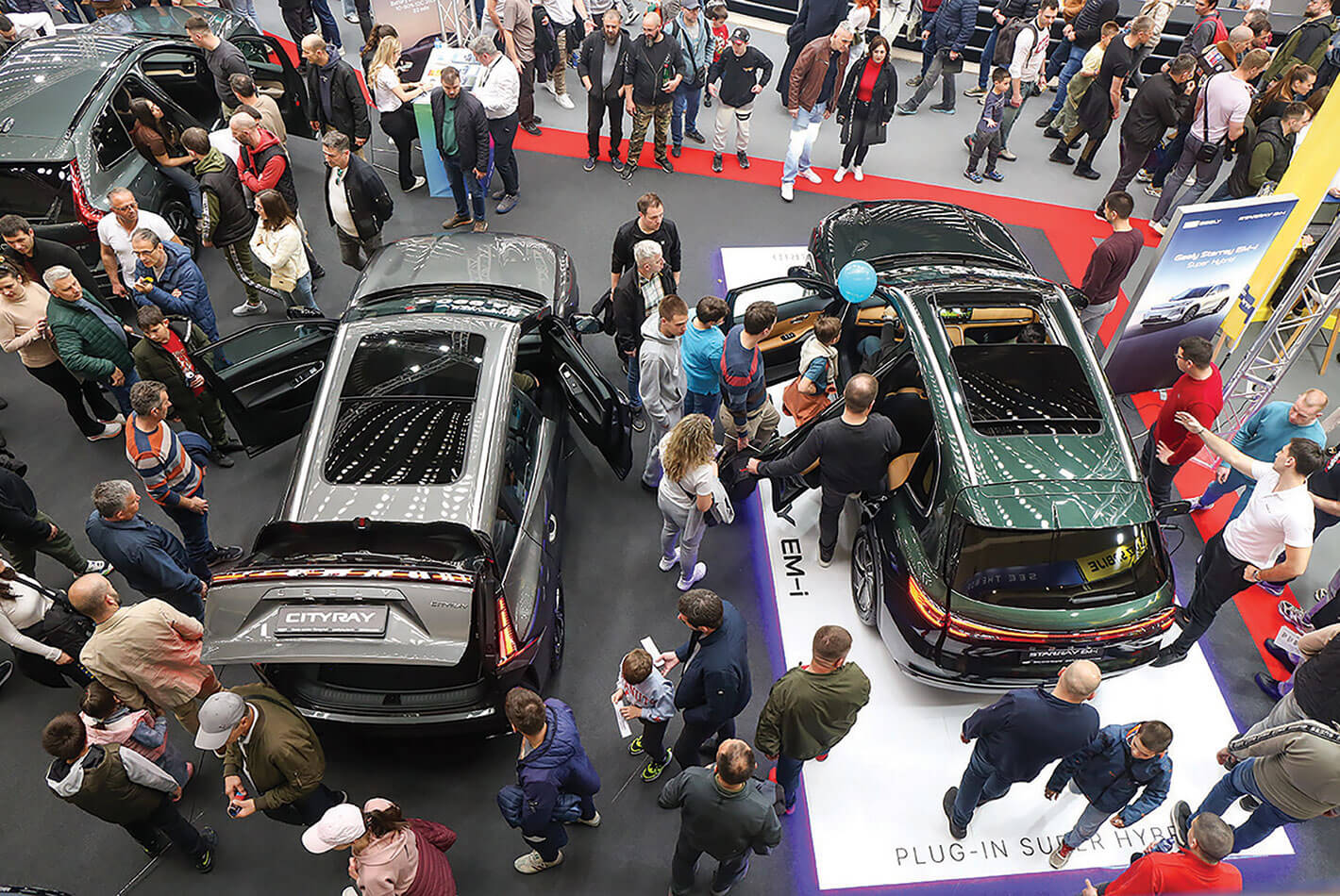
On the occasion of three decades of operation of the Serbian Association of Importers of Vehicles and Parts, we spoke with the Association’s Secretary General, Boris Ćorović, about the key changes shaping the domestic automotive market.
From record growth in new-vehicle sales and the increasingly dominant SUV segment, to challenges in developing electric-vehicle infrastructure and the inevitable transition toward sustainable mobility, this interview provides a realistic picture of a sector at a turning point between traditional powertrains and a future based on electrification and new technologies.

Q: You recently marked three decades since the establishment of the Serbian Association of Importers of Vehicles and Parts. How do you view the Association’s mission today, and in what ways has it contributed to the development of the automotive industry in Serbia over the year.
A: During this year’s auto show, we had the opportunity, together with the founders, to look back at 1996, when, following the lifting of sanctions, normal import, distribution, and after-sales support for vehicles in the then Federal Republic of Yugoslavia were re-established. Since then, the Association has continuously worked to provide the domestic market and consumers with access to the latest models and technologies coming from the European and global automotive industry.
At the same time, through cooperation with state institutions and partners, we have made a significant contribution to improving the regulatory framework and business conditions in the market. Today, this role is particularly evident through initiatives we are launching together with the Serbian Chamber of Commerce in the field of e-mobility, infrastructure development, and the long-term transition toward more sustainable transport.
For three decades, we have also been co-organizers of the Belgrade Motor Show, through which we bring the industry closer to citizens and businesses and regularly inform the public about trends in the domestic and European markets. At the same time, through cooperation with the Road Traffic Safety Agency and the Ministry of the Interior, we contribute to the broader public interest in road safety, as well as to the education of the public and the market by raising awareness of modern trends such as electrification and autonomous driving.
Taken as a whole, we believe that over the past 30 years, the Association has fulfilled its role as a reliable partner to institutions, a support to its members, and a relevant voice of the modern automotive industry in Serbia.
Q: How do you assess the current government subsidies for electric vehicles in Serbia? Are they sufficient to encourage wider adoption, and what would you potentially change in the existing regulatory framework?
A: Government subsidies for electric vehicles in Serbia certainly represent a good and important instrument, which has been in place for six years and has delivered visible results – although the share of electric vehicles remains low, it has been gradually increasing year by year thanks to this support. Experience also shows that no European country has managed to significantly scale up e-mobility without direct or indirect government incentives.
However, the current level of subsidies in Serbia is not sufficient to enable a stronger and more widespread transition to electric vehicles. An additional challenge is the lack of continuity – once the initial funds are exhausted, interruptions occur, creating uncertainty and effectively halting the market during certain periods. We believe it is crucial to ensure a larger budget and continuity throughout the year, without interruptions between subsidy cycles.
At the same time, subsidies are only one part of a broader picture. An integrated approach is necessary, including the development of charging infrastructure, improvements to the legal framework, the introduction of non-financial incentives, and the addressing of a range of operational issues that accompany the everyday use of electric and hybrid vehicles.
Therefore, we believe that a more significant breakthrough requires viewing e-mobility as a comprehensive system – where subsidies are an important, but not the only, element of the process.

Q:What are the trends in the import of new and used vehicles in the first quarter of this year compared to the same period last year? Which market segments are recording the highest growth or decline?In the first quarter of 2026, there has been an increase in the sale of new vehicles compared to the same period last year, both in the passenger car segment and in light commercial vehicles.
A: When it comes to passenger cars, around 1,000 more vehicles were sold, representing an increase of approximately 15 percent. In comparison, the LCV segment recorded growth of around 20 percent, or about 200 vehicles more than in the previous year.
The SUV segment continues to play a dominant role in the new-vehicle market, accounting for around 56 percent of total sales across all classes – from city cars to luxury models. There is also a noticeable increase in interest in premium brands, which are becoming increasingly present among top-selling models.
It is also important to highlight the recovery of the light commercial vehicle market, which declined in 2025 due to a slowdown in economic activity but is now returning to a growth trajectory. At the same time, due to current geopolitical circumstances and energy price trends, there is also growing interest in electric vehicles.
On the other hand, the used car market still dominates, accounting for around 83 percent of the total market, and includes a significant share of imported older vehicles with lower emission standards. During the past year, approximately 147,000 used vehicles were registered for the first time, posing a serious challenge from both environmental protection and road safety perspectives.
Without questioning the need to import used vehicles, we believe that in the coming period, additional mechanisms should be considered to encourage fleet renewal, such as restrictions on older standards or the introduction of higher environmental taxes for the biggest polluters. Overall, the new-vehicle market continues its growth trend from 2025 but remains under the strong dominance of the used-vehicle segment.
Interview by Milena Maglovski
Read the whole interview in Energy portal Magazine ECOMOBILITY