

Newsletter Subscribe
Enter your email address below and subscribe to our newsletter



At a time when the energy transition is becoming a key issue for Europe’s future economic development and energy security, the need to connect experts, investors, decision-makers, and innovators has never been greater. It was precisely with this mission that The Energy Bridge (TEB) was created — a community intelligence start-up and spin-off of the Vienna University of Technology, which seeks to accelerate the transformation of the energy sector in Central and Eastern Europe by networking key stakeholders.
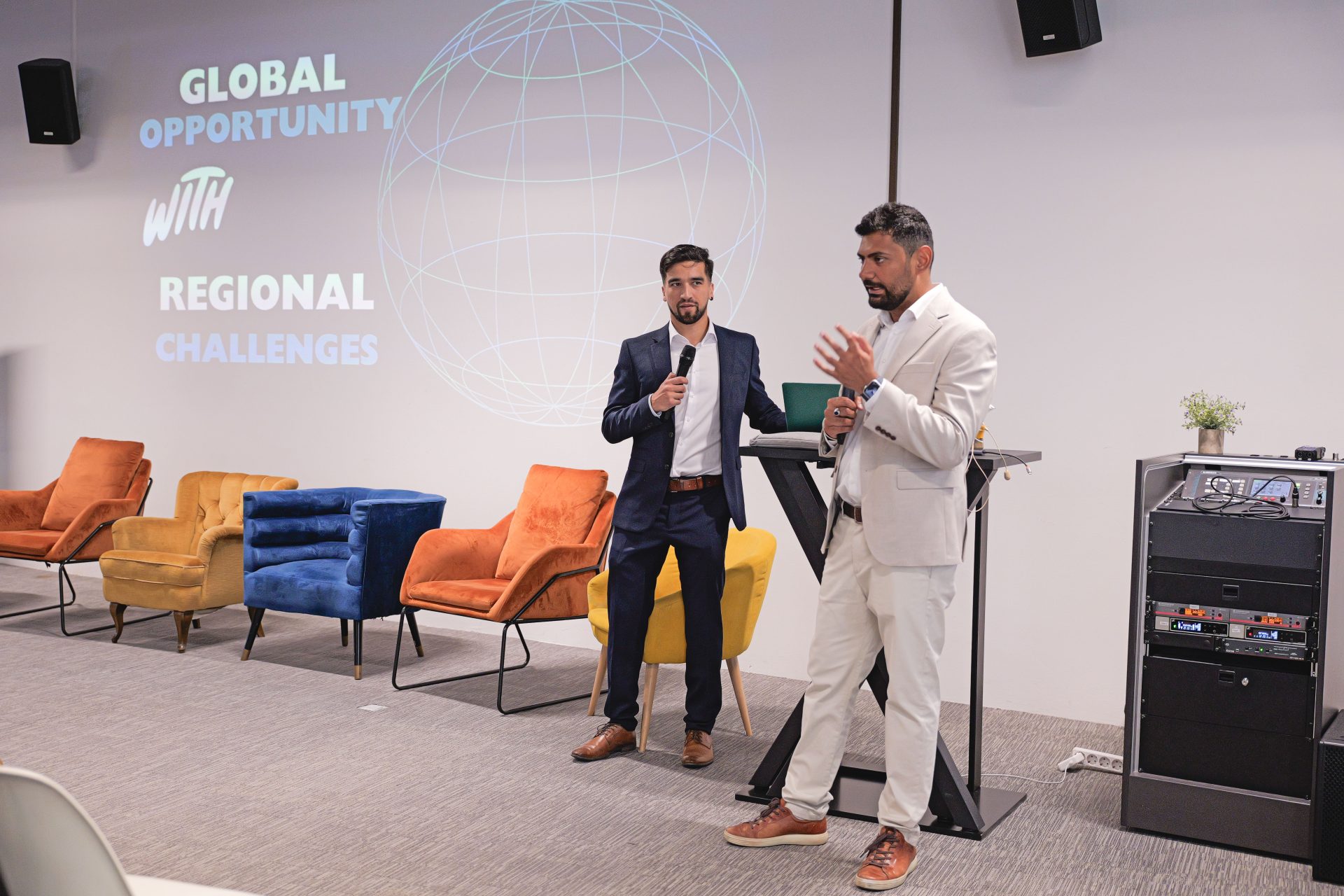
Confirmation of the importance of this initiative also came at the third Energy Bridge Forum, held in Vienna, which brought together more than 500 participants from over 18 countries. Over two days, 90 speakers on two stages and across six thematic areas discussed the most important challenges and opportunities of the energy transition, from the development of renewable energy sources and energy storage to financing, digitalization, and regional cooperation.
The Most Important Outcomes of the Forum
BESS as a New Investment Infrastructure Class – Battery energy storage systems (BESS) are increasingly moving from a speculative investment phase into the category of structured infrastructure assets. As Thomas Rosenzopf of Enervis pointed out, this development is being driven by a “rare convergence” of factors – increased market volatility, falling capital expenditure (CAPEX), and improved regulatory frameworks.
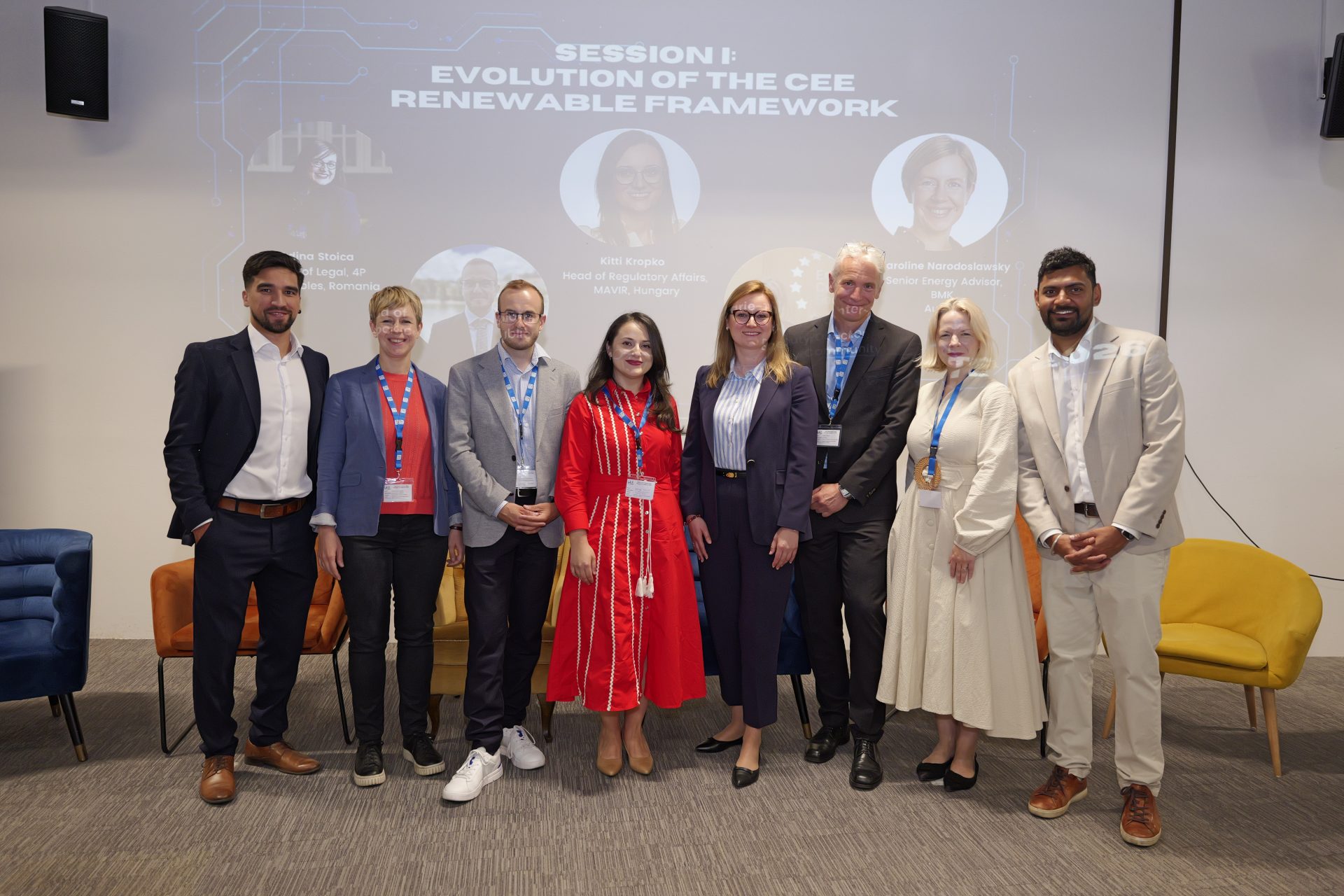
His analysis of the profitability of Central and Eastern European (CEE) markets showed that individual markets differ significantly in terms of the depth of volatility, while the most attractive investment opportunities are those markets that combine frequent price fluctuations with high price spreads. The mere presence of negative price signals, Rosenzopf emphasized, is not sufficient to create a sustainable business model.
Lukas Stühlinger of Fingreen pointed to the increasingly pronounced shift towards project bankability, noting that contracted revenues and a certain level of cash-flow certainty are necessary to secure bank financing in the CEE region. According to him, such certainty is provided through capacity markets, contracts for difference (CfDs), tolling agreements, or long-term power purchase agreements.
Stühlinger also emphasized that subsidies in the CEE region today are not only useful but, in most markets, a necessary precondition for project implementation. As key examples, he highlighted Polish capacity market contracts lasting 15 to 17 years, Bulgaria’s RESTORE grants, which cover up to 44 percent of CAPEX, and Hungary’s combined schemes of CfD contracts and grants.
In his assessment, attracting long-term institutional capital depends on the speed of grid connection, certainty in the permitting process, and a clear legal status for energy storage. At the same time, the countries of Central and Eastern Europe face the task of developing sustainable electricity market models after the expiry of existing subsidy programs.
Western Balkan Market Integration – One of the central topics of the Forum was also the Energy Community’s role in aligning the energy markets of Central and Eastern Europe and the Western Balkans with the European Union’s internal market. Participants assessed that the process of transposing European legislation has begun, but its implementation is still in its early stages. Although this is a long-term process, optimism was expressed that the countries of the region, with appropriate support, will successfully progress towards full integration with the EU energy market.
Decarbonization of District Heating Systems – On the second day of the Forum, concrete examples were presented confirming that the decarbonization of district heating systems is no longer a theoretical concept, but a process already being implemented in practice.
Particular attention was drawn to the City of Vienna’s Heating Plan to 2040, with an estimated value of EUR 45 billion. Also presented were Wien Energie’s 55 MW heat pump at the Ebswien facility, considered the most powerful in Europe, and the deep geothermal energy development program aimed at securing 200 MW of thermal energy. These projects showed that technological solutions for heating decarbonization are already available and that their implementation is rapidly expanding across Europe.
Identified Challenges and Coordination Gaps
Market Fragmentation – In Central and Eastern Europe and the EU, there are more than 20 national balancing frameworks, and that significantly complicates the establishment of a single market. The Forum emphasized that without market coupling, there can be no efficient electricity market. Although Hungary’s integration into the PICASSO platform, planned for the first quarter of 2026, represents a step forward, the harmonization process is still far from complete.
Misalignment Between Grid Development and Renewable Energy Sources – Only three per cent of Romania’s renewable energy portfolio can be considered bankable, not because of technological limitations, but due to insufficient coordination between grid connection, permitting, and financing. At the same time, permitting procedures in Austria remain among the longest in Europe, lasting between eight and twelve years.
Coordination Between TSO and DSO Operators – Distribution system operators (DSOs) are gradually shifting from passive grid managers to active platform operators, but the regulatory framework has not kept pace with this transformation, creating additional obstacles to the efficient integration of new energy resources.
Cross-Border Planning and Market Coupling – The Forum assessed that the Western Balkans already represents a kind of “large battery” for the European Union market, thanks to its energy potential. However, the formal integration and coupling of regional electricity markets remain in their early stages of development.
Lack of Heating and Cooling Planning – Although advanced spatial tools for energy planning exist, such as solutions developed by AEE INTEC and SIR Salzburg, most countries still lack a legal obligation to plan local heating and cooling systems, which slows their decarbonization.
The Winning Combination: Spread and Subsidies
The most important conclusion from the event is that successful business models for BESS require markets that combine frequent price events with wide daily price spreads; negative price signals alone are insufficient.
Romania has highly attractive price spreads and significant revenue potential from the day-ahead market. Although historical grid charges were a concern, recent legislative changes have greatly reduced exposure to grid charges for storage assets, making it a highly attractive investment market, with strong volatility expected until 2030.
Bulgaria generates exceptionally high revenues in the day-ahead market, sufficient to ensure a sustainable, independent business model while maintaining structurally low grid charges. Moreover, Bulgaria offers substantial funding support through RESTORE grants, which cover up to 44 percent of a project’s CAPEX.
While markets such as Hungary have high spreads, they lack storage-specific exemptions from grid charges, which seriously weakens standalone profitability. Ultimately, access to EU funding mechanisms and supportive regulatory frameworks positions Romania and Bulgaria, and likely other Western Balkan countries with transposed regulations, at the forefront of battery storage expansion in CEE.
The Evolution of TEB in the Coming Years
Current Ecosystem:
Planned Initiatives Publicly Announced:
The conclusions of TEB Forum 2026 clearly show that the energy transition in Central and Eastern Europe is no longer a question of technology availability or a lack of investment interest. The key challenge today is coordination – between markets, regulatory frameworks, grid infrastructure, financial institutions, and different stakeholders in the energy sector. It is precisely the ability to connect these elements that will determine the speed and success of the region’s energy transformation.
The Forum also confirmed that energy storage systems and other flexible resources are becoming a foundation of the future power system. However, their further development will depend on the creation of stable, predictable regulatory frameworks that provide investors with long-term certainty and enhance project bankability. Countries that successfully combine market reforms, incentive mechanisms, and accelerated grid infrastructure development will have the opportunity to become leaders in the new energy economy.
The importance of deeper integration of the Western Balkans with the European Union energy market was particularly emphasized. The region has significant energy potential, but to fully valorize it, it is necessary to accelerate regulatory harmonization, cross-border cooperation, and the creation of a more favorable investment environment. In this process, initiatives such as the TEB Forum play an important role by creating a platform for knowledge exchange and the launch of partnerships.
Prepared by Milena Maglovski
The story was published in Energy portal Magazine CLEAN ENERGY