

Power outages are common in rural areas of Eastern Ukraine partly due to the worn out power lines infrastructure and also because of harsh weather conditions in the winter and autumn. For a hospital power outages are not just a matter of inconvenience. The lack of a reliable energy supply can and does have a drastic impact on a doctor’s ability to save children’s lives.
Years of mining have turned the town of Bryanka in Eastern Ukraine into an environmental hotspot leaving a heavy footprint not only on the environment through increased greenhouse gas emissions and local air, water, and land pollution but also negatively impacting people’s lives. Coal dust stirred during the mining process and from transport of coal can cause severe respiratory problems to people and in some extreme cases can even lead to death. The recent economic crisis has affected Ukraine more strongly than other countries and it aggravates the situation. High levels of unemployment, low incomes, decreased life expectancy, and the growth of infant mortality rate and proliferation of communicable diseases are just a few challenges that Bryanka residents face as a result. Women and children are particularly prone to suffer from negative health due to living in areas affected by mining.
There was an urgent need for solution to the problem of power outages at Bryanka children’s hospital. Since the hospital is a public organization it has been constantly underfunded meaning that the solution had to be cost-effective, environmentally-friendly and sustainable at the same time.
“We wanted to buy a diesel electric-power generator but had to give up this idea,” says Elena Zhevaga , the hospital’s supply manager. “This is a children’s hospital. We couldn’t have the constant smell and noise here. Besides, the exhaust from the diesel electric-power generator is harmful and it releases CO2 into the air – and we have enough of that anyway here,” she adds.
The environmental NGO “Zeleny Svit” (Green World) has turned to UNDP GEF Small Grants Programme for the solution to the problem of preventing power outages while at the same time providing a source of clean, affordable, and reliable energy for the hospital.
The solution was to power the hospital using wind energy. It was a joint decision of the hospital, the mayor’s office, and the NGO ‘Zeleny Svit’ to purchase and install a 5 KwH wind power generator capable of producing up to 5 KwH of energy, enough to keep the hospital running for 5 hours in the event of a power failure.
The Small Grants Programme supported the initiative with 50 000 USD because it was not only helping people of Bryanka but it was providing global environmental benefits by reducing carbon dioxide emissions through the use of wind energy. In the broader scheme of things, the Small Grants Programme project helped to raise people’s awareness about climate change and demonstrated local solutions for global challenges. The GEF Small Grant Programme has been deeply committed to promote environmental protection and support initiatives of non-governmental and community based organizations, demonstrating that community action can respond to people’s needs and promote global environmental benefits at the same time.
This grass-roots initiative was also supported by the Lugansk state environmental department because it contributed to local environmental strategies and demonstrated an integrated approach to ecology, economy and health care.
The solution to the environmental and economical problems at the Byyanka Children’s hospital was always there – blowing in the wind.
Source: undp.org


The Prime Ministers of Sweden and Serbia confirmed that IKEA will invest 300 million euros in Serbia by the end of the year at the World Economic Forum in Davos during January. Exclusively for Energy portal Mrs Irena Dobosz, the manager for sustainability at IKEA company for Southeast Europe, has said something more about the way in which this company operates. IKEA follows the values and the concept of the founder Ingvar Kampard, who grew up in Smaland province in Sweden. Rocky landscape dominates Smaland province, and residents have the reputation of innovative people because they use all raw materials in a thoughtful way and do not recognise imperfect solutions. That spirit which is characterized by the belief that no method is more effective than the good example is incorporated in IKEA.
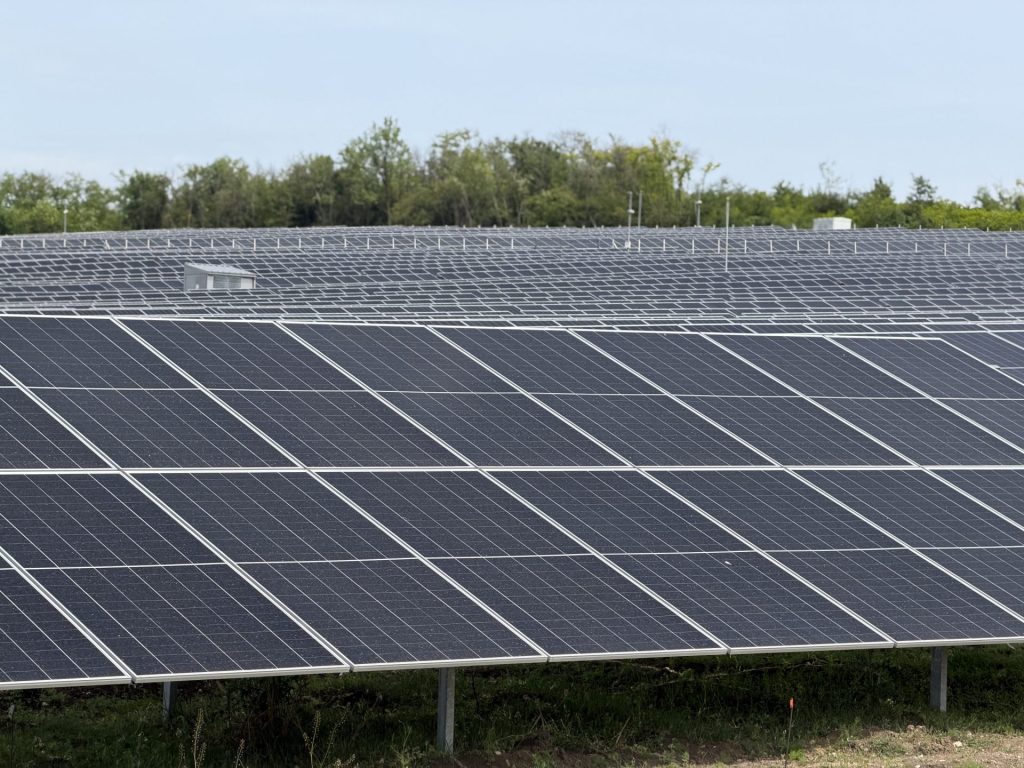
Irena Dobosz: The IKEA company is dedicated to performing business in accordance with the sustainability principles which are grounded on the strategy “IKEA People & Planet positive“. The planning of our investments in the construction of buildings, whether commercial, business or manufacturing are in accordance with this strategy. We have invested 1,5 billion euros in our own renewable energy sources (solar power plants, wind generators) from 2009. Our goal is to achieve energy independency by 2020 by that is to produce the amount of energy that we consume. So far we have installed 700,000 solar panels on our department stores and other facilities world-wide. Numerous standards regulate technical solutions which will be implemented on our facilities. In addition to the construction of our own renewable energy resources (solar power plants on the roof of the facilities or the usage of geothermal energy), other key principles applied are the rational consumption of energy and resources through the application of new materials and technologies (for example LED lightening in the facilities, the use of sophisticated systems for planning and facility management, etc.), the use of renewable materials and waste management.
Irena Dobosz: IKEA continuously records an increase on a global level. Last year we had an increase of 11% and at the moment there are 375 IKEA department stores in 28 countries, which achieved a turnover of more than 33 billion euros and 884 million visits. With its diverse business activities IKEA is present in 43 countries and the number of employees arose to 172,000 last year.