

Newsletter Subscribe
Enter your email address below and subscribe to our newsletter


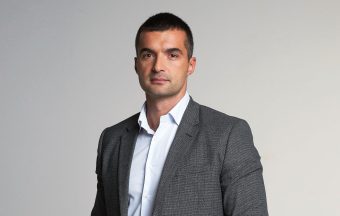
This year, ProCredit Bank in Serbia is marking 25 years of successful operations, during which it has built a reputation as a reliable and responsible financial partner, particularly for small and medium-sized enterprises and individuals. From the first green loans for individuals in 2007 to the latest programs supporting the digital and energy transition, the bank has consistently implemented a sustainable banking strategy. We spoke with Nemanja Tomić, Member of the Executive Board of ProCredit Bank, about the results achieved so far, plans for a green future, and the importance of internal culture in recognizinclients’ environmental potential.
Q: On the occasion of ProCredit Bank’s 25 years of successful operations in Serbia, what are the key values you have nurtured throughout this period, and what will you continue to work on in the future, especially when it comes to sustainable banking?
A: From the very beginning, our operations have been based on clear values: responsibility, transparency, and a long-term approach to clients. Over the past 25 years, we have not pursued rapid growth at any cost, but rather stability and the quality of our placements, with strong support for small and medium-sized enterprises and individuals. Sustainable banking holds a special place in our business model, and we do not treat it as a trend but as a strategic commitment.
In the coming period, we will continue to develop green and digital products while also investing in client education to help them better understand the importance of sustainable investments and make long-term, responsible financial decisions.
Q: Back in 2007, you launched the first green loans for individuals. After almost two decades of developing green finance, what are your further plans when it comes to expanding your green loan offer, particularly for individuals, given rising energy prices and citizens’ngrowing interest in energy efficiency?
A: We were among the first to recognize the potential of investments in household energy efficiency. Today, citizens’ interest is significantly higher, particularly due to rising energy prices. Our focus is on further improving our offer – expanding financing for solar systems and energy renovation of buildings, as well as simplifying the application process through digitalization. Our goal is to make these investments accessible to as many citizens as possible, with a clear calculation of savings and long-term benefits.
Q: ProCredit Bank recently received the O.U.R. HR award for the best HR team. What does this recognitionbmean to you, and how does the culture of sustainability within the bank – which you have built through HR practices – help employees better recognize green potential among clients and become more proactive in offering green financial products?
A: This award is a confirmation of our long-standing investment in employee development and an organizational culture based on responsibility. At ProCredit Bank, we believe that sustainability starts from within – through employees’ knowledge and awareness. Through continuous training and development programs, our employees gain an understanding of topics such as climate change and green finance, enabling them to act as competent advisers to clients.
As a result, they not only recognize opportunities for green investments but also actively encourage clients to think in that direction.
Q: ProCredit Bank and the EBRD have signed a EUR 10 million loan agreement for micro, small, and medium-sized enterprises. What exactlyare the criteria for companies to qualify for these funds, and what does the procedure look like for an average SME owner in Serbia?
A: The Go Digital in the Western Balkans program provides a combination of specialized financing for automation, digitalization, competitiveness, and green technologies for micro, small, and medium-sized enterprises. The key criteria relate to business sustainability, financial transparency, and a concrete investment idea that contributes to greater energy efficiency or a reduction in negative environmental impact.
The procedure itself is simplified the client defines the project with a banking adviser, after which an assessment is conducted, and a quick financing decision is made. An additional advantage is a grant of up to 10 percent of the total loan amount, plus free technical support from the program consultant, both financed by the EU.
Q:Given that at least 60 percent of placements are directed towards green and digital investments, how much will this program accelerate the green transition in Serbia?
A: We believe the impact will be significant, as the SME sector forms the backbone of the domestic economy. It is precisely through programs like this that faster business modernization, reduced energy costs, and more competitive operations are made possible. Our focus on green placements is already producing results, while additional technical assistance and investment incentives from the European Union, through partnerships such as this one with the EBRD, further accelerate the transition.
Q: ProCredit Bank already uses the Net Zero calculator to measure carbon footprint – what has been the initial feedback from clients who have used it? Were they surprised by the results, and how often does this tool prove decisive in their decision to apply for a green loan?
A: Client reactions have been very positive. For many, this is the first time they have been able to assess their own carbon footprint concretely and understand where the largest emissions occur. They are of ten surprised by the results, but this is precisely what motivates them to consider changes. In practice, this tool often serves as the first step towards deciding whether to invest in energy efficiency or renewable energy sources. We are increasingly seeing clients, after the analysis, seeking concrete recommendations and financial solutions to reduce emissions.
Q:You financed your first solar project back in 2013, followed by the largest solar power plant in 2023. What is the next major step in supporting renewable energy sources?
A: After financing pioneering projects in the field of solar energy, our next focus is the further decentralization of energy generation. This includes support for small solar systems for businesses and households, as well as investments in innovations such as energy storage. Our ambition is to remain a reliable partner in Serbia’s energy transition and actively contribute to its sustainable future.
Interview by Milena Maglovski
The interview was published in Energy portal Magazine CLEAN ENERGY