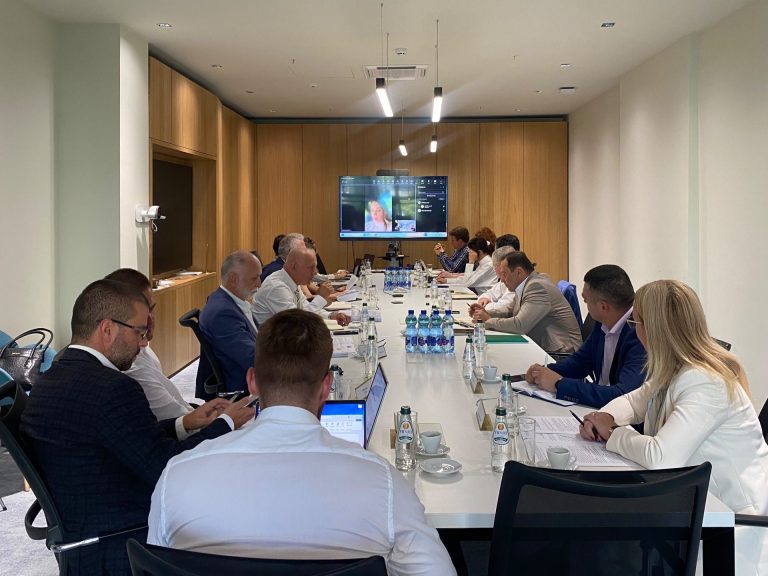
Serbia’s Minister of Mining and Energy, Dubravka Đedović Handanović, said that talks are currently under way between the Russian shareholders of Naftna industrija Srbije (NIS), Hungary’s MOL, and other potential buyers, adding that a binding agreement on the purchase of NIS shares could be signed by the end of the week.
Following a meeting with Hungary’s Minister of Foreign Affairs and Trade, the minister stated that once agreement is reached on the key elements of the transaction, a request will be submitted to the US administration to extend NIS’s operating licence. She noted that Hungary has so far supported Serbia in these requests, with the aim of ensuring the company’s continued operations after January 23 and the successful completion of the ownership restructuring process, according to a statement published on the website of the Government of Serbia.
More:
Đedović Handanović also said that increasing Serbia’s ownership stake in NIS by around five percentage points is being considered, stressing that there is no intention to shut down the Pančevo oil refinery. She added that during nearly 100 days without crude oil supplies via the Adriatic Oil Pipeline, security of supply had been maintained, and that the Pančevo refinery is expected to continue operating now that deliveries via JANAF have resumed.
The meeting also addressed accelerating the drafting of an intergovernmental agreement between Serbia and Hungary, as well as joint energy projects, including the construction of the Serbia–Hungary oil pipeline, with works expected to begin in mid-year.
Hungarian Foreign Minister Péter Szijjártó confirmed that negotiations between Gazprom Neft and MOL are under way and expressed strong support from the Hungarian government for a potential entry of MOL into NIS’s ownership structure, saying this would contribute to greater regional energy security.