

Newsletter Subscribe
Enter your email address below and subscribe to our newsletter



The country of a thousand islands is increasingly positioning itself as a regional leader in transport electrification, with professional and independent organizations playing a significant role in this process. Among them, the Croatian National E-Mobility Association (HUEM) stands out, bringing together all relevant stakeholders in Croatia’s growing EV ecosystem. We spoke with Davor Karolj, Director of the Association, about the development of e-mobility, infrastructure challenges, incentives, and the broader geopolitical context of transport electrification.

Q: To begin with, could you provide an overview of HUEM’s founding history and its core mission? How has the role of the Association evolved since its establishment in the context of energy transition and the decarbonization of transport in Croatia?
A: HUEM – the Croatian National E-Mobility Association – was established in 2025 with a clear vision: to create an independent, national community that brings together all participants in the e-mobility ecosystem. From drivers and enthusiasts to CPOs (charging point operators), service providers, vehicle dealers, and experts – they are all united by the belief that electric mobility is better for the environment, cities, and quality of life. In a relatively short period, we have become a recognized platform with more than 250 association members and nearly a thousand users of our shared digital platform. What differentiates us from lobbying or commercial interest groups is our independence – we act solely in the interest of end users and the broader public. Our role has developed in two directions: the first is community-oriented, providing daily support, knowledge exchange, and information sharing, while the second is directed toward the public, state administration bodies, and regulators, delivering expert analyses and concrete recommendations to remove administrative and infrastructural barriers.
Q: How do you assess the current incentive schemes for the purchase of alternative fuel vehicles in Croatia? Are the existing measures sufficiently effective in accelerating the transition to electric and other low-carbon vehicles, or do you see room for improvement?
A: Incentives in Croatia are not new – the Environmental Protection and Energy Efficiency Fund (FZOEU) has been implementing them since 2014, and in that sense, there is institutional continuity that should be acknowledged. However, the current model is still not sufficient to significantly accelerate mass adoption, nor is it predictable, as calls for applications are not issued every year for certain categories.
There are several structural issues we observe in practice: seasonality and the “fastest finger” model are the first. Funds are opened periodically, interest is high, reservations are filled extremely quickly, and uncertainty then follows. Individuals and legal entities that have applied cannot know with certainty whether they will receive the incentive until they receive confirmation and a contract for signing. This uncertainty when deciding to purchase a vehicle worth 30,000, 40,000, or 50,000 euros is not negligible.
The second issue is administrative complexity. The procedure is demanding and leaves no room for error – a single document missing or incorrectly submitted can result in the application being rejected, often several months after the funds are reserved. The result is that a user who, in good faith, planned a purchase is left without the incentive, without a clear timeline for reapplying, and with the impression that the system is not user-friendly.
It is also important to be fair regarding the amounts, as they are indeed substantial. Depending on the call, co-financing can reach 30–50 percent of the vehicle’s value, with a maximum of 9,000 euros for a fully battery-electric vehicle. This is a significant financial lever that, when functioning properly, genuinely helps encourage the purchase of a battery-electric vehicle compared to an equivalent internal combustion engine vehicle.
What we advocate for, as HUEM, is a transition to a more predictable, continuous model – rather than seasonal calls with a limited number of allocations. This would result in a stable, transparent program that provides users with certainty when planning their investments. An electric vehicle is not an impulsive purchase; it is a decision planned over months, and the incentive system must follow that logic, rather than creating additional stress and uncertainty in the process.
Q: HUEM has conducted analyses related to electric buses – could you tell us more about the key findings? What are the main challenges and advantages of electrifying public transport according to your data?
A: The Croatian National E-Mobility Association conducted an analysis of the electrification of public bus transport in Croatia, and the results show significant progress. According to our data, Croatian cities and municipalities have already procured or are in the process of procuring more than 210 electric buses. The project includes 19 cities and municipalities, with a total investment value of around EUR 163 million. This represents one of the largest transformations of public transport in Croatia’s history.
A large portion of these investments has been enabled by the National Recovery and Resilience Plan, meaning that European non-repayable funds were the key driver behind cities’ actions. This is an important lesson for policymakers, as without a clear and accessible financing mechanism, many cities would not have had the capacity to undertake such a transformation independently.
In terms of advantages, electric buses do not emit CO2 or other harmful gases, reduce noise in urban areas, and provide citizens with quieter, more modern public transport. In addition to environmental benefits, the economic argument is becoming increasingly clear – our data for Osijek indicate estimated energy-cost savings of around 40 percent per kilometer compared to diesel vehicles. Given the mileage achieved by bus operators, this figure is highly relevant.
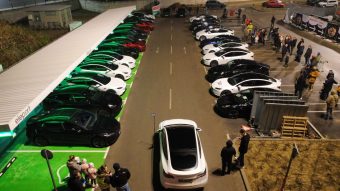
The key challenge remains charging infrastructure. Vehicle procurement is only part of the story – cities must simultaneously build depot charging stations and ensure sufficient power grid capacity. Zagreb is addressing this systematically – “Končar” is building the largest charging terminal in Croatia, with a capacity of 124 charging positions, but not every city is in a position to plan at that scale. This is where we see room for coordinated national support for smaller municipalities.
Q: Are you satisfied with the current pace of public transport electrification in Croatia? What are the key factors influencing the faster or slower introduction of electric buses in cities?
A: The pace is not satisfactory if observed in absolute numbers and in comparison with the European average, but if we look at the trend and dynamics over the past two years, the picture is significantly more positive. In a short period, Croatia has initiated procurement of more than 210 electric buses across 19 cities and municipalities, which would have been unthinkable just a few years ago.
The key factor accelerating the process has been European funding, specifically the NRRP. As a rule, cities do not have the capital for such investments from their own budgets, and electric buses are significantly more expensive to procure than diesel ones, so without grants, most of these projects would not have been initiated at all.
However, this is also where a structural issue lies that slows further progress. Vehicle procurement is only the first step, as cities must simultaneously address the construction of charging terminals, which are technically complex and financially demanding. Smaller cities often lack both the administrative capacity to prepare such projects and the technical expertise to define tender documentation. As a result, the same cities that have successfully utilized the funds are generally those that already had well-established administrative structures and experienced teams.
What would help concretely is centralized technical support for smaller cities in preparing tenders and project documentation, a clearer national plan for the electrification of public transport with measurable targets, and continuous access to financing, rather than one-off funding cycles that create pressure and administrative complexity.
Interview by Milena Maglovski
Read the whole interview in Energy portal Magazine ECOMOBILITY