

Newsletter Subscribe
Enter your email address below and subscribe to our newsletter


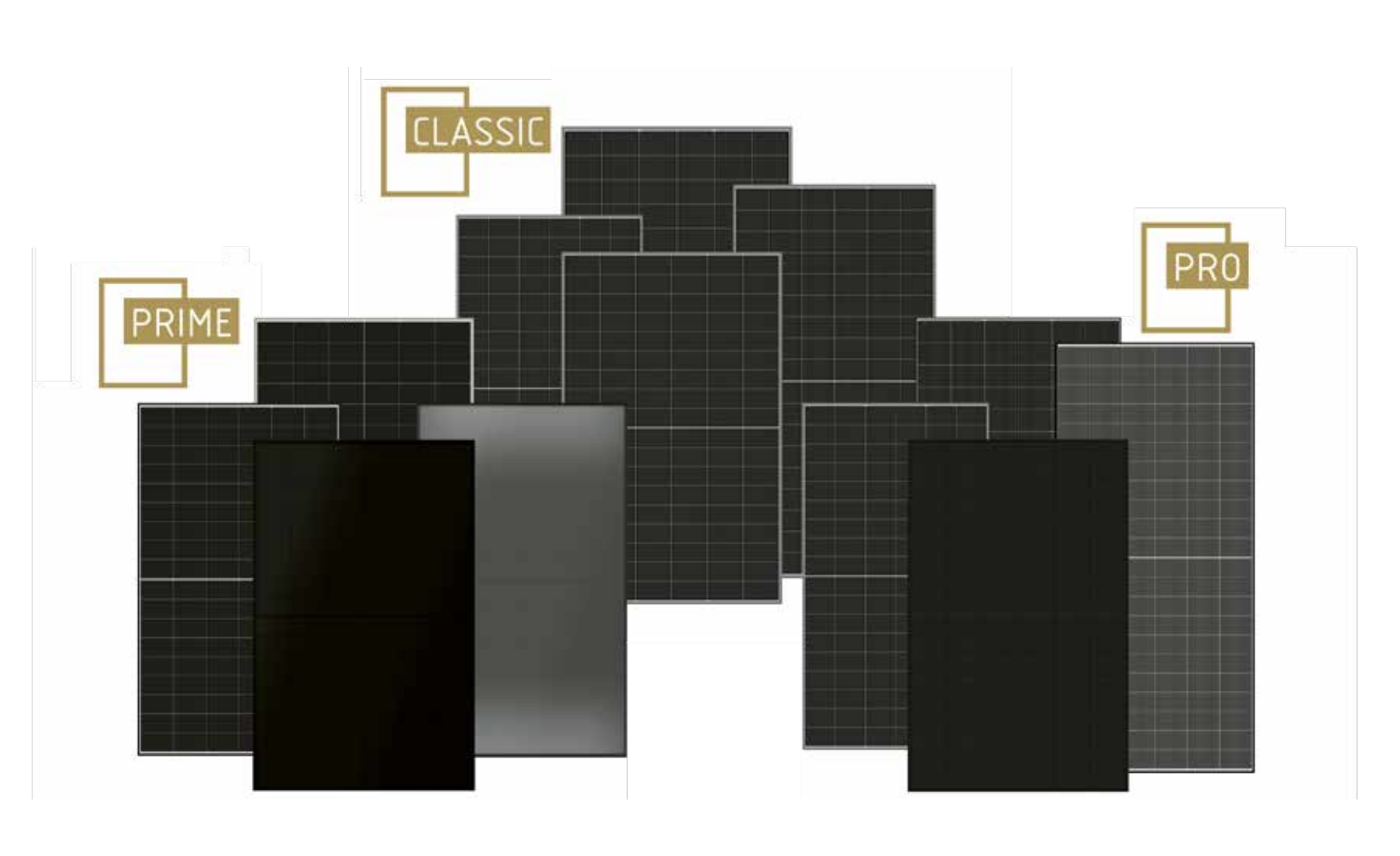
Europe’s solar market has undergone major changes in recent years. Financial pressures, falling module prices, competition from Asia, but also growing demand for renewable energy sources have changed the way investors choose equipment. In such an environment, the German manufacturer Luxor Solar has reorganized its portfolio into three clearly defined segments — ECO LINE Classic, ECO LINE Pro, and ECO LINE Prime. We spoke with Nino Sijerić, the company’s Business Development Manager, about the reasons for this change, the state of the market, and the direction in which the solar industry is developing.
Q: What led to the reorganization of the ECO LINE portfolio, and how do the Classic, Pro, and Prime segments function today?

A: We noticed that there are three most common profiles of needs. One is investment optimisation, meaning the best possible price and a cost-efficient model. The second is long-term reliability and security, and the third is the highest utilization per square meter. We felt that our portfolio may not have been segmented clearly enough, which meant that people could not immediately reorganize where they belonged, so we wanted to simplify it.
This is how ECO LINE Classic was positioned for projects where the initial investment and competitive price are key. ECO LINE Pro focuses on longevity and mechanical durability, while ECO LINE Prime was developed for maximum efficiency and uses back-contact technology.
Classic and Pro use TOPCon technology, while Prime is based on back-contact technology. That is the main difference.
The new segmentation also brought a change in the approach to warranties. We realized that competitors in this segment generally offer a 15-year product warranty, and that is why Classic has been positioned in a similar way. But our Pro remains the product for which we are reorganized – with a 30-year product warranty and a 30-year performance warranty. With this, we wanted to show why people pay more for Luxor.
There are also differences in module performance. Classic currently reaches a power output of around 620 W, Pro 630 W, while Prime, with back-contact technology, goes up to 655 W, with further efficiency growth expected.
As far as our segmentation is concerned, there is no winner. All products have their position on the market, depending on the client’s needs. Over the past four months, the ratio between the Classic and Pro segments has been practically 50–50 per cent.
Q: The European solar market is undergoing major changes. How do you see market development in the region today, and are investors still primarily guided by price?
A: In the Balkans, we have gone through a typical phase of market maturation. People often look at a solar panel only from the outside – as a glass surface in a rectangular frame – and assume that all products are more or less the same, so they make decisions solely on the basis of price. However, the market is slowly but surely learning from its mistakes, and the focus will increasingly shift from price alone to longevity and stable kilowatt-hour production.
The solar market has already gone through two major cycles, especially over the past two years, when the sharp decline in module prices pushed many manufacturers into financial difficulties. This was challenging both for manufacturers and for end users, because the market was changing rapidly.
When I started preparing my first offers in 2009, the price was around three euros per watt-peak, while today we are talking about 10 to 15 cents. Nevertheless, projects were already profitable back then. That is why I believe the next phase of the market will not be only about the lowest price, but about trust, longterm reliability, and secure revenues from electricity generation. Today, financial institutions primarily follow projects that can provide stable and long-term revenues, which is why the durability of equipment is becoming increasingly important.
Q: How much demand is there today for specialized solar solutions, and which products from that part of the portfolio would you particularly highlight?
A: In addition to standard products, Luxor Solar also develops specialized solutions for specific applications. We have the Eco Line Pro Non-Reflect module with glass that does not reflect light, but “traps” it, which is of great importance for certain projects. We are also developing façade modules with thicker glass and greater weight for integration into buildings.
Façades and façade modules are a topic that is still discussed too little. In winter, façades can generate more energy than rooftop power plants. What is needed is simply more communication with clients and the market, because quality will certainly prevail in the end.
Q: How are changes in the European market, such as the CBAM mechanism and competition from Chinese manufacturers, affecting demand for solar solutions in the region and the position of European companies such as Luxor Solar?
A: The changes are already visible. In Bosnia and Herzegovina, we are currently seeing strong demand precisely because of CBAM. Companies exporting to the European Union have to prove that they use renewable energy sources, so both small and large manufacturers are turning to solar as the fastest and simplest solution.
On the other hand, when it comes to competition from Chinese manufacturers, what matters today is no longer where a product is manufactured, but how it is manufactured.
Our business model is similar to that of Apple. We develop solutions and control quality, while production takes place in China. However, what matters is which components are used and what level of security the client receives. Our warranty is in Stuttgart, our headquarters are in Stuttgart, and therefore a client in Europe knows where they can exercise their rights in any situation. This is becoming increasingly important to people today.
Interview by Milica Vučković
The interview was published in Energy portal Magazine CLEAN ENERGY