


In the future, when fossil fuels are no longer the leading source of energy around the world and oil platforms aren’t pumping oil from beneath the ocean floor, we won’t have to worry about oil spills, but unfortunately, ocean pollution from spills, leaks and other sources is still a reality.
There are many technologies that have been developed to clean up spills more effectively, but the first hurdle is quick and accurate detection of chemical pollutants in the ocean.
Researchers at the Polytechnic University of Valencia have come up with a way to keep tabs on ocean pollution and keep it from spreading.
They designed an intelligent sensor system that can detect very small quantities of chemical pollution that might come from oil leaks and other contaminants. It can detect the exact location of toxic waste, diesel and other hydrocarbons and how far they have spread through that part of the ocean.
The sensors are embedded in floating devices that can be deployed in any body of water and using clever algorithms move independently to find the perimeters of a pollution event like in an oil spill. The sensors communicate back to the researchers in real time so that a map can be created using their relative positions and what contaminants they’re detecting.
A system like this could make pollution clean up more effective because spills and other events could be detected much earlier before they spread.
“Different chemical pollutants require different techniques for their clean-up. But the single most important factor for minimising the impact and damages to the affected area is how quickly they is detected. This is particularly critical in the case of oil spills, where a full clean-up is virtually impossible if decontamination efforts don’t start immediately,” said Jaime Lloret from the UPV’s Research Institute for Integrated Management of Coastal Areas.
Quick identification and containing of ocean pollution is crucial for the health of ocean organisms and humans too.
Source: www.treehugger.com


Vestas chief Runevad says UK rules shut out the latest hi-tech turbines, leaving Britain behind as the global wind boom spreads. The world’s biggest producer of wind turbines has accused Britain of obstructing use of new technology that can slash costs, preventing the wind industry from offering one of the cheapest forms of energy without subsidies. Anders Runevad, chief executive of Vestas Wind Systems, said his company’s wind turbines can compete onshore against any other source of energy in the UK without need for state support, but only if the Government sweeps away impediments to a free market. While he stopped short of rebuking the Conservatives for kowtowing to ‘Nimbyism’, the wind industry is angry that ministers are changing the rules in an erratic fashion and imposing guidelines that effectively freeze development of onshore wind. “We can compete in a market-based system in onshore wind and we are happy to take on the challenge, so long as we are able to use our latest technology,” he told the Daily Telegraph.
“The UK has a tip-height restriction of 125 meters and this is cumbersome. Our new generation is well above that,” he said. Vestas is the UK’s market leader in onshore wind. Its latest models top 140 meters, towering over St Paul’s Cathedral. They capture more of the wind current and have bigger rotors that radically change the economics of wind power. “Over the last twenty years costs have come down by 80pc. They have come down by 50pc in the US since 2009,” said Mr Runevad. Half of all new turbines in Sweden are between 170 and 200 meters, while the latest projects in Germany average 165 meters. “Such limits mean the UK is being left behind in international markets,” said a ‘taskforce report’ by Renewable UK. The new technology has complex electronics, feeding ‘smart data’ from sensors back to a central computer system. They have better gear boxes and hi-tech blades that raise yield and lower noise. The industry has learned the art of siting turbines, and controlling turbulence and sheer. Economies of scale have done the rest. This is why average purchase prices for wind power in the US have fallen to the once unthinkable level of 2.35 cents per kilowatt/hour (KWh), according to the US energy Department.
At this level wind competes toe-to-toe with coal or gas, even without a carbon tax, an increasingly likely prospect in the 2020s following the COP21 climate deal in Paris. American Electric Power in Oklahoma tripled its demand for local wind power last year simply because the bids came in so low. “We estimate that onshore wind is either the cheapest or close to being the cheapest source of energy in most regions globally,” said Bank of America in a report last month. A study by Bloomberg New Energy Finance concluded that the global average for the ‘leveled cost of electricity’ (LCOE) for onshore wind fell to $83 per megawatt/hour last year compared to $76-$82 for gas turbine plants in the US, or $85-$93 in Asia, or $103-$118 in Europe. Yet the size of the new wind turbines is precisely the problem in Britain, though the industry says they are less intrusive than more numerous smaller towers. Rural activists vehemently oppose further onshore expansion for a mix of reasons, often to protect the countryside and migrating birds. One application was turned down on fears that blade-noise would startle race-horses. It is understood that up 100 backbench Tory MPs wish to stop development of onshore wind altogether and that is effectively now happening. While there is no fixed height limit, the guidelines for local governments imply a 125 meter cap. This is often beaten down to nearer 100 meters, and the planning obstacles have become a nightmare for the industry.
Amber Rudd, Secretary of Energy and Climate Change, drastically revised policy last year, announcing that support for onshore wind would be cut from April 2016. She said 250 wind farms in the planning phase were unlikely to be built as a result but insisted that Britain was “reaching the limits of what is affordable, and what the public is prepared to accept”. Mr Runevad has other fish to fry in a booming global wind market. The Vestas share price has soared twentyfold since 2012, when the company flirted with bankruptcy after a debt-driven expansion, and faced cu At the time, critics said the wind bubble had played itself out, but the epitaphs were premature. The company’s plant in the Isle of Wight producing blades – shut in the crisis – has opened again. Vestas has raised its revenue guidance for this year to a record €8bn to €8.5bn, with a profit margin (EBITDA) of 9pc to 10pc. It has a mounting backlog of orders for South Korea, China, Brazil, India, Turkey, the US, Finland, and Greece. The world added a record 51 gigawatts (GW) of wind power capacity last year. Almost 40pc of this was in China, where the vast plains of the “three Norths’ have become the epicentre of the global industry – though the US midwest from the Dakotas to Iowa and Texas is no slouch either.

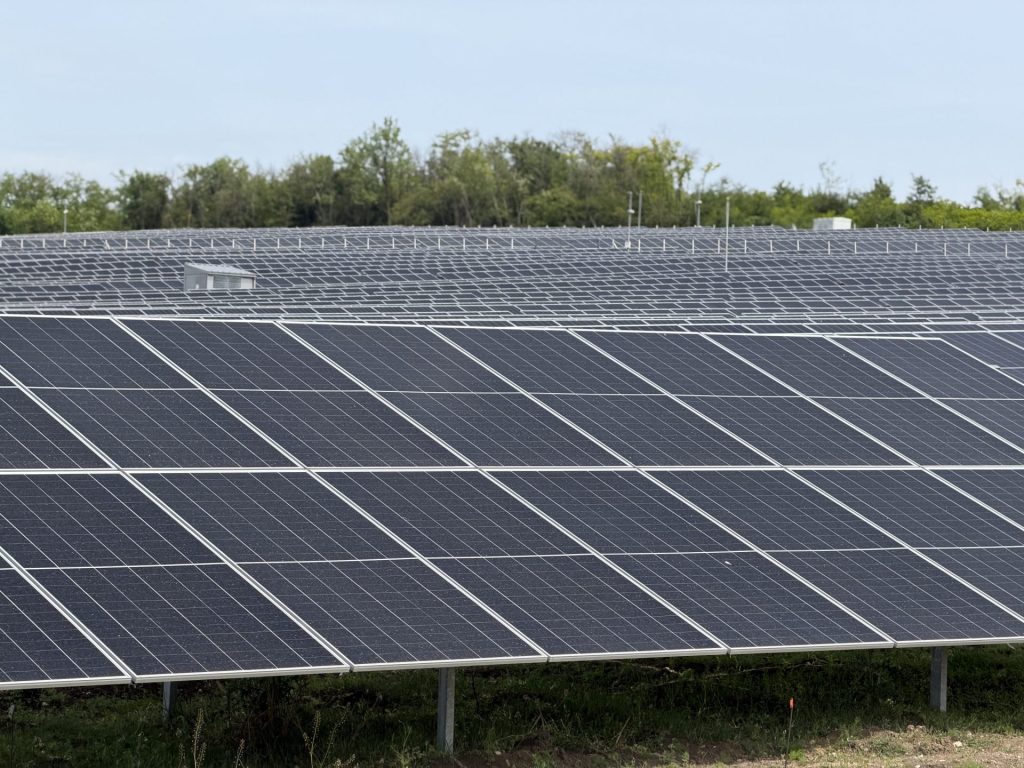
The country will also close more than 1,000 coal mines next year, taking out 60 million metric tons of unneeded capacity, according to the Xinhua report. China shuttered a similar number of mines this year, wiping out 70 million tons of production, according to a separate statement from the NEA dated Dec. 29. The country is on track to produce 3.58 billion tons of coal this year, down 0.5 percent from 2014, according to the NEA. China plans to increase wind and solar power capacity by more than 21 percent and have at least 20 gigawatts of new wind power installations and 15 gigawatts of additional photo voltaic capacity next year, according to the NEA statement.
China’s total coal production capacity including under mines construction is estimated at more than 5 billion tons while its coal output for next year will probably reach 3.7 billion tons, leaving more than 20 percent of its capacity idle, according to David Fang, a director with China Coal Transport and Distribution Association in Beijing. “We expect to see less downside pressure on coal prices in view of ongoing production cuts in 2016 and demand recovery, albeit at a slow pace,” said Helen Lau, an analyst with Argonaut Securities (Asia) Ltd. “China is still oversupplied.” The NEA estimates China next year will consume 3.96 billion tons of coal, 550 million tons of oil and 205 billion cubic meters of natural gas, according to the Xinhua report.


It’s worse than getting a scratchy throat. Breathing greenhouse gases and airborne particulate matter can make you seriously ill. These pollutants damage children’s developing lungs and cause asthma in children and adults alike. And that’s not all, as this diagram shows. Outdoor air pollution is among the topmost killers of the world in terms of shortening people’s life span, and it is estimated that it causes around 3 million deaths worldwide each year,” said air quality expert Rashid Shaikh. But solutions are available: Low-sulfur fuels and diesel particulate filters can drastically cut harmful pollutants — and save lives.


News that India has opened the first airport to be entirely powered by solar energy has underlined the growth in renewable energy. The sector has been growing strongly despite the dramatic fall in the price of oil and last year 59% of all new power generated around the world came from renewable sources.