Newsletter Subscribe
Enter your email address below and subscribe to our newsletter

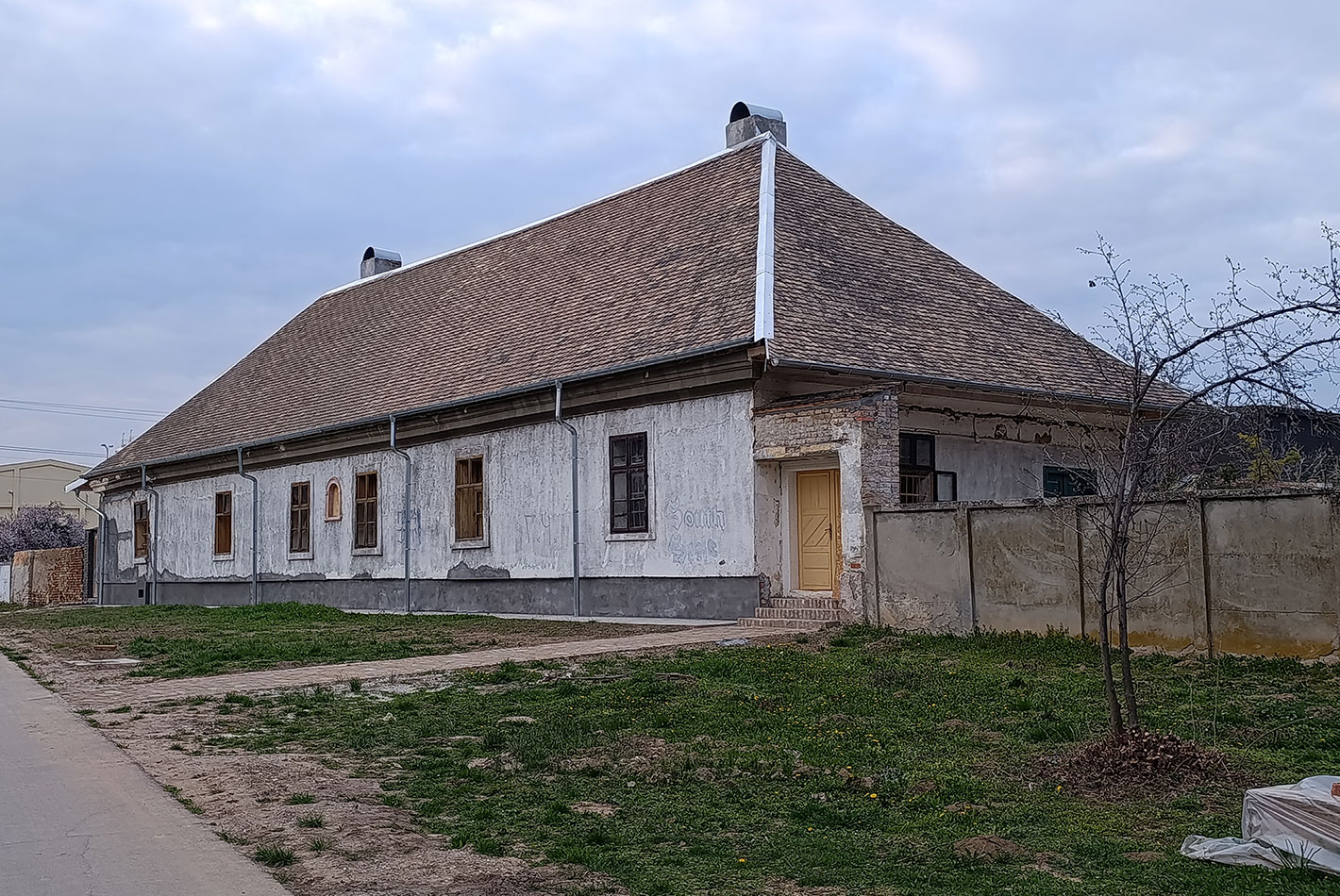
I n order to preserve the traditional values of Vojvodina – above all, its multiculturalism and diversity – the desire to contribute to the local community brought together a critical mass of people from business, culture, and art in the spring of 2023. From this initiative emerged an association with an intriguing name – PASTIR (Shepherd), a once widespread profession in Vojvodina symbolizing care and the preservation of shared values.
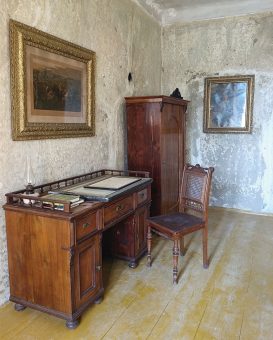
These values are being revived through the restoration of the parish house – a single-story Baroque building from 1817, constructed from earth and serving as a testimony to time and tradition. As Branislava Grubor, graduate environmental protection analyst, founder and president of the PASTIR Citizens’ Association from Čelarevo, points out for our magazine, the idea for reconstruction was born at the moment of the first encounter with the building and the realization of its exceptional architectural and craftsmanship solutions dating back more than two centuries. Built as a representative facility for church purposes, the parish house embodies the very best of Vojvodina – spaciousness, light, and a position overlooking the central park in Čelarevo.
Already worthy of attention, this story gains its uniqueness through the desire to restore the building using natural materials and traditional construction methods, and to present it as such to the wider community.
The significance of preserving this building is further emphasized by the fact that it is one of the rare surviving earthen structures that still contains an original open hearth used for cooking before the introduction of masonry stoves. The parish house has also preserved original documents from the early 19th century, testifying to the turbulent history of Čeb as an imperial estate that was bought and sold by Hungarian noblemen and shared their fate, our interviewee explains.
– Buildings of this size and type no longer exist; they have been demolished. We began the reconstruction at the very last moment, and we will succeed in preserving this jewel of Vojvodina architecture – emphasizes Branislava Grubor.
Great support in this successful undertaking also comes from architect Dragana Kojičić, PhD, a scholar dedicated to sustainable construction, ecology, and permaculture, whose shared love for earthen buildings connected her with the association. The importance of this architectural approach is particularly evident in the times ahead, which bring challenges such as limited resources, prolonged temperature peaks, and alternating periods of extreme drought and heavy rainfall.
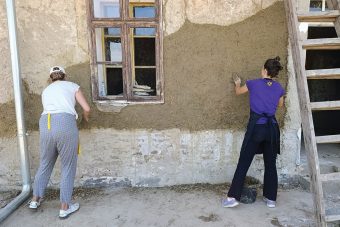
Earth as a construction material is exceptional when one knows how to work with it and apply it to various applications – wall structures, different types of plaster, floors, facades… The list is, in fact, the same as for modern materials and depends on the composition and fineness, i.e., the particle size of the soil. The soil of Vojvodina has an exceptionally fine granulation, making it ideal for finishing plasters and for buildings that are not constructed to great heights.
– If you have trained workers and a material that is practically all around you, you can build a serious structure suitable for a high-quality life. When you realize that all the materials originate from within a radius of just ten kilometers, you also understand the remarkable rationality and ecological principles according to which it was built. At the same time, every unsuccessful attempt, old plaster fallen from the walls, and so on, can simply be recycled: by adding water, they turn back into mud that can be reused, emphasizes the president of the PASTIR Citizens’ Association.
The parish house is a representative example of architecture – the walls were built from clay-rich soil from Čelarevo, the roof structure from hewn timber transported via the Danube, and it is covered with roof tiles from the nearby Čelarevo brickyard. In addition to earth, materials such as straw of various lengths, chaff, and woven wicker are also used in construction. It is particularly interesting that houses built this way do not require air-conditioning systems. Thanks to the excavated basements, a constant temperature of around 10 degrees Celsius is maintained, while the houses themselves remain warm deep into autumn from the summer sun that heated them.
– Through the reconstruction, we aim to raise awareness about sustainable and natural construction, which we achieve through the promotion of natural materials. We use various gatherings and events to speak about the importance and beauty of this type of construction. We are aware that this is a more demanding path, free from shortcuts, prefabrication, and similar approaches, yet these are ultimately the healthiest homes to live in, concluded Grubor.
Prepared by Katarina Vuinac
The story was published in Energy portal Magazine ECOMOBILITY